

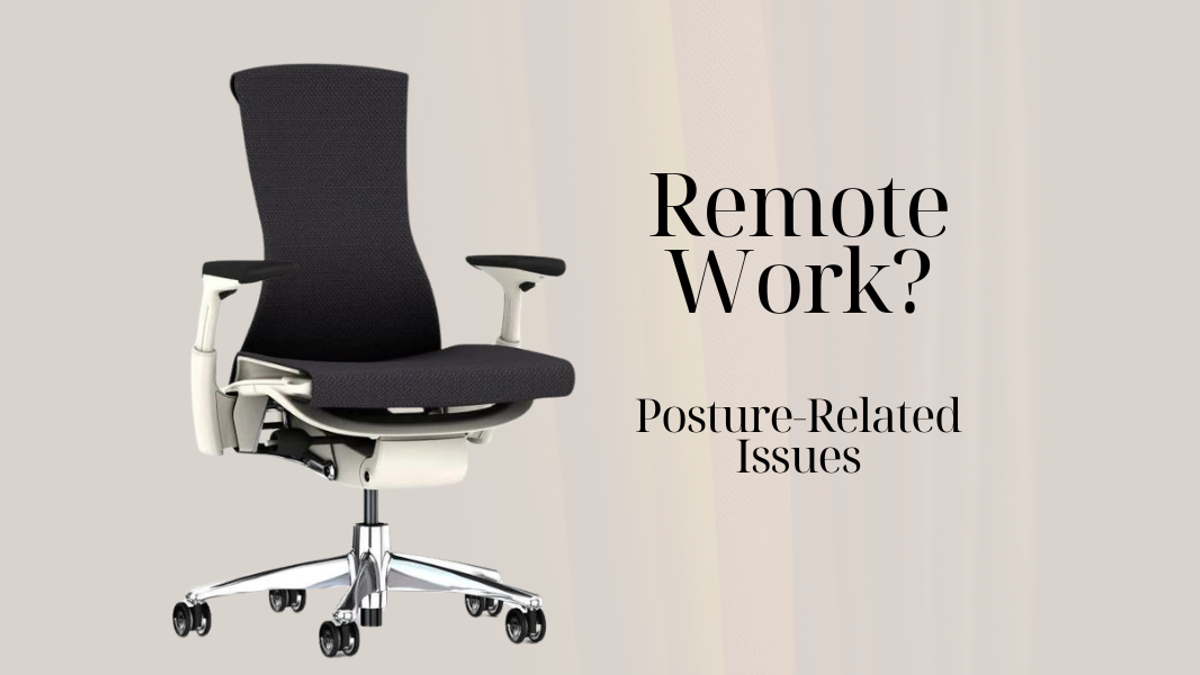

The modern home office was never meant to be an office at all. Dining tables, low sofas, and barstools have been conscripted into full-time duty, and the human body is bearing the cost. The pandemic-era shift to remote and hybrid work has fueled a quiet epidemic of back, neck, and shoulder pain that cuts across industries and income brackets.
Recent data show that as screen time and sedentary behavior increase, so do musculoskeletal complaints, with the lumbar and cervical spine most frequently affected, which underscores how quickly work can turn against workers when the environment is not built for them. Many companies tout flexibility as a benefit, but the physical fallout of that flexibility is only beginning to be understood. For many employees, the price of working from anywhere is being paid in pain.
Remote Work And Rising Posture Issues
Researchers tracking remote learners and workers have documented a pronounced rise in musculoskeletal pain as people spend 6 to 8 hours a day seated at screens. One recent study found daily musculoskeletal pain prevalence jumping from roughly one in four participants to nearly one in three over a matter of months, with the lower back and neck showing the steepest increases. This pattern mirrors broader surveys in the United States, indicating that about six in ten adults who primarily work from home report pain symptoms such as back or joint pain and headaches, which suggests that the problem is neither rare nor transient.
The issue is less tied to the concept of working from home than to its enactment in practice. Instead of dedicated workstations, millions of workers spend their days hunched over laptops at kitchen counters or perched on non-ergonomic dining chairs designed for brief meals, not extended concentration. Health experts warn that prolonged static sitting, poor monitor height, and lack of lumbar support can accelerate joint stiffness and muscle strain, fostering chronic discomfort that lingers beyond the workday and erodes quality of life. Many ergonomics specialists now characterize improvised home setups as long-term health risks, rather than temporary inconveniences that will resolve on their own.
The Business Impact
Poor posture among remote workers quickly becomes a business problem. Musculoskeletal pain can reduce focus, increase fatigue, and lead to more errors, with surveys showing nearly half of affected employees experience noticeable productivity drops. Over time, these disruptions contribute to missed deadlines, lower creativity, and higher burnout.
The financial consequences are clear: investing in ergonomic furniture and adjustable chairs can boost productivity by 5–20% and often pay for themselves within two years. Experts note that poor ergonomics acts like a silent tax on every work hour, and companies that ignore it risk higher long-term costs.
Corporate Responses And Solutions
Faced with mounting evidence, a growing number of employers are treating it as a strategic concern rather than a private matter for workers to solve alone. Some organizations now offer stipends for employees to upgrade their home setups with ergonomic chairs, external monitors, and sit-stand desks, decentralizing the office furniture budget while maintaining a baseline for health and safety. Others are partnering with ergonomic specialists to provide virtual assessments of home workstations and tailored recommendations that address common pitfalls such as incorrect seat height or poorly positioned screens.
Within this industry, niche providers have emerged as quiet infrastructure for the remote era. Office Logix Shop, for example, has built its business on refurbished premium chairs from brands such as Herman Miller and Steelcase, emphasizing adjustability, lumbar support, and durability at a lower price point than new inventory. Its refurbishment process involves disassembling used chairs, deep cleaning frames and mesh, and replacing critical components such as lumbar supports, arm pads, gas cylinders, seat foam, and casters to meet contemporary ergonomic standards.
The company offers refurbished chairs as a sustainable, budget-conscious alternative to new seating for employers equipping dispersed teams. For organizations seeking to retrofit worker comfort at scale, refurbished premium seating has become an attractive middle ground between cost and care.
The Future Of Workplace Wellness
The early years of widespread remote work were defined by improvisation, but the coming phase is likely to be shaped by deliberate design of policies, tools, and environments that account for the body. Surveys show that a large majority of workers now want flexible arrangements to continue, which signals that hybrid and remote models are not a temporary experiment but an enduring realignment of where and how work happens. In that future, ergonomics is poised to become a core pillar of employee wellness, as integral as mental health support or parental leave in the competition for talent.
For companies, investing in proper seating and posture supportive equipment is increasingly viewed not only as a health measure but also as a productivity strategy and a statement of values. Organizations that underwrite high-quality, adjustable chairs, whether new or refurbished, are effectively betting that fewer injuries, lower burnout, and higher engagement will follow. Those who do not may find the true cost of their savings reflected in rising claims, absenteeism, and the quiet resignation of workers who are simply in too much pain to stay. As flexible work arrangements become an established feature of corporate life, the chair has become a small but revealing stage on which a company’s commitment to its people is tested.