

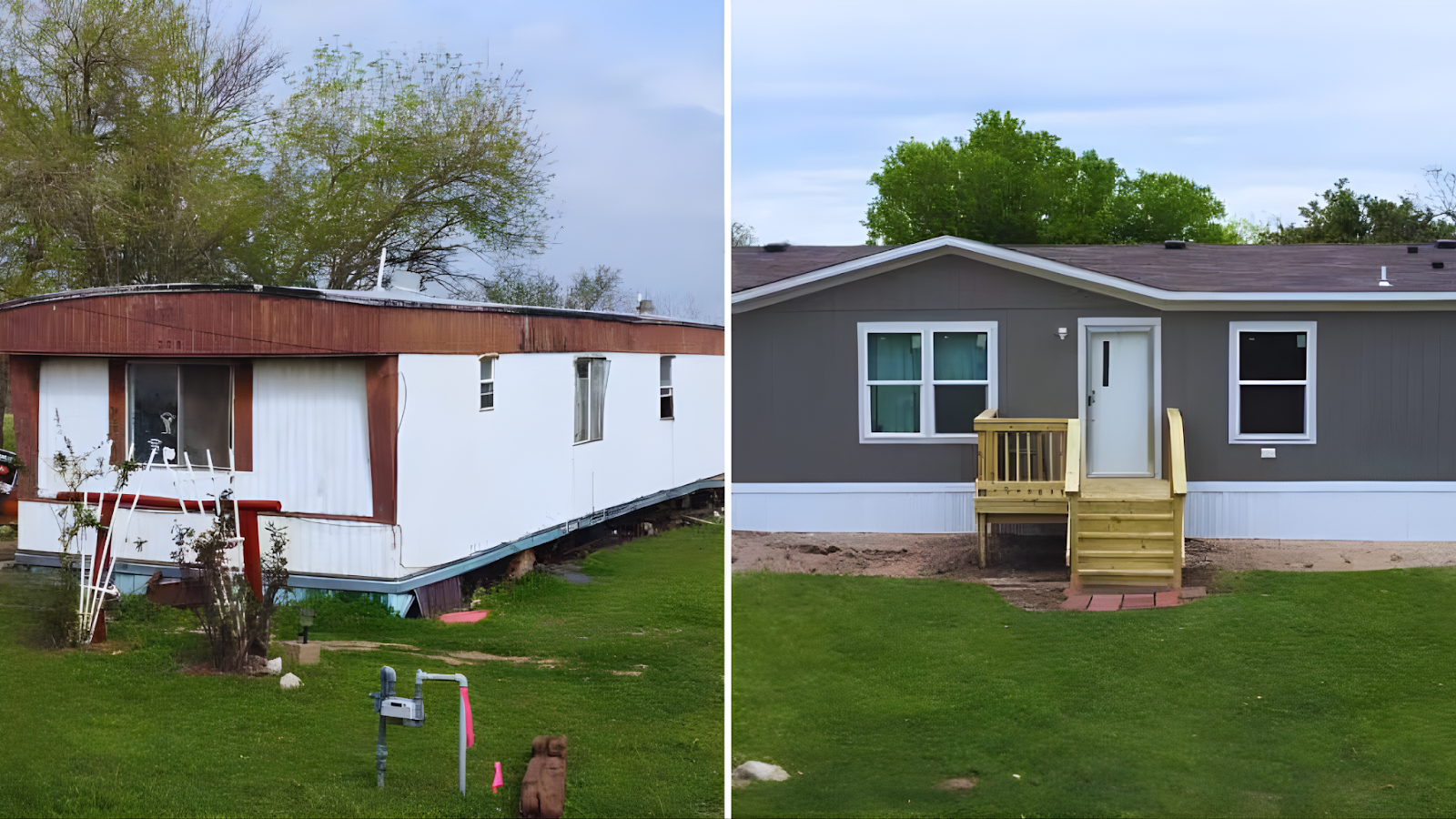

We’ve watched sophisticated investors dismiss manufactured housing communities in seconds: “Trailer parks? No thanks.” That reaction costs them access to an asset class that has delivered 22% annual returns over the past 10 years while serving 22 million Americans.
The problem isn’t the investment—it’s the language. “Mobile homes,” “trailer parks,” and “manufactured housing communities” may sound interchangeable, but they represent fundamentally different realities spanning five decades of evolution. Understanding these distinctions separates informed operators from those leaving opportunity on the table.
The Terminology Breakdown
Mobile Homes (Pre-1976): Where the Stigma Started
Mobile homes were built before June 15, 1976, when the HUD Code established federal construction standards. These structures had no safety requirements, often included wheels and axles for relocation, and suffered from poor construction quality. This era created legitimate concerns about durability, safety, and community stability. When people picture “trailer parks,” they’re remembering pre-1976 mobile homes—and they’re right to associate that era with problems.
Manufactured Homes (Post-1976): Built to Federal Standards
Everything changed in 1976. Manufactured homes built after HUD Code implementation must meet strict federal construction and safety standards. They’re constructed in climate-controlled factories, transported to sites, and permanently installed on foundations. Modern manufactured homes feature energy efficiency, structural durability, and safety comparable to site-built homes. These aren’t temporary structures—97% of occupants own their homes and are building equity, not renting.
Manufactured Housing Communities (MHCs): The Business Model
Manufactured housing communities operate on a land-lease model: residents own their homes, the community owner maintains land, roads, utilities, and amenities. Professional management provides services similar to homeowners associations. We don’t use “trailer parks” because that term refers to the pre-1976 era with different construction standards and business models.
Modern Manufactured Housing: What The Data Shows
Who Lives Here?
22 million Americans live in manufactured housing—6% of U.S. housing stock.
Residents include:
- Teachers earning $42,000 annually
- Nurses at $38,000
- Retail managers, service workers, essential employees
- Retirees on fixed incomes
- Working families priced out of housing where median prices approach $350,000
97% are homeowners, not renters. They own assets and build equity in their homes.
The Economics Tell The Story
| Metric | MHC Communities | Traditional Apartments |
| Average cost | $300-$500/month lot rent | $2000+ |
| Resident tenure | 8-14 years average | 18 months average |
| Annual turnover | 2-5% | 50% |
| Resident status | Homeowners (own homes) | Renters |
These aren’t abstract numbers. When residents stay 7-12 years instead of 18 months, communities stabilize. Neighbors know each other. Families plan long-term. Operational efficiency compounds.
The Stigma Problem—And Opportunity
Why Stigma Persists
Pre-1976 mobile homes created lasting impressions: poor construction, safety issues, transient reputations. Media portrayals from the 1970s-1980s still shape perception decades later. Many investors, policymakers, and lenders have never visited modern communities. Class bias compounds the issue—affordable housing faces stigma regardless of quality.
Here’s what most people don’t see: 70% of communities remain owned by mom-and-pop operators managing 20-200 lots each. Quality varies wildly. Some properties do match stereotypes. Others are indistinguishable from traditional neighborhoods with maintained infrastructure, professional management, and strong community standards.
What Professional Operators See
Stigma creates arbitrage. While others dismiss the sector, data tells a different story:
- 22% historical annual returns (2010-2020)—highest-performing real estate asset class that decade
- Institutional REITs aggressively acquiring: Sun Communities, Equity LifeStyle Properties
- Supply-constrained: zoning makes new development difficult if not entirely unfeasible
- Necessity-based demand: housing affordability crisis drives structural demand
The gap between perception and reality is where informed operators build portfolios.
Workforce Housing vs. ‘Affordable Housing’
The Critical Distinction
Workforce housing: Private-market, private-pay residents earning below area median income but above poverty thresholds. Working families paying market rent from wages.
Affordable housing: Often government-subsidized (Section 8, public housing, voucher programs).
Manufactured housing communities are workforce housing. Teachers, nurses, retail employees—people earning $30,000-$45,000 annually—need housing they can afford without subsidies. Traditional developers ignore this segment because profit margins are too thin at sustainable price points.
Why This Matters
The U.S. faces a 7 million affordable home shortage. 50% of Americans earn $30,000/year or less. Government programs can’t solve this at scale. Traditional developers won’t build for this market. Manufactured housing communities fill the gap through private capital addressing market failure.
When we improve a community—repave roads, upgrade lighting, modernize utilities—we’re providing workforce housing infrastructure essential workers depend on. That’s not charity. It’s recognizing that communities function when teachers, nurses, and retail workers have stable, affordable places to live.
What This Means For You
If You’re an Investor
Understanding terminology clarifies the opportunity. You’re not investing in “trailer parks”—you’re accessing professionally managed workforce housing communities serving essential workers. The stigma creates entry points. The fundamentals create returns.
If You’re A Property Owner
If you own a manufactured housing community, terminology affects valuation. Properties positioned as “modern workforce housing” with professional operations command premium pricing from institutional buyers. “Old trailer parks” with deferred maintenance don’t.
If You’re Evaluating The Sector
Language shapes analysis. Analyze manufactured housing communities the way you’d analyze any real estate: resident tenure, occupancy trends, revenue per lot, expense ratios, capital improvement needs, regulatory environment. The terminology doesn’t change the math—but it might change whether you look at the math in the first place.
We operate in this space because the fundamentals work: necessity-based demand, supply constraints, operational upside in fragmented markets, and mission alignment serving working families. The terminology matters because it determines who sees the opportunity. Now you understand the difference.
For more information visit www.sonoscapital.com