

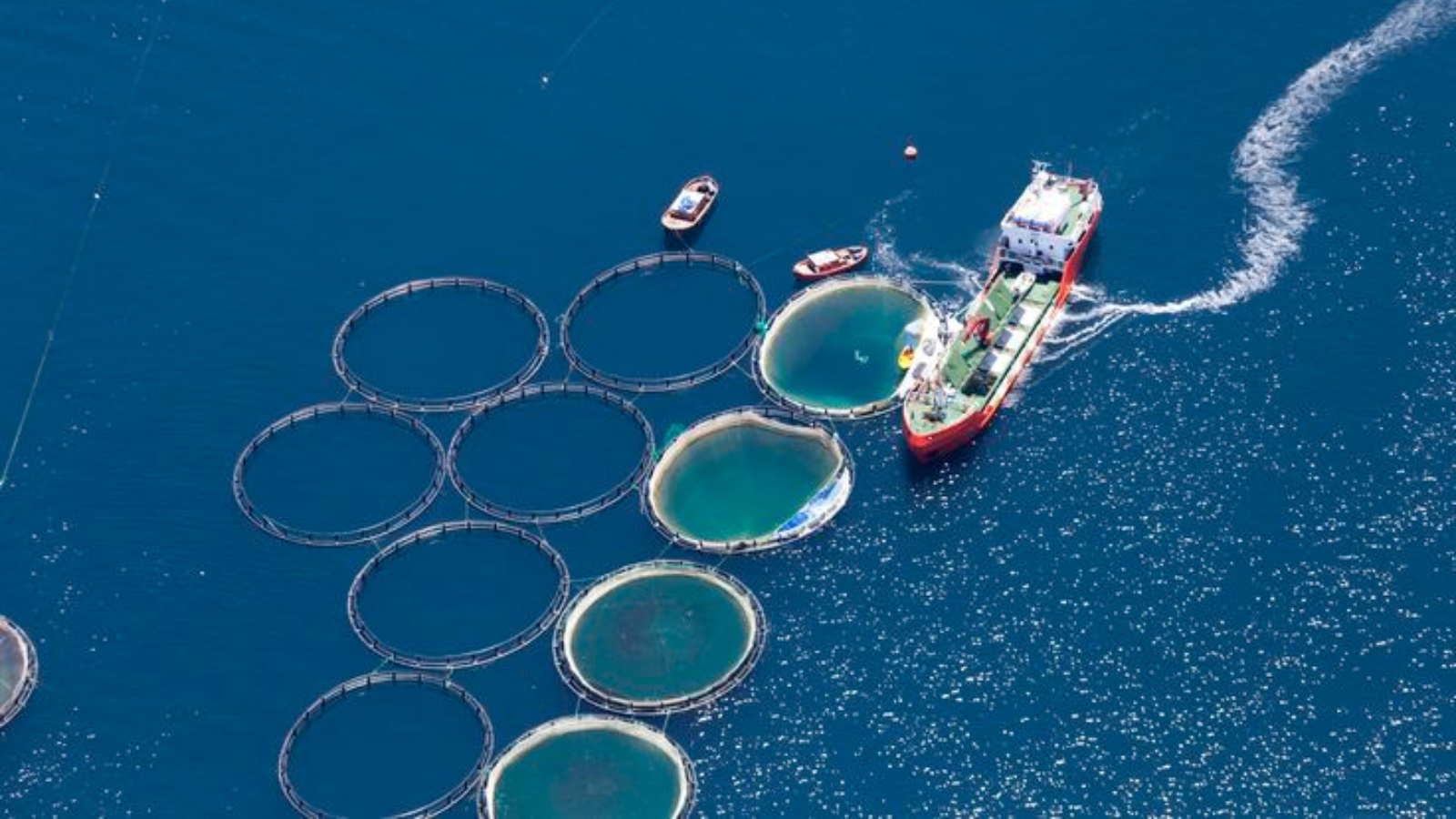

Aquaculture has surged into a defining role in the modern food system, eclipsing wild-catch fisheries to become today’s primary source of seafood. Yet a new warning from Fairr (Farm Animal Investment Risk and Return), an investment network focused on animal agriculture risks, argues that the very industry it helped spotlight could be approaching a breaking point. In its view, a combination of the climate crisis, heavy antibiotic use, reliance on wild fish for feed, and weak governance could undercut the sector’s long-term viability.
The stakes are immense. Fairr pegs fish farming as a roughly 230 billion-dollar global industry, and its rapid growth has reshaped how seafood reaches consumers. But that rise, the report suggests, has also amplified vulnerabilities that were easier to overlook when aquaculture played a smaller role. What once looked like a reliable solution to pressure on oceans now faces its own set of systemic threats.
Fairr’s assessment frames these risks as interconnected rather than isolated. Global heating can strain farming conditions; feed supply chains can tighten as wild stocks decline; and management failures can compound environmental damage. Taken together, the report argues, these forces could “sink” parts of the industry if they remain unaddressed.
Wild Feed Inputs and a Tightening Supply Chain
A central concern in the report is how dependent key farmed species remain on ingredients sourced from the wild. Fairr points to the continued need for fish oil and fishmeal in the production of farmed shrimp and salmon, a reliance that links aquaculture’s success to the health of already pressured wild-caught fish populations. Instead of fully decoupling seafood production from ocean extraction, parts of the sector still draw heavily on the sea to keep farms running.
That dependency is not marginal. Fairr estimates that nearly one fifth of global fish production is diverted into fish oil and fishmeal. The implication is blunt: as wild stocks become more strained and harder to replenish, the inputs that support intensive farming may become more constrained, more costly, or more controversial. For an industry celebrated for scaling quickly, the report suggests its growth model could be limited by the very resource constraints it was expected to relieve.
In Fairr’s framing, feed is more than a line item; it is a structural risk. When farms depend on finite wild inputs, expansion can become a competition for shrinking supply. That dynamic, the report argues, can leave companies exposed to volatility and can weaken confidence in aquaculture as a sustainable long-term answer to global seafood demand.
Governance Troubles and Environmental Spillover
Alongside supply-chain concerns, Fairr highlights governance as a mounting issue, especially as the sector grows faster than oversight. The report notes that fish farming, while the world’s fastest-growing food production segment, has recently been associated with governance scandals that raise questions about transparency and accountability across parts of the industry.
It points to a recent episode that brought scrutiny into sharp relief. In April, seafood buyers in the United States filed a class action lawsuit alleging price-fixing by salmon producers in Norway. The filing followed spot raids on fish farms in Europe carried out by investigators from the European Commission, a sequence of events that underscored how legal and regulatory shocks can reverberate through global seafood markets.
Environmental impacts compound the governance challenge. Fairr links discharges from fish farms, including wastewater and sewage, to the emergence of toxic algae and to degraded drinking water quality. These outcomes, as described in the report, do not stay neatly contained within farm boundaries; they can affect surrounding ecosystems and communities, escalating reputational and regulatory risk while adding pressure on already stressed coastal environments.
Antibiotics, Resistance, and the Search for Safer Practices
Another major risk area Fairr emphasizes is the use of antibiotics in fish farming and the role this plays in antimicrobial resistance. The report argues that reliance on these medicines does not simply address short-term disease pressures; it can also contribute to a broader public health problem by accelerating resistance. In that sense, the concern extends beyond farm performance and into the wider consequences of routine pharmaceutical use in food production systems.
Fairr’s message is not solely a warning. It also offers practical steps framed as precautionary management measures aimed at reducing exposure to these risks. One recommendation is the use of probiotics as a way to bring down antibiotic dependence, shifting farm health strategies toward approaches that may reduce the need for routine medication.
The report also points toward alternatives to fishmeal as another lever for change. Among the substitutions it raises are feeds produced using bacteria, as well as a greater emphasis on cultivating species such as oysters and mussels, which do not require fishmeal-based feed. The direction is clear: reduce pressure on wild stocks while lowering the incentives that drive intensive inputs, and strengthen the industry’s resilience against climate and governance-related shocks.