

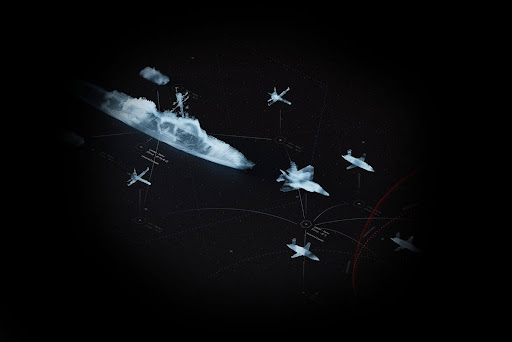

Edge autonomy solved the problem of running intelligence on the asset. The next problem is harder.
The autonomous aerial systems flying over conflict zones today are, by any historical standard, remarkably capable. They navigate without GPS. They identify targets in cluttered visual environments. They execute complex mission profiles without human intervention across communication-denied airspace. The engineering achievement they represent is real.
But they share a structural limitation that is becoming increasingly consequential as the pace of adversarial adaptation accelerates. Most deployed aerial systems do not autonomously improve from operational exposure—in-field, on-platform, at mission timescales. Their perception capabilities reflect the threat environment as it existed when the training data was assembled. Their control logic was optimized for the mission profiles that engineers anticipated. Once deployed, both are largely fixed. The world continues to change. The system does not update itself because of what it encounters.
Edge autonomy solved the problem of running intelligence on the asset. The next problem is enabling that intelligence to improve from what the asset encounters after deployment.
Skylark Labs is a Silicon Valley-rooted AI company whose technical team emerged from research programs focused specifically on one of the harder open problems in deployed machine learning: how to build systems that retain and extend knowledge over time rather than resetting with each new deployment. That research background is less a credential than a statement of which problem the company chose to organize itself around. TALOS is the company’s attempt to operationalize that research problem in the field.
The Structural Gap in Deployed Aerial AI
The gap between what a deployed aerial system knows and what the threat environment actually looks like is not static. It widens.
Adversaries probe detection systems methodically. New commercial airframe platforms proliferate faster than any training dataset can track. Electronic countermeasures evolve to exploit the specific signatures that known detection models rely on. Environmental conditions, such as clutter profiles, radar returns, and acoustic backgrounds, vary in ways that no pre-deployment simulation fully captures.
Against this evolving environment, the conventional response has been periodic retraining: assembling new data, updating the model, redeploying the system. That cycle typically takes months. In a conflict environment where adversarial adaptation happens in weeks, the lag is not a minor inefficiency. It is a systematic capability gap.
The deeper problem is architectural. Most defense AI systems are built around a strong base model—a perception-and-control stack trained on known data and certified before deployment. The base model is the product. After deployment, it is essentially fixed. Improvement requires going back to the factory.
Researchers and defense autonomy programs have explored pieces of this problem for years through online calibration, operator-in-the-loop tuning, and limited forms of in-mission adaptation. But a widely deployed, operationally credible architecture for bounded post-deployment learning at mission timescales, without connectivity to a central server, remains rare in fielded systems.
Phase 1 of aerial autonomy was getting capable AI to the edge reliably enough for operational use. That progress is now real. Phase 2, which enables the deployed intelligence to learn from what it actually encounters, is where the field has not yet converged on a credible answer.
How TALOS Works: Perceive, Learn, Strike
TALOS or Tactical Aerial Loitering, Observation and Strike Layer is not a drone or a weapons platform. It is an adaptive intelligence layer designed to sit above the existing perception-and-control stack on any aerial asset, including autonomous drones, manned fixed-wing aircraft, and rotary platforms. It adds the capability that is missing—the ability to improve from operational exposure.
Its most operationally demanding deployment is on fiber-optic dark drones — platforms that operate without RF communication, GPS, or external connectivity, executing detection, tracking, target prioritization, and terminal mission logic entirely on-device.
That deployment context is the clearest statement of what the architecture is actually required to do. In a fiber drone environment, there is no remote operator to defer to, no connectivity to fall back on, and no opportunity to update the system between launch and mission completion. The intelligence layer has to work and keep improving entirely on its own.
The architecture has four interlocking parts: a strong base model, a local adaptation layer, bounded learning constraints, and fleet-level knowledge transfer.
A certified perception-and-control stack performs against known threat profiles at deployment. A local adaptation layer sits above it on every asset, continuously identifying new signals of operational interest. When such a signal is identified, the system can incorporate it from limited operational examples through a local memory layer that improves performance during ongoing operations. Bounded learning constraints ensure that adaptation stays within auditable, mission-appropriate parameters — because unbounded adaptation in mission-critical environments creates its own failure mode. TALOS refines within defined operational boundaries. It does not rewrite its own logic freely.
On the control side, the same adaptive layer supports the refinement of downstream decision-making—improving how detections are prioritized, handed off, and routed across the mission chain from reclassification and continued tracking to terminal mission logic within predefined operational parameters and rules of engagement. The kill chain runs through the intelligence layer, not around it.
The intelligence layer is designed to be platform-agnostic, adapting to what the asset encounters rather than being tied to a specific airframe.
Local Learning, Global Compounding
The on-asset adaptation is the first layer of the architecture. The network effect is the second, and the one with the more durable strategic implications.
Across a connected fleet, every new signal identified by any asset, every learned adaptation, propagates as reusable operational intelligence to every other connected platform, not as raw sensor data or mission footage, but as extracted knowledge in a form that other connected assets can apply without reproducing the original encounter themselves.
This creates a compounding loop that operates at two levels simultaneously. At the asset level, each platform builds a continuously improving intelligence layer calibrated to its specific operational environment. At the network level, the fleet compounds: every new deployment enters the network already more capable than the one before it, inheriting the accumulated operational intelligence of every prior encounter.
This fleet-level transfer is a designed capability, not a natural consequence. It depends on how knowledge is extracted, normalized, and represented across platform differences. The strategic premise that every deployment makes the next one more capable is the architectural bet the system is built around.
The distinction between data and reusable operational intelligence matters here. Data accumulates. Reusable operational intelligence transfers. In a multi-domain operational environment where aerial assets are expected to share situational awareness across geographically distributed theaters, that distinction is not semantic. It is the difference between a growing archive and a network that gets harder to defeat.
A Gap at Scale
The problem TALOS is designed to solve lies within one of the fastest-growing segments of global defense spending. The US Department of Defense alone has committed over $1.8 billion in FY2025 to autonomous unmanned systems — a 24 percent year-on-year increase.
Globally, the autonomous aerial systems market is projected to exceed $28 billion by 2030, with defense applications driving the majority of that growth. Allied governments across Europe, Asia, and the Middle East are accelerating procurement under pressure from a threat environment that has made autonomous aerial capability a front-line operational requirement, not a future investment.
The capital is committed. The doctrine is being written in active conflict theaters. The unsolved problem—the one that determines which systems actually perform when deployed—is the one this architecture is built to address.
Field Validation Across Operational Environments
TALOS has been deployed across environments that present fundamentally different perception and control challenges, providing evidence of generalization rather than optimization for a single mission type.
A major US defense prime deployed TALOS as the autonomous control layer for its fiber drone program, supporting on-device mission execution in GPS-denied, communications-degraded environments where cloud-dependent systems are unavailable.
ideaForge, India’s leading defense drone manufacturer, deployed TALOS as an adaptive perception layer across operational environments where static models can produce false positive rates too high for reliable operational use, with the ability to incorporate previously unseen signatures encountered in the field. Active deployments in the Middle East are exposing the system to loitering munition threat environments.
The same adaptive architecture has also been deployed at commercial scale, including by Coca-Cola for large-area industrial facility monitoring. The relevance is architectural: the same learning mechanism that improves threat detection in a contested military environment improves object classification in a commercial one. The underlying problem is similar across both, deployed systems encountering new signals faster than static models can be updated.
The Procurement Question
The US Department of Defense allocated $1.8 billion in FY2025 for autonomous unmanned systems, a 24% year-on-year increase. These are active procurement cycles, not future commitments, and the doctrine emerging from active conflict theaters is shaping the capability requirements that will drive them.
The signal from those theaters is increasingly consistent: the operational advantage in autonomous aerial systems does not belong to the platform with the most comprehensive pre-deployment training set. It belongs to the architecture whose deployed intelligence improves fastest from what it actually encounters and shares that improvement across the network.
That is a specific architectural claim. It is also a testable one. The deployments currently active across multiple continents are in the process of testing it.
In the emerging architecture of autonomous aerial operations, the most capable system will not be the one that knew the most before it launched. It will be the one who learned the most because they did.