

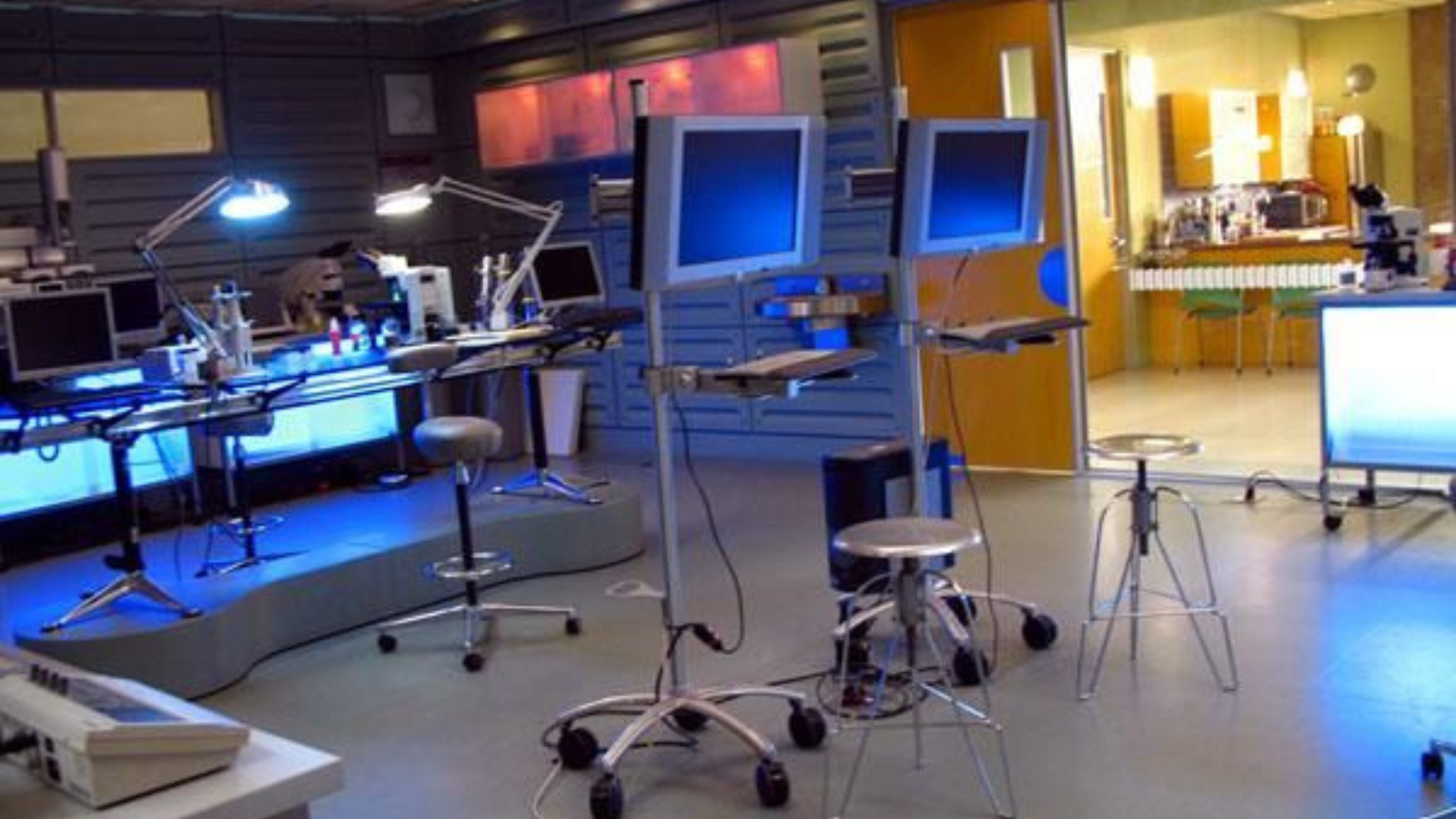

In pharmaceutical laboratories, the most disruptive moments rarely begin with a dramatic announcement. They start quietly, with a screen that refuses to load or a process that hangs for no obvious reason. A workstation crashes mid-task. A system locks up during a routine workflow. A dataset that was accessible an hour ago suddenly cannot be found. In environments built around precision and repeatability, those small failures create an immediate chain reaction: experiments pause, documentation workarounds multiply, and teams lose momentum they cannot easily regain.
This is happening at the same time companies are investing heavily in the very systems meant to prevent chaos. The global market for laboratory information management systems reached 2.44 billion dollars in 2024, a sign that organizations are pouring resources into digital infrastructure. Yet the spending does not automatically translate into stability. Rules tighten, expectations rise, and the burden on platforms grows heavier as laboratories produce more complex data and require more rigorous traceability than ever before.
The cost of a breakdown is not theoretical. Pharmaceutical organizations can lose around 50,000 dollars per hour when critical systems go offline, and the damage extends far beyond the balance sheet. When research timelines slip, downstream work slips with them. Drug trials inch forward later than planned, internal reviews get delayed, and teams find themselves explaining to stakeholders why progress that looked steady yesterday has stalled today. In the end, the consequences land on patients waiting for treatments that depend on the steady flow of validated, retrievable data.
A Three-Month Deadline With No Room for Error
That pressure sits at the center of Manikanteswara Yasaswi Kurra’s day-to-day work. As an R&D IT Developer at a major medical technology company, he is the person laboratories turn to when core systems fail and when reliability must be restored quickly. Over recent years, he has become known for taking unstable, interruption-prone platforms and turning them into systems researchers can trust during the moments that matter most.
His most demanding test arrived with the NovaSTB Stability System, a platform tied directly to stability testing operations. It was not a peripheral tool or a convenience layer. It tracked samples, scheduled testing, and managed storage conditions that influence how research holds up under scrutiny. If that system did not function, stability work effectively stopped, and the workflow that supports critical research outputs would seize up immediately.
The constraint was as unforgiving as the mission. He had exactly three months to deploy the system and have it working flawlessly. Missing the deadline meant more than an inconvenience; it threatened access for over 100 users and put years of research data at risk. For a project that often takes at least six months, the timeline forced every decision to be efficient without sacrificing rigor. Infrastructure setup, end-to-end configuration, and user readiness all had to happen inside a compressed window, while ensuring the platform could handle full lifecycle sample tracking, complicated protocols, and storage requirements that feed into regulatory submissions.
“The three-month deadline was not something we could negotiate,” Kurra said. “Research operations completely depended on having this system running. We had to move fast, but we could not cut any corners because that would destroy years of research data.” The result was a launch that met the deadline and a system that has sustained 99.9% uptime since going live. He built proactive monitoring using Splunk, Wireshark, and Dynatrace so issues surfaced early through automated alerts rather than waiting for researchers to discover problems mid-workflow.
Making Complex Systems Work as One
Deploying NovaSTB was not an isolated win; it was one part of a broader reality in modern laboratories. Most organizations run multiple platforms that must operate together without friction, even though they were not designed as a single, unified ecosystem. In this environment, Kurra also supports the Global LIMS setup running LabVantage 8.4 and 9.x, along with OpenLab and Electronic Lab Notebooks that need reliable connections across the stack.
The challenge is not simply technical compatibility. Each tool has its own assumptions, workflows, and integration patterns, and the lab still expects the whole environment to behave like one coherent system. That is why integration work often resembles constant translation, aligning different “languages” so data and processes move cleanly from one platform to another. One of the more demanding efforts involved linking the Electronic Lab Notebook environment with LabVantage LIMS in a way that aligns with FDA expectations, including 21 CFR Part 11 and GxP requirements. Those standards exist to protect data integrity and auditability, but they also raise the bar for how authentication, traceability, and system behavior must be implemented.
OpenLab brought a different kind of complexity due to the company’s Zero Trust security posture, where every connection is scrutinized and re-verified. That meant resolving firewall constraints, network issues, and port configuration problems without weakening security or creating gaps that could expose sensitive research data. The work required careful coordination, because the goal was to keep laboratory operations moving while maintaining a hardened environment that does not tolerate shortcuts.
Behind the visible tools, he also manages the infrastructure services that keep laboratory systems stable and accessible, including JBoss, Apache, Shibboleth, Okta, SharePoint, and AWS development environments. Identity and access management plays a central role here, particularly with Shibboleth and Okta enabling single sign-on so researchers can move between systems without juggling an unreasonable number of credentials. “Modern lab environments need all these systems to work together smoothly while keeping security tight,” Kurra explained. “Every system has to communicate with the others without creating weak spots that could compromise data.”
Reliability That Shows Up in the Metrics
Today, Kurra handles user support and ongoing maintenance for NovaSTB, and the operational results reflect a structure built for consistency rather than constant crisis response. His team resolves 95% of tickets within service-level agreements, and after the system’s deployment, escalations remained low. Users adapted quickly, supported by training that focused on real workflows and by a platform that performed as expected in day-to-day use.
Recognition followed the outcomes. He received a Best Employee Award for Customer Delight Champion, tied to direct feedback from the client organization that highlighted his proactive support style and focus on keeping systems dependable. Internally, leadership expanded his ownership over critical platforms, and project reviews continued to identify him as a key technical resource when reliability and delivery timelines were on the line.
Still, the deeper impact is not captured by awards. These systems directly influence research schedules and regulatory submissions, and reliability helps determine whether critical work proceeds without interruption. In an industry where pharmaceutical companies cover 75% of the FDA’s drug review budget through user fees, delays and rework can compound quickly when systems fail and audit-ready data becomes harder to prove or retrieve on time.
When laboratory platforms stay stable, researchers spend their energy on science rather than troubleshooting. Data remains complete and accurate, and submissions move forward without avoidable friction. As the industry shifts toward more integrated and automated research environments, organizations that solve the reliability problem gain advantages in efficiency and compliance. Kurra’s sustained 99.9% uptime is not just a number; it signals a standard of resilience that mission-critical laboratory operations increasingly require.
The broader issues he addresses are familiar across the sector: disconnected systems that trap data in silos, repeated manual entry that invites errors, and monitoring practices that react too late. By connecting Electronic Lab Notebooks with LIMS environments and implementing end-to-end monitoring, he helps labs preserve operational continuity and data integrity under escalating demands. And as regulations evolve and data volumes expand, specialists who can deploy, integrate, and sustain these environments remain essential. When the underlying systems hold steady, medical research keeps moving, and patients feel the benefits sooner.