
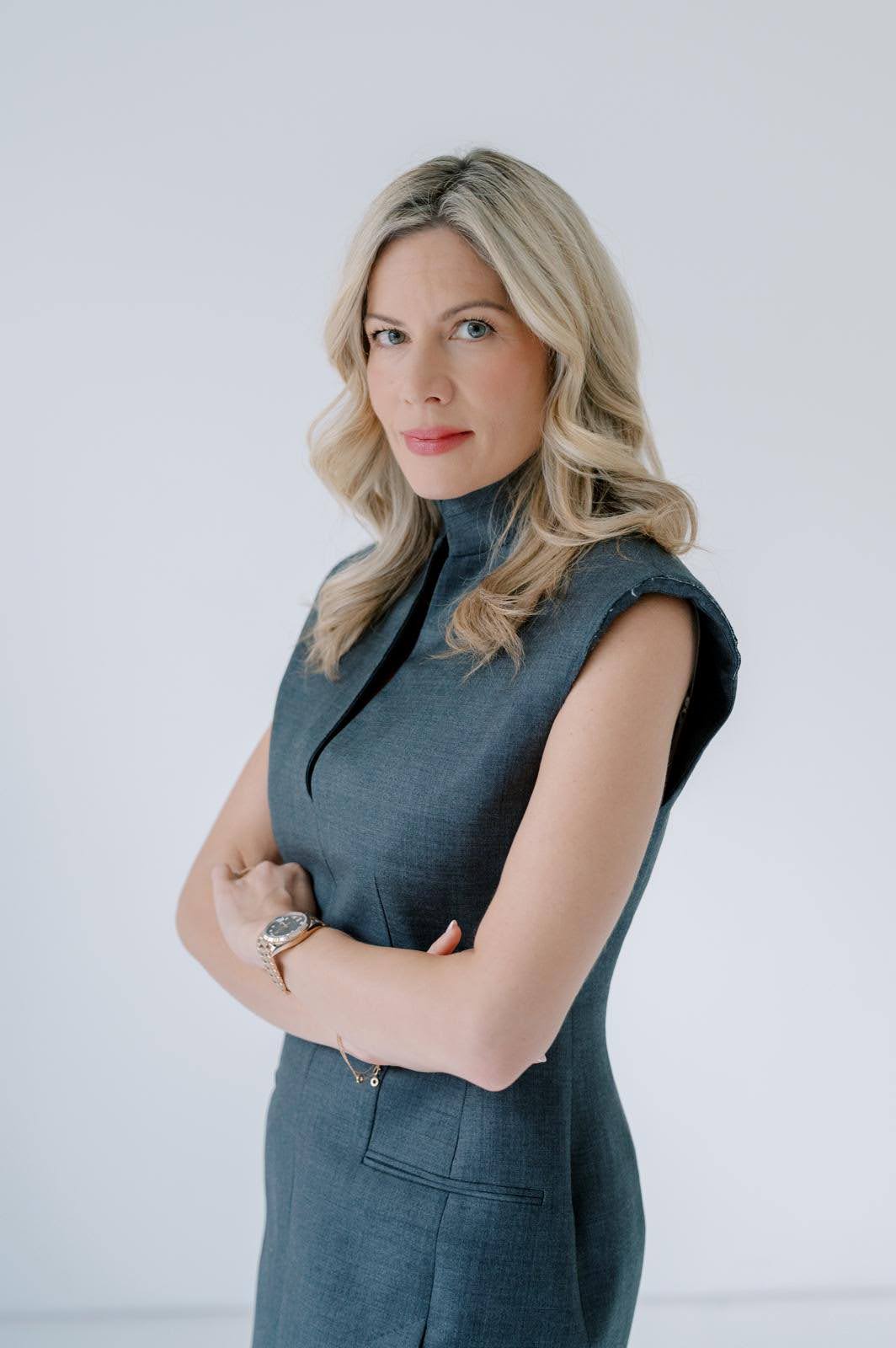
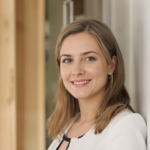
Jennifer Urwyler did not set out to rebuild healthcare. She set out to fix something obvious, a problem so embedded in the medical system that most people had stopped questioning it: The CEO of medicalswitzerland AG had a simple observation: patients own their bodies, but they do not own their data. “Their medical histories live scattered across clinics, hospitals, and laboratories, locked behind institutional walls and inaccessible at the moments that matter most.”
Jennifer Urwyler developed a solution built on a simple premise: medical data should remain accessible and patient-directed. At the center of that approach is HealthCard®, a Swiss-patented system that uses NFC technology to place patients’ medical records exactly where they belong: in their own hands.
The Problem With A Broken System
Every year, millions of patients walk into a doctor’s office and hand over the same information they provided somewhere else just weeks before. Previous diagnoses. Old X-rays. Blood tests that already exist, already paid for, already completed — all sitting in a filing cabinet or a locked digital silo at another clinic across town, or across the world. The doctor needs those records. The patient cannot produce them. So the process starts again.
This is not a fringe problem. Fragmented health data is one of the most persistent and costly inefficiencies in modern medicine. Records are distributed across hospitals, general practitioners, specialists, and labs, with no reliable thread connecting them. Patients lose continuity of care. Physicians lose time. Insurance systems absorb the cost of redundant tests. And the person at the center of it all — the patient — remains without control over something that belongs entirely to them.
Jennifer Urwyler, CEO of medicalswitzerland AG, and her co—founder, a Swiss based physian, observed this problem long enough to understand that the solution does not require a bureaucratic overhaul. It requires a practical one. “Our vision is very clear, HealthCard®® is a simple solution that can address many of the issues we face in healthcare today,” Urwyler has said. “Our HealthCard® is universal, and data is transferable. Your records are always on hand.”
The HealthCard®, a Swiss-patented tool developed by medicalswitzerland AG, uses NFC technology to give patients immediate access to their own medical records. An X-ray from a clinic in Zurich. A blood panel from a lab in Nairobi. A vaccination record from a pediatrician in São Paulo. With a single tap of the card against a phone, it all becomes accessible. No phone calls. No waiting rooms. No repetition.
The HealthCard® Platform stores X-rays, blood analyses, live scans, and vaccination records — all in a secure, password-protected environment. Uploading is as simple as tapping a button, just like posting a photo to a social media account. Urwyler draws that parallel deliberately. “Just like you control your own Instagram account, you can control your own healthcare data with a simple tap and click,” she explains. The analogy strips away the intimidation that often surrounds health technology, making the product feel immediately intuitive.
A Card That Taps Into More Than Records
Beyond record storage, the HealthCard® platform opens a direct channel between patients and doctors worldwide. A patient in a remote area with no nearby specialist can swipe to connect with a physician on the other side of the globe and make payment for the consultation through the same platform. The card, in this sense, does not merely store data; it activates access to care that would otherwise remain out of reach.
From Davos To Uganda: A Global Ambition
The ambition behind medicalswitzerland AG reaches well past Switzerland’s borders. The company has been active with NGOs across Sub-Saharan Africa, with programs running in Uganda, the Democratic Republic of Congo, and Kenya. The work there carries particular weight because the problem looks different on that continent. Health records in many parts of Africa are still kept on paper — the physical Green Paper System passed between clinics, carried by hand, and easily lost.
Mobile phone penetration across Africa tells a different story than the paper system does. Nearly everyone carries a phone. The HealthCard® works with those phones. medicalswitzerland AG has used that alignment to begin moving an entire system, at scale, from paper to the digital age, in partnership with governments. When that data is anonymized and aggregated, it can also help national health authorities track trends, allocate resources, and build programs grounded in real population data rather than guesswork.
Jennifer Urwyler has spent more than half her life as an entrepreneur. Her career spans startups, real estate, and development ventures, but for the past four years, her focus has been squarely on medicalswitzerland AG. The company holds a Swiss patent for its NFC-based health data access system, a credential that speaks to the originality of what they have built.
Urwyler has presented this work at the World Economic Forum in Davos three years running: in 2023, 2024, and 2025. That is not a small stage. Davos draws heads of state, global health ministers, and the architects of international finance. The fact that medicalswitzerland AG holds a seat at that table reflects both the reach of the problem the company is tackling and the credibility of the solution it has built.
The implications stretch further still. Insurance companies stand to recover high costs when redundant testing stops. Healthcare providers recover time. Patients recover agency. The HealthCard® reorients the entire relationship between a person and their medical history, placing that history where it has always belonged: at the hands of the patient.