


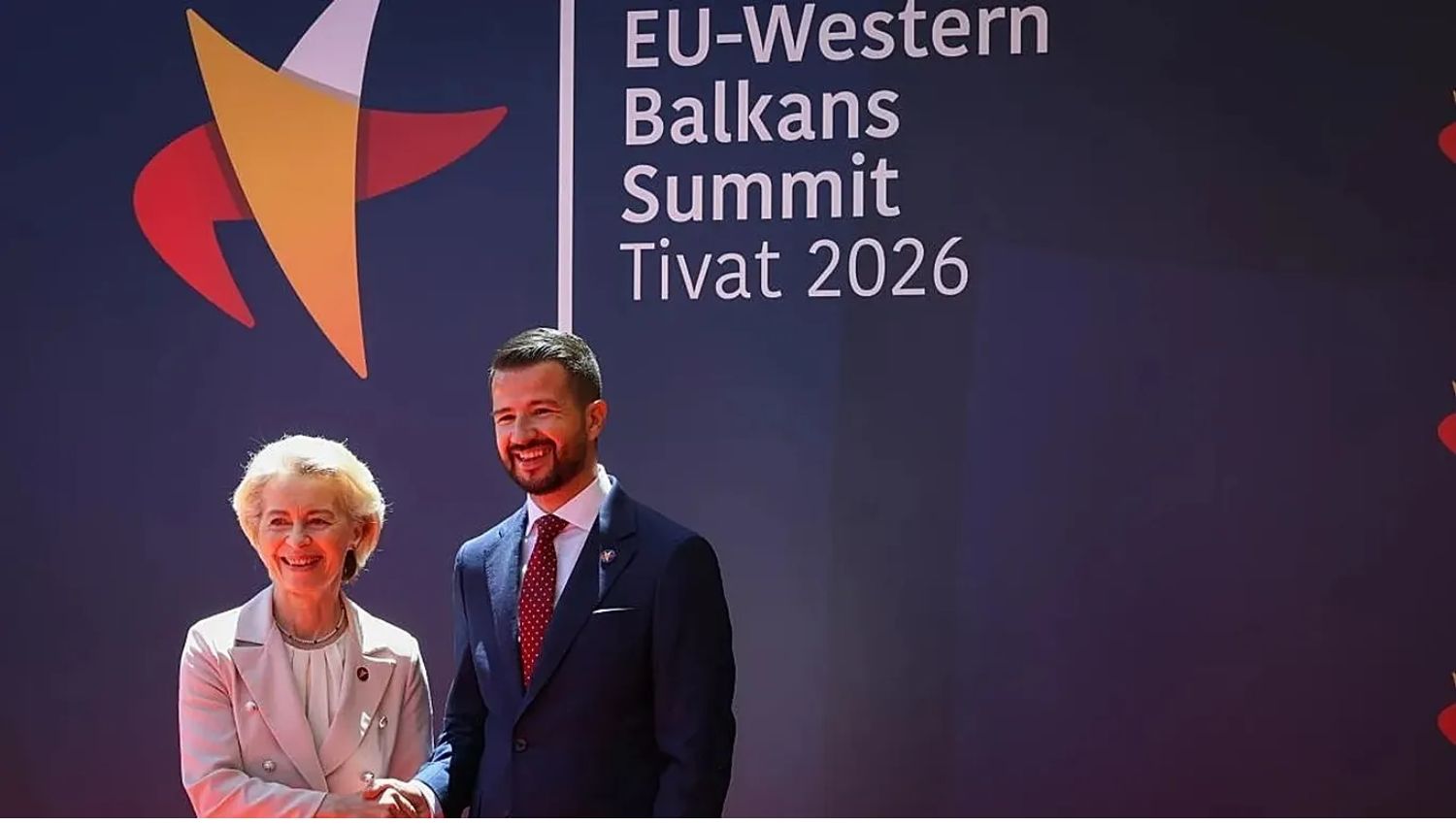
Montenegro supports new safeguards designed to stop future EU members from backsliding on the rule of law and democratic standards, but only if those measures rest on objective criteria for judging systemic breaches, the country’s ambassador to the bloc has told Euronews.
Montenegro is the frontrunner among candidate countries, aiming to become the EU’s 28th member state in 2028. Its bid, however, could be complicated by a series of proposals to overhaul how enlargement works. Foremost among them is a call by five of the six EU founding members for stronger protections against democratic rollback after accession, a lesson drawn from Viktor Orbán’s Hungary.
Petar Marković, Montenegro’s head of mission to the EU, said his country welcomes tougher safeguards, pointing out that Podgorica already outperforms some existing member states on rule-of-law reforms, according to the European Commission’s periodic review.
“Montenegro has an interest in introducing guarantees meant to maintain EU standards. But the potential breaches would have to be assessed on a case-by-case basis against objective criteria to prove systematic backsliding,” he said.
Marković argued that any such criteria must be agreed before membership begins and should not be used to curtail a new member’s voting rights through a transitional period. He called that idea politically and legally dubious, warning it could effectively create a second class of membership.
At the same time, the ambassador acknowledged that one of Montenegro’s main incentives for accepting new safeguards is that they could ease the ratification process, offering reassurance at a moment when the political mood in some founding members is shifting rightward and growing more sceptical of enlargement.
Rethinking the Method
Another proposal on the table is “gradual integration,” championed by France and Germany, which would allow candidate countries to enjoy some benefits of membership as they progress through accession.
“For far too long, there has not been a real discussion on the enlargement methodology,” Marković said, welcoming the renewed political focus on enlargement across European capitals.
Even so, he argued that after 14 years of intensive work, changing the rules this late would be unfair, especially since Montenegro was the first country to accept the current methodology and is now the most advanced as it approaches the finish line.
“This is not about what we deserve. This is a rational choice. Discussions on a new methodology should focus on the candidate countries for which the current methodology has not worked. For Montenegro, it clearly has,” he said.
“Strategically, the stakes could not be higher. The EU has a real chance to reverse the Brexit effect and return to expanding again,” Marković concluded.