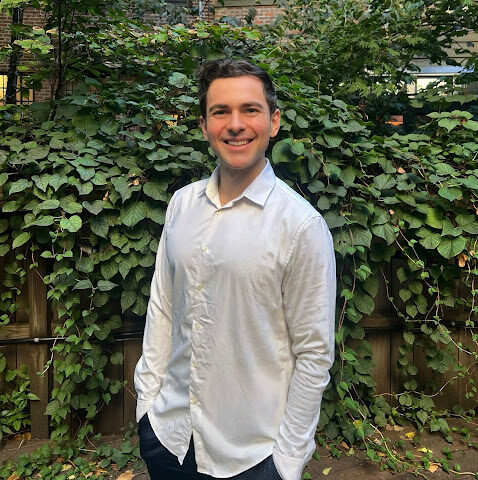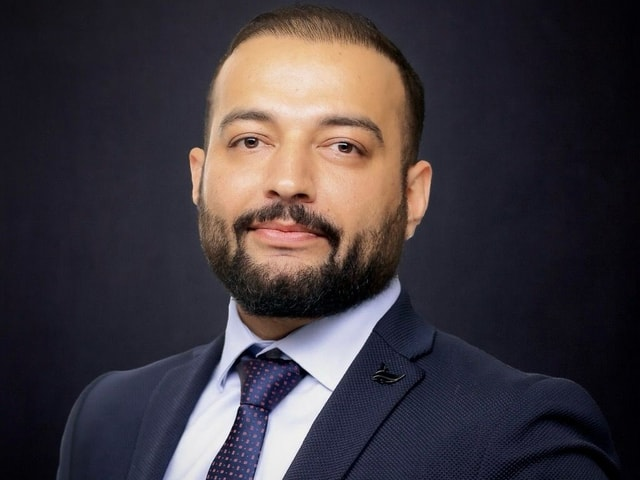


In a modest Stanford University laboratory, Dr. Amarjot Singh speaks about a future that was once confined to science fiction. The founder of Skylark Labs envisions a world where self-aware machines live among the people as “digital citizens,” learning continuously from their environment without explicit programming and performing tasks that once required human judgment and intuition.
“If you have a tech that works, you can embody it into different kinds of machines, such as humanoids, robotic dogs, drones, towers, and cars,” Dr. Singh mentions. “You end up with self-aware machines that are self-conscious eventually, leading to this kind of digital citizen who would live among us eventually and be able to do maybe 70% of the tasks, if not all the tasks, and would learn and evolve through interactions with us.”
What makes Dr. Singh’s vision distinctive is not the idea of intelligent machines but rather how fundamentally different his outlook is from the prevailing understanding of artificial intelligence (AI). While most tech giants perfect ever-larger language models trained on vast internet datasets, Skylark Labs has built something far more like how people’s minds work.
The Hippocampus Concept
The journey toward digital citizenship began not with coding but with neuroscience. Dr. Singh’s fascination with the brain’s memory systems, particularly the hippocampus, emerged during his doctoral studies. This small, seahorse-shaped brain region enables humans to learn from single experiences, a dramatically different process from conventional AI systems, which require millions of examples to recognize patterns.
“You can manage in a single data point, and we can do that because of this small part here called the hippocampus, which is most of my work. This insight became the foundation for Skylark’s hybrid architecture,” Dr. Singh shares.
While traditional AI systems operate like students cramming for exams, like ingesting enormous datasets in controlled environments before companies deploy them with fixed knowledge, Skylark Labs’ brain-inspired hybrid architecture functions more like an apprentice, learning continuously through experience and adapting its understanding on the fly.
According to Dr. Singh, Skylark Labs’ systems can recognize novel threats in environments it has never encountered before. It is not just executing pre-programmed instructions but developing a rudimentary form of situational awareness.
What Makes a Citizen Digital?
When thinking of “digital citizens,” one might imagine images of robot butlers and android companions, but Dr. Singh’s concept is more subtle. These are not merely machines programmed to mimic humanoid behaviors; these are autonomous systems that can self-identify gaps in their knowledge and actively address them.
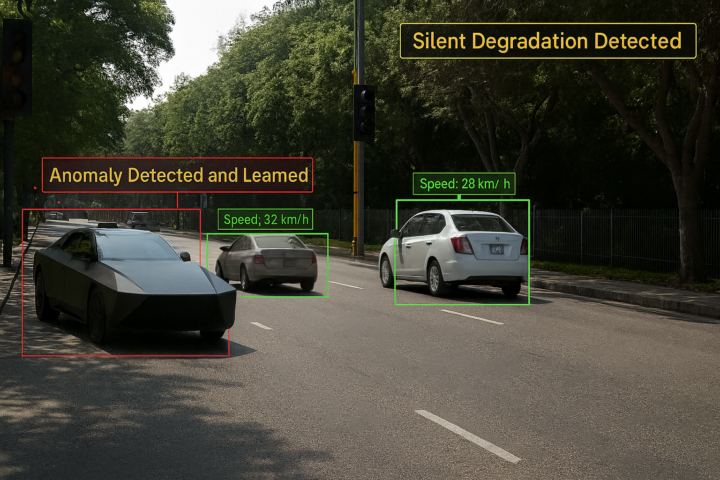
Consider the Skylark Labs’ Scout MK II AI Tower deployed along border regions. Unlike traditional systems that require manual updates, these towers automatically detect unusual patterns and learn from them without human help. The system is not simply following instructions but making judgments about what matters in its environment.
This capacity for autonomous learning represents a qualitative shift in machine intelligence. A digital citizen is not just a sophisticated tool but an entity capable of growth, like a newcomer to a community gradually absorbing local customs and knowledge through observation and interaction.
The Emphasis on Self-Awareness
The path to machine self-consciousness begins with self-identification of learning needs. Skylark Labs’ architecture includes supervised and unsupervised learning modules working in tandem, similar to how people’s conscious and unconscious mental processes collaborate.
“Our machines are self-aware. So when operating in the real world, they can say, ‘Oh, there is a need for me to learn something new,’ and they can self-evolve,” Dr. Singh explains.
This architecture mirrors how human brains consolidate memories. This means it does not need to discard old knowledge when learning something new, but rather integrates fresh information with existing understanding. Traditional AI systems typically suffer from “catastrophic forgetting,” losing previously trained capabilities when updated with new information.
The implications are profound. When a Skylark Labs-powered drone encounters an unusual flying object, it does not merely classify it as “unknown” and await human instructions. It actively seeks to make sense of the anomaly, drawing on related experiences and adjusting its internal models to accommodate this new reality, all without phoning home to a distant server farm.
Living Among Digital Minds
What would it mean to share the world with ”digital citizens”? For Dr. Singh, it means far beyond technological convenience. The immediate applications are already visible in defense and security. Skylark Labs’ ARIES (Aerial Reconnaissance & Elimination System) can detect previously unseen threats, and the Scout Tower can adapt to novel smuggling tactics without software updates. But the longer-term implications are more profound.
However, Dr. Singh notes, “This transition won’t arrive as a single revolutionary moment but through gradual integration.”
He elaborates, “As these systems spread-from smart traffic networks to adaptive rescue drones-we will increasingly share decision-making with entities that see and interpret the world differently than us.” For example, the TransportGuard platform learns to distinguish “normal” from “suspicious” behavior in railway networks, much like a human guard develops instincts over time. It goes beyond following preset safety protocols.
Learning the Concept of “Interdependence”
Mutual learning, rather than dominance, will define humans’ relationship with these digital citizens. Unlike the dystopian narratives of machines overpowering humanity, Dr. Singh envisions a more balanced coexistence, an interdependence where humans and machines gradually develop complementary roles.
The machines learn from people’s contextual understanding and ethical frameworks, benefiting from their tireless vigilance and pattern recognition. At the same time, individuals will adjust to their capabilities and limitations as digital citizens adapt to preferences and behaviors.
“The bigger vision… is brain-inspired self-learning architecture. With its ability to learn on the edge,” says Dr. Singh. This edge-based intelligence, operating without centralized control, creates a fundamentally different relationship from the cloud-dependent AI systems dominating today.
The “digital citizens” emerging from Skylark Labs’ outlook extend people’s collective capabilities, amplifying human potential rather than supplanting it. In this more optimistic conception, the future belongs not to humans alone nor autonomous machines, but to the higher forms of collaboration the world has only begun to imagine.