


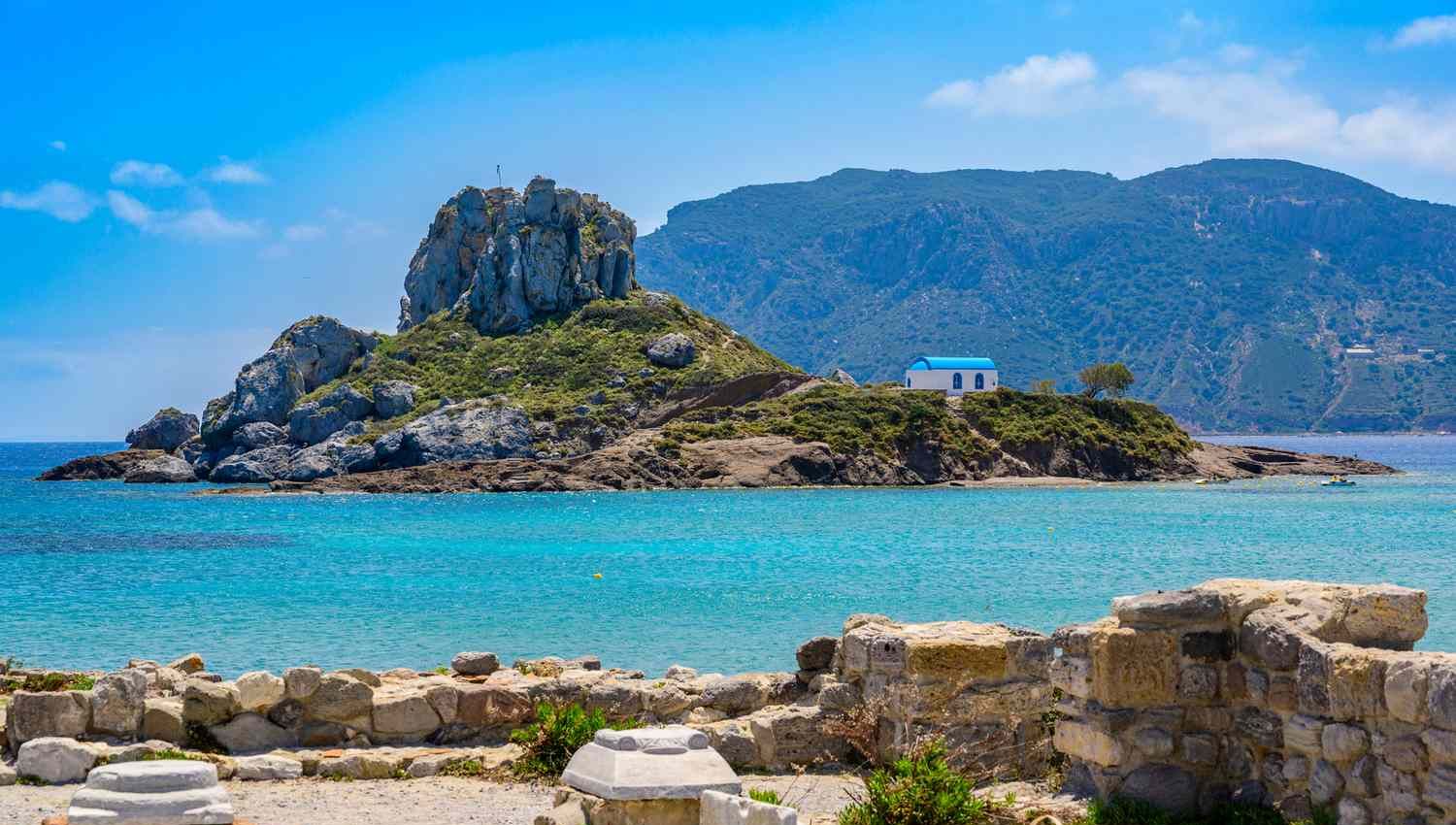
Seven Greek islands in the Aegean Sea have declared drought emergencies this year to conserve water, as a warming climate brings hotter summers and increasingly unpredictable rainfall.
With the dry conditions taking hold, authorities are now anxiously asking whether next year will bring enough rain to support the thousands of tourists who place heavy demands on water supplies at the very moment locals need them most.
The butterfly-shaped island of Astypalaia, which depends on bottled water for drinking, sits east of the mainland and saw none of the rainfall that fell across northern and western Greece, where the country enjoyed its wettest winter since 2022. For Astypalaia in the southeastern Aegean, this was the second driest season since 2020, according to local data, leaving officials with difficult choices.
“If we collected all the water dropped throughout the year in a bucket or in a washbowl, it would be 2.5 cm deep,” said mayor Nikos Komineas, speaking near a man-made lake ringed by dry hills and sparse scrub. Built in the mid-1990s, it is the island’s only water reservoir.
Farmers return to relying on wells
To conserve water, authorities cut off farmer Evdokia Palatianou from the man-made lake in April. The vegetables in her orchard withered as she was left to depend on brackish water pumped from her well.
“Unless it rains, I won’t plant anything,” said Palatianou, 71, standing beside a dead tree that once bore mandarins in the coastal village of Livadi, the island’s main fertile region.
The lake, which supplies water for household use and irrigation in Livadi as well as the main tourist town of Chora, the island’s capital, now holds around 150,000 cubic metres, roughly a sixth of its full capacity. With summer consumption running at about 900 cubic metres a day, that supply would last around five and a half months.
Authorities declared a water emergency in May to fast-track a temporary desalination plant capable of producing 600 cubic metres a day for Chora, and halted irrigation for Livadi farmers to protect the lake’s reserves through to autumn, Komineas explained.
“We did it with a heavy heart, but anyway, thankfully there’s this alternative for them,” he said, adding that farmers would be reconnected if rain replenishes the Livadi reservoir.
Consumption soars during peak summer months
A map produced by the Copernicus European Drought Observatory shaded Astypalaia orange in June, an early warning sign of emerging drought.
At the seaside village of Analipsi on the island’s eastern side, sheep and goat farmers haul in water to fill tanks or draw low-quality water from boreholes. A desalination plant supplying tap water there could not keep pace with a population that swells to 7,000 from 1,400 in midsummer, prompting the setup of a second, temporary facility in Chora while a permanent plant is built, with completion planned for the end of the year.
Dozens of energy-intensive desalination plants are already installed across the Greek islands. Komineas described the temporary plant as a fallback against drought, though he acknowledged its high cost.
“A major worry for me was what will happen if there is no rain once again this year,” he said.
Hotels weigh water-saving measures
Some hoteliers on Astypalaia have already begun conserving water. Carolina Alkalai, 42, who runs a hotel on a hillside in Chora overlooking the castle and the Aegean Sea, offers guests a €5 voucher if they skip the daily cleaning service.
“Clients have embraced it,” she said. Looking ahead, she pictured a second hotel on the island that would feature a cistern to capture rainwater in place of a pool or jacuzzi.
Environment Minister Stavros Papastavrou has approved €15 million ($17 million) for desalination, grid upgrades and water tanks across nine of Greece’s more than 200 inhabited islands, including 1.5 million euros earmarked for Astypalaia. In June, he briefed fellow environment ministers in Luxembourg on water resilience.
“For Greece, water isn’t theoretical, it’s about security, economic growth and the protection of local communities,” he said.
The Athens-based National Centre for Scientific Research “Demokritos” warns that drought could worsen by 2049 as global temperatures climb, deepening water scarcity on the region’s vulnerable islands.