

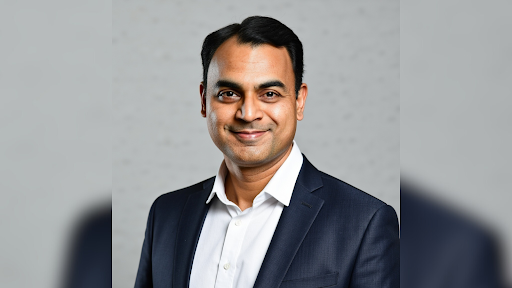

For many enterprises, the real weakness in digital service is not a lack of platforms or data, but the inability to connect them in ways that preserve continuity. A customer may start on the web, move into chat, switch to phone, and return through another touchpoint later, while the business behind those interactions still behaves as if each moment exists in isolation. Over a 21-year career in enterprise IT and digital transformation, Shankar Raj has worked on solving that problem through a governed single-customer-view framework designed to make service systems more coherent, more reliable, and more usable in real time.
The Cost of Fragmentation
Raj’s work begins with a straightforward recognition: fragmented systems create costs that are operationally significant even when they are not immediately visible on a technical diagram. When service teams are forced to work across disconnected CRM instances, communication channels, commerce layers, and identity systems, the result is duplicated effort, slower handling times, incomplete context, and weaker experiences for both associates and customers. In enterprise environments, those failures shape whether a system feels dependable or exhausting long before anyone describes them as architectural problems.
That is why Raj has approached enterprise transformation as more than a systems-integration exercise. “Technology doesn’t earn its keep simply by being new or efficient,” Raj says. “It earns it when it helps customers and associates feel that their efforts matter more, not less, in a digital world.” That idea captures the practical ambition behind his work: the goal is not merely to connect tools, but to make those tools materially more useful for the people who depend on them every day.
A Governed View
At the center of Raj’s methodology is the governed single-customer-view framework. Unlike traditional point-to-point integrations that simply move data between systems, his method treats the customer record as an enterprise asset shaped by explicit contracts, service expectations, capacity models, and reliability standards. The objective is to reduce context loss, minimize duplicate effort, and give service teams a stronger basis for action across telephony, chat, email, web, commerce, and CRM environments.
The framework also reflects Raj’s broader belief that transformation should be treated as product management rather than as a one-time IT event. He has consistently emphasized roadmaps, operating metrics, and service outcomes—handle time, adoption, reliability, and experience quality—rather than allowing modernization to be judged only by implementation milestones. That discipline gives his work a practical edge because it ties architecture directly to what people experience in daily operations, which is often where digital programs succeed or fail.
From Design to Results
One of the clearest examples of this methodology appears in the omni-channel interaction-center environment associated with his work. In that setting, the architecture supported more than 2,000 agents and contributed to an average handling-time reduction of about 30 percent by giving teams a richer, more unified customer view across channels. What matters most in that outcome is not just scale, but the design principle behind it: when systems retain context instead of discarding it at every handoff, resolution becomes faster and service becomes more coherent.
A related principle appears in Raj’s work on customer and digital experience. In a project tied to a luxury retail online journey, improvements in search, product presentation, and digital navigation were associated with measurable gains in click-through rates, mobile engagement, and conversion. Even in that different domain, the same logic remained visible—well-structured systems perform better when they reduce friction, clarify decision paths, and connect back-end complexity to front-end usability.
AI and Reliability
Raj has extended this same framework into AI and reliability engineering. “AI should augment human judgment, not erase it,” he explains. “Our goal is not artificial intelligence—it’s assisted intelligence that keeps people at the center.” Together, those statements define a view of AI that is especially relevant in enterprise environments, where systems must respond to context without becoming opaque, unstable, or unaccountable.
The login-security use case illustrates that point in practical terms. By applying a rule-relaxation approach that reduced login failures by roughly 15 percent while maintaining core safeguards, Raj demonstrated how AI can be used to reduce friction without abandoning control. The broader lesson is consistent with the rest of his work: intelligent systems are most effective when they support people precisely in the moments where rigid automation would otherwise create failure.
A Repeatable Method
What makes Raj’s contribution notable is the consistency of the framework across very different enterprise challenges. Whether the issue is CRM fragmentation, contact-center performance, digital identity friction, paper-heavy processes, or API resilience, his work repeatedly returns to the same principle: enterprise technology should preserve continuity and support judgment rather than forcing people to compensate for system weakness. That consistency gives the article a stronger individual focus because the methodology remains visible across use cases, employers, and domains.
Raj has articulated that broader view in direct terms as well. “We are not just modernizing systems,” he says. “We are modernizing the relationships those systems carry.” In a field often defined by speed and scale alone, that idea may be the clearest summary of his contribution: he has worked to make enterprise systems more connected, more dependable, and more responsive to human needs.