
“It is precisely in the midst of war that we rediscover the strength of prayer.” Now more than ever, there is a need for “forgiveness, both given and received, to heal the historical memory of Europe’s peoples.”
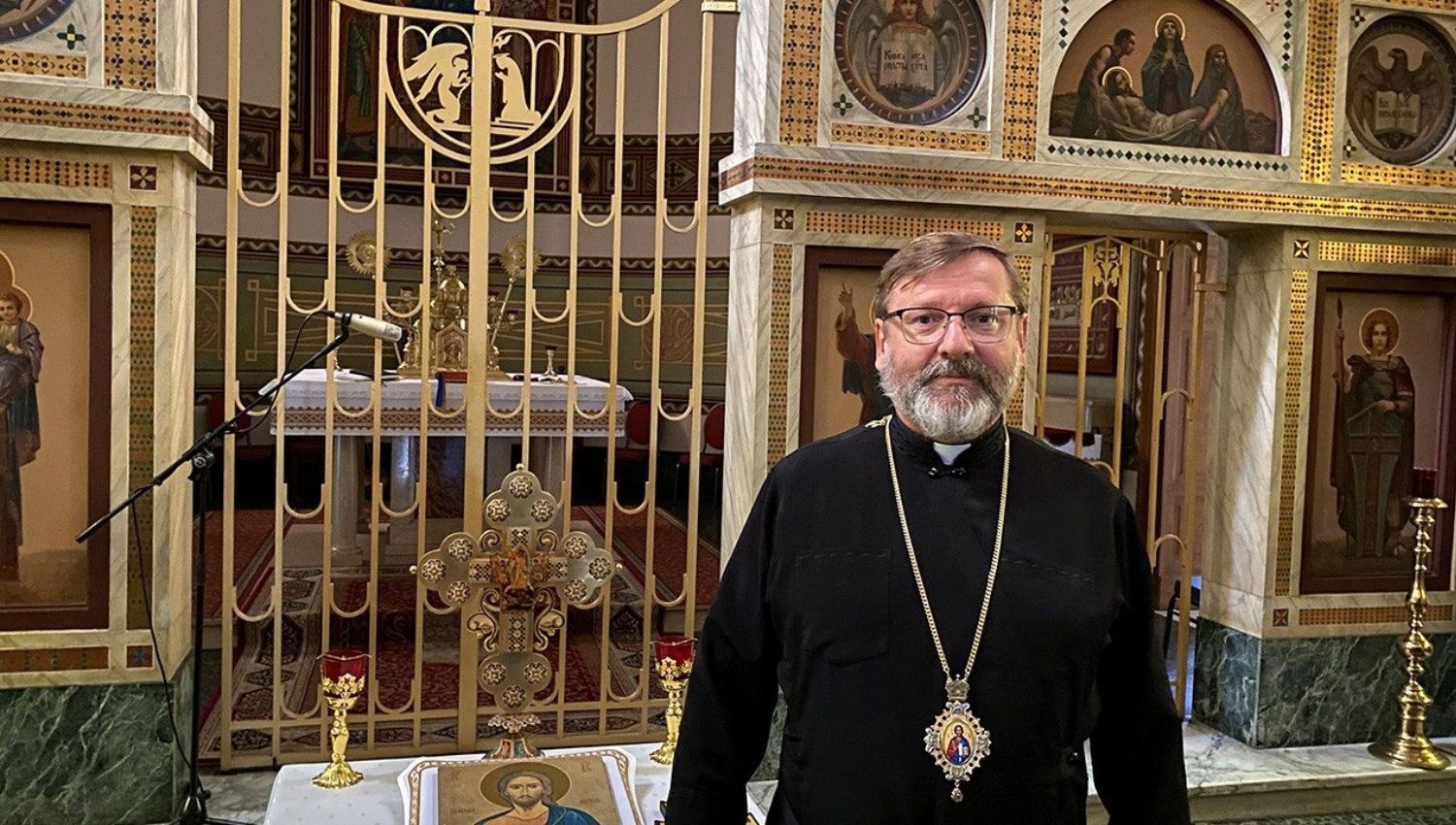
Those were the words of the head of the Ukrainian Greek Catholic Church, His Beatitude Sviatoslav Shevchuk, speaking to Vatican Media after meeting Archbishop Paul Richard Gallagher, who is on the second day of his mission to Ukraine alongside the Apostolic Nuncio to the country, Archbishop Visvaldas Kulbokas.
Archbishop Gallagher, Pope Leo XIV’s special envoy for the celebrations marking the 35th anniversary of the reopening of the Latin Rite Catholic Church’s structures in Ukraine, arrived in Kyiv on Friday evening. The celebrations are due to take place on Sunday at the Shrine of Our Lady of Mount Carmel in Berdychiv. On his way, he stopped at the Church of St John Paul II in Rivne, roughly midway between Lviv and the capital.
The power of prayer in wartime
Asked how important it is at this moment to pray together and to feel the closeness of the Holy Father through his representatives, Shevchuk pointed to the meaning that prayer takes on during conflict.
In times of war, he said, people rediscover both the meaning and the power of prayer. To pray together is to open a space where wounds can begin to heal, describing prayer as a balm and as the healing grace of the Holy Spirit reaching into the heart of a suffering person.
Praying together, he added, also means sharing gifts, recalling the words of Jesus: “Where two or three are gathered in my name, there am I among them.” But praying with the Holy Father’s special envoys means praying within the heart of the universal Church, praying with the Holy Father himself, and feeling embraced by a father.
For that reason, he said, the presence of Cardinal Zuppi and Archbishop Gallagher is a visible sign of the universal Catholic Church embracing and praying for the Ukrainian people.
Faith communities working side by side
On how the various Catholic communities are cooperating to support a suffering population, Shevchuk stressed that the challenges are shared far beyond Catholic circles.
In Ukraine, he explained, the same tragedies and the same pastoral and humanitarian challenges are faced not only among Catholics but together with Orthodox Christians, Protestants, Jews and Muslims, all part of the All-Ukrainian Council of Churches, which is marking its 30th anniversary this year.
Working together, he said, quite literally means saving lives, with Christian charity at times reaching across confessional and ritual boundaries. As Catholics of both the Byzantine and Latin Rites, echoing St John Paul II, he said they are able to bear witness together to the authenticity of Catholic love, a love that embraces, heals, saves and serves everyone.
A population in urgent need
Turning to the greatest needs of the population as the bombing and fighting intensify, Shevchuk described the scale as immense. According to United Nations figures, around five million people in Ukraine are currently facing a humanitarian emergency, while resources available through international organisations are sufficient to help only two million of them.
Yet, as the mayor of Kyiv once told him, what people need from the Church, even more than clothing, bread and food, is a word of hope.
This time of immense suffering for millions of Ukrainians, he said, is also a time of new evangelisation, a kairos, a moment of profound conversion, a hunger and thirst for God. Only the Church of Christ, he said, can heal these wounds and answer that hunger by offering the Bread of Life, the Eucharist, and the Word of God to those who long for Him.
Forgiveness as the medicine for memory
Asked how Christians can become bearers of reconciliation and forgiveness in such a difficult international climate, Shevchuk turned to the legacy of St John Paul II, noting that these months in Ukraine mark the 25th anniversary of his historic visit.
As an integral part of his Petrine ministry for Europe, he said, John Paul II saw himself as being at the service of reconciliation among the continent’s peoples. The late pope regarded it as his duty to help heal the historical memory of Europe’s peoples, especially the wounds of the Second World War, which remain deep even today. To those old wounds, Shevchuk said, have now been added the wounds of the war being lived through in Ukraine.
But what remedy did Pope Wojtyła leave behind? According to Shevchuk, he taught that the balm capable of healing historical memory is forgiveness, both given and received. We are all sinners, he said, and neighbouring peoples often carry painful memories of one another because of the past. Yet they must not become prisoners of that past. History cannot be rewritten, but through forgiveness a better future can be built.
That, he concluded, is why the gift of forgiveness, both offered and received, is the medicine that heals the historical memory of Europe’s peoples.