
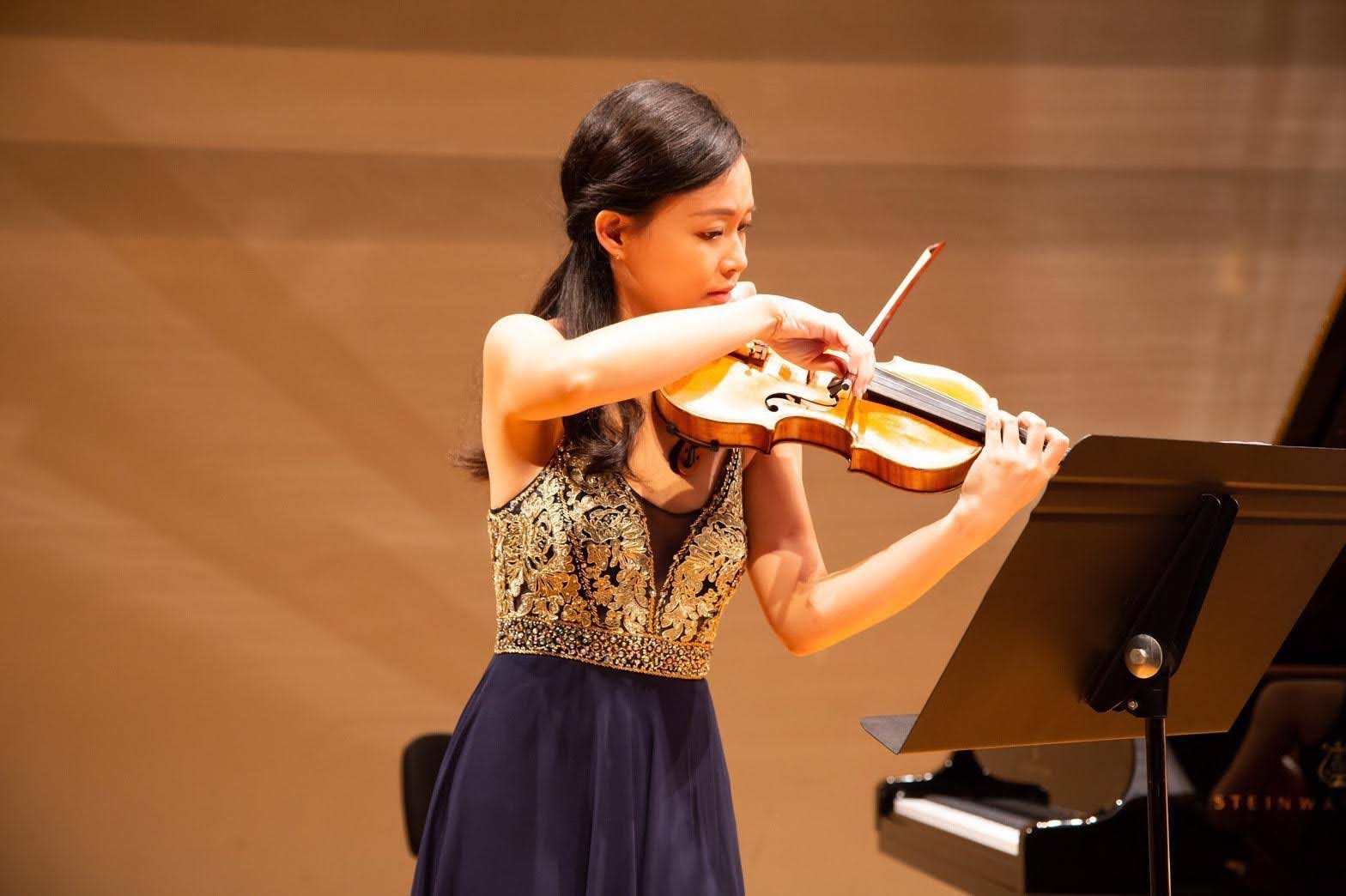

A violin sat under a warm stage light at the Steinway Center Recital Hall in Taipei on February 22, 2021. The crowd had come expecting a normal classical concert. What they got was something else — a sonic trip through the minds of Arvo Pärt, Philip Glass, and Max Richter. These are three of the boldest voices in modern composition. Jennifer Chia-Hua Hsieh, a Juilliard-trained violinist based in San Francisco, brought a program called “Dream” back to her homeland, Taiwan. The music was steeped in a spare, stripped-down style. It hung in the air like fog.
Few performers would dare to build a full recital around such works for an audience raised on the Romantic canon. Hsieh played alongside pianist Ivan Lin that evening. She threaded Glass’s The Hours between Debussy’s Clair de Lune and Fauré’s Après un Rêve. The choices were sharp and clear. Each modern work sat beside a classical piece that stirred a dreamlike mood. Listeners could hear how writing styles had split across the centuries. The recital asked people to listen in a new way — to sit inside the repetition, to feel a single chord stretch over minutes rather than seconds.
The Dreamscape She Built In Taipei
Pärt’s Spiegel im Spiegel opened the concert with stark, bell-like piano chords and a violin line so restrained it barely breathed. Hsieh followed it with Fratres, one of Pärt’s most fierce works, where rushing runs and abrupt silences crash into each other. Richter’s On the Nature of Daylight, known from the film Arrival, closed the modern portion of the program. Its layered strings pulled the audience into a space that felt both cinematic and deeply personal.
“It was a special moment for me to bring back what I learned in the United States and share my love and passion for contemporary music with audiences in Taiwan,” Hsieh has said of the concert. That passion carries real weight. It comes from years of performing with some of America’s top orchestras. She holds a tenured spot in the first violin section of the San Francisco group and regularly performs with the San Francisco Symphony and San Francisco Ballet. Her command of contemporary works grew on the stages of Miami, San Francisco, and the Swiss Alps.
Playing What Others Will Not Touch
Contemporary American music sits in a strange place. Composers like Philip Glass and Caroline Shaw have won the highest honors in their field. Glass reshaped how people think about repetition and time. Shaw became the youngest-ever Pulitzer Prize winner for music. Yet their works remain scarce on concert programs worldwide. The reason is plain: they demand too much from the performer. The methods are unfamiliar. The rhythms fight memory. The reward arrives slowly, and only if every player commits to the full arc of the piece.
Hsieh walked straight into that terrain when she performed Shaw’s Entr’acte at Miami’s New World Center on March 31, 2017. She took the first violin chair in a string quartet that had to master methods invented by the composer herself. Shaw coached the quartet in person, guiding them through the precise bow pressure and angle needed to produce an otherworldly, pitchless whisper. Hsieh earned Shaw’s praise during those sessions for her grasp of the special work.
A year later, she reprised the piece at the BeMusical Series in San Francisco on February 4, 2018, carrying it to a new audience on the opposite coast. “The technique involves using just the right amount of pressure of the bow and at a specific angle to create this otherworldly, mysterious sound effect. The player needs to adjust between this sound effect and normal playing very quickly.” That kind of physical skill goes far beyond classical training. It requires a performer who can rewire her muscle memory on demand.
Carrying The Music Forward
Her drive to champion contemporary works did not stop when COVID-19 shut down concert halls in 2020. Hsieh joined the social media team at her orchestra. She pulled together recording projects and outdoor concerts to keep music alive during the shutdown. She performed at retirement homes and art galleries, carrying her group’s presence into venues far from the gilded stages of the War Memorial Opera House.
The “Dream” concert stands as a vivid picture of Hsieh’s mission. Where many violinists cling to the old Romantic canon when touring abroad, she chose to spotlight living composers whose work remains underheard outside American and European concert halls. Pärt, Glass, and Richter are giants — but their chamber works seldom travel to Taipei. Hsieh made sure they did. She placed them inside a program that respected tradition while pulling listeners toward something unfamiliar and alive.
Her career reflects a performer who treats contemporary American music as something worth fighting for. Trained at Juilliard and the New England Conservatory, tested at festivals in Verbier and Tanglewood, and sharpened nightly in the orchestra pit, Hsieh has built a body of work that places the new alongside the old. She does so with clarity, conviction, and an ear that refuses to let difficult music go unheard.