


State Farm Stadium didn’t feel like a football venue on Friday, June 14. It felt like a proving ground, the kind of place where possessions matter, voices echo off unusual sightlines, and the faces along the baseline tell you everything about what’s at stake. Courts 4 and 9 drew a steady crowd from the moment the girls’ weekend began at the Section 7 mega showcase, and it wasn’t just fans filling the space. College coaches flowed from court to court, intent on catching the next detail that might separate a prospect from a name on a list.
The matchups alone made the message clear. Hamilton, coming off an Open Division semifinal run last year, opened against Etiwanda, the California program that held the No. 1 national ranking a season ago. Nearby, Desert Vista, last season’s Open Division runner-up, lined up with Ontario Christian, another California powerhouse. The games looked like June on the calendar, but they carried the urgency of something bigger, because rosters like these are built with players who project beyond high school gyms.
What unfolded in those early hours was less about a single result and more about a broader reality: the girls’ side of the event now commands its own gravity. The second annual girls’ weekend, paired with more than 100 college coaches in attendance, reflected a shift that has been building for years. The sport is gaining attention, and the depth of ability is rising right alongside it.
A Game Growing Younger and Wider
Cedric Cobb Sr., the lead girls’ basketball scout for Arizona Prep Hoops, has watched the change take root in real time. In his view, what used to be isolated pockets of talent has become something much more widespread. The difference isn’t only at the top of the high school level, either. Cobb points to what’s coming next, to the girls entering eighth grade who already show skills that once took years longer to surface.
He describes the current moment as a time of intensified interest, with girls committing to the sport earlier and showing up more prepared. That early commitment, he suggests, is reshaping what coaches and scouts expect when they walk into a gym or, in this case, into a stadium converted into a multi-court showcase.
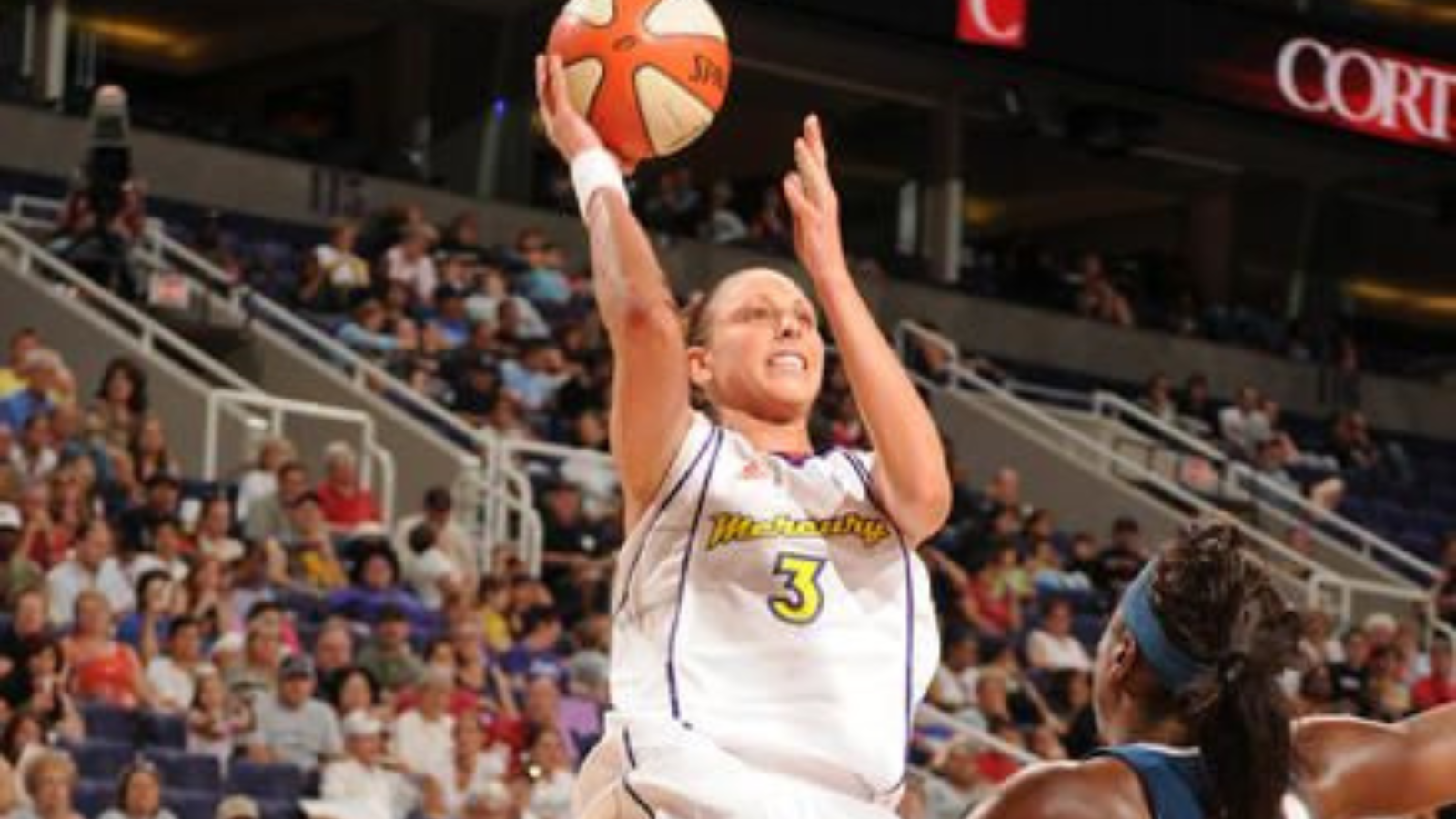
Some people label the surge the “Caitlin Clark effect,” tying the spike in visibility to the former Iowa star’s meteoric rise over the last two years. Others believe the climb was already underway before Clark’s college run captured national attention. Either way, the sport has benefitted from a lineage of stars who broadened the audience and legitimized the women’s game in the mainstream. Diana Taurasi’s presence has mattered, and so have the impacts of Lisa Leslie, Candace Parker, and Tamika Catchings.
Now, that torch is being carried by a wave that includes Clark, Angel Reese, Cameron Brink, and JuJu Watkins, among others. Their influence doesn’t stop at the college level. It filters down into youth gyms and weekend tournaments, shaping what younger players believe is possible and how early they decide to chase it. The result is a generation that trains with more intent, develops faster, and builds reputations earlier than the players before them.
Desert Vista head coach Erin O’Bryan sees it nationwide. She believes girls’ basketball is drawing more eyes, and she’s noticing how quickly players are specializing. She acknowledges the debate around specializing early, with its benefits and drawbacks, but she doesn’t ignore what’s in front of her: athletes doing advanced things at ages when previous generations were still figuring out basics. In her mind, the sport’s growth will continue to pull in more athletes, which only raises the competitive bar.
Desert Vista’s Youth Movement Meets the Moment
For Desert Vista, the weekend wasn’t just an invitation to a marquee event; it was a snapshot of where the program is headed. The Thunder arrived with a roster that included several freshmen, and that youth didn’t read as a liability in this setting. One of the clearest examples was Cherri Hatter, a 2028 guard already widely regarded as Arizona’s best in her age group. Against elite competition and under constant evaluation from the sideline, she looked comfortable enough to build immediate chemistry with established teammates.
That blend of emerging and experienced talent mattered for Desert Vista. Hatter connected quickly with seniors Trinity Jones, Dylan Swindle, and Saniya Jones, creating the kind of rhythm teams spend months trying to manufacture. It also underscored what coaches around the event were saying: high-level ability is appearing earlier, and when it’s paired with veterans who know how to manage big moments, the ceiling rises.
Swindle’s own path reflects that reality. Much like the role Hatter may grow into during the winter season, Swindle didn’t need a long runway before contributing. She started from day one at Desert Vista and helped drive a standard that has come to define the program’s recent success.
Dave Williams, who coached Swindle during his first two seasons leading Desert Vista before moving to McClintock, remembers how much the girls’ game surprised him when he transitioned over from coaching boys. What stands out to him is the foundation. He sees girls playing with strong fundamentals, and he believes the overall talent level has climbed sharply. In his view, the club landscape has become more competitive, with more players training early, committing to the sport, and building a culture that feels noticeably different than it did just a few years ago.
Section 7’s Evolution Into a June Destination
Section 7 didn’t become a summer staple overnight, and the girls’ portion of the event has had its own timeline. Years ago, the games were staged inside the gym at Brophy, and the girls’ invite list was small, limited to eight teams. After a Covid-era hiatus, the boys side moved to State Farm Stadium, and the girls were brought in too, though in a restricted format that featured only a handful of Arizona programs and a single late-night game.
Even with those limitations, interest kept building. That momentum led to last year’s first dedicated girls’ weekend, when teams from across the West Coast came to the stadium for an experience that felt almost unreal the first time you stepped onto the floor. Playing basketball inside an NFL venue carried a novelty that teams didn’t forget, and the sense of occasion has remained part of the draw.
Perry head coach Andrew Curtis calls the event a national standout, describing Arizona as the host of what he considers the biggest and best showcase in the country. In his eyes, the top brackets are loaded with elite recruits, and the atmosphere turns June basketball into something closer to a destination than a date on the calendar.
Perry’s placement in one of the stronger brackets this year meant exactly what it sounded like: games against nationally recognized programs. The Pumas matched up with Archbishop Mitty, a team that finished last season ranked No. 2 in the country. Injuries factored into Perry’s loss, but Curtis framed the experience as valuable exposure for his players, an opportunity to learn in a setting where every detail is amplified.
That theme echoed throughout the weekend. Coaches and players talked about what they gain when they step into unfamiliar matchups and unfamiliar styles. The stadium setting changes the feel of shooting and space. The variety of opponents introduces different systems and tempo. And the pressure is unmistakable, especially with college coaches walking the courts, watching body language, decision-making, and composure as much as raw skill.
Seton Catholic head coach Karen Self sees the opportunity as distinct for her roster, and she believes it will continue to fuel the sport’s growth. She also points to a broader shift in attention toward women’s sports, one that is helping raise both visibility and standards. From her perspective, Arizona’s talent pool is as strong as it has ever been, and competing against top-tier programs only sharpens that edge.
Dobson head coach Henry Bribiescas, a longtime presence in the girls’ high school game, didn’t try to complicate his initial reaction to the level of play at Section 7. He said his first thought was simply “Wow.” For him, the value is especially clear for younger players. Being in the building, seeing the pace and physicality at the upper end, gives them a reference point they can’t get from highlights or stories. It’s competition, yes, but it’s also a glimpse of what the next level demands.