

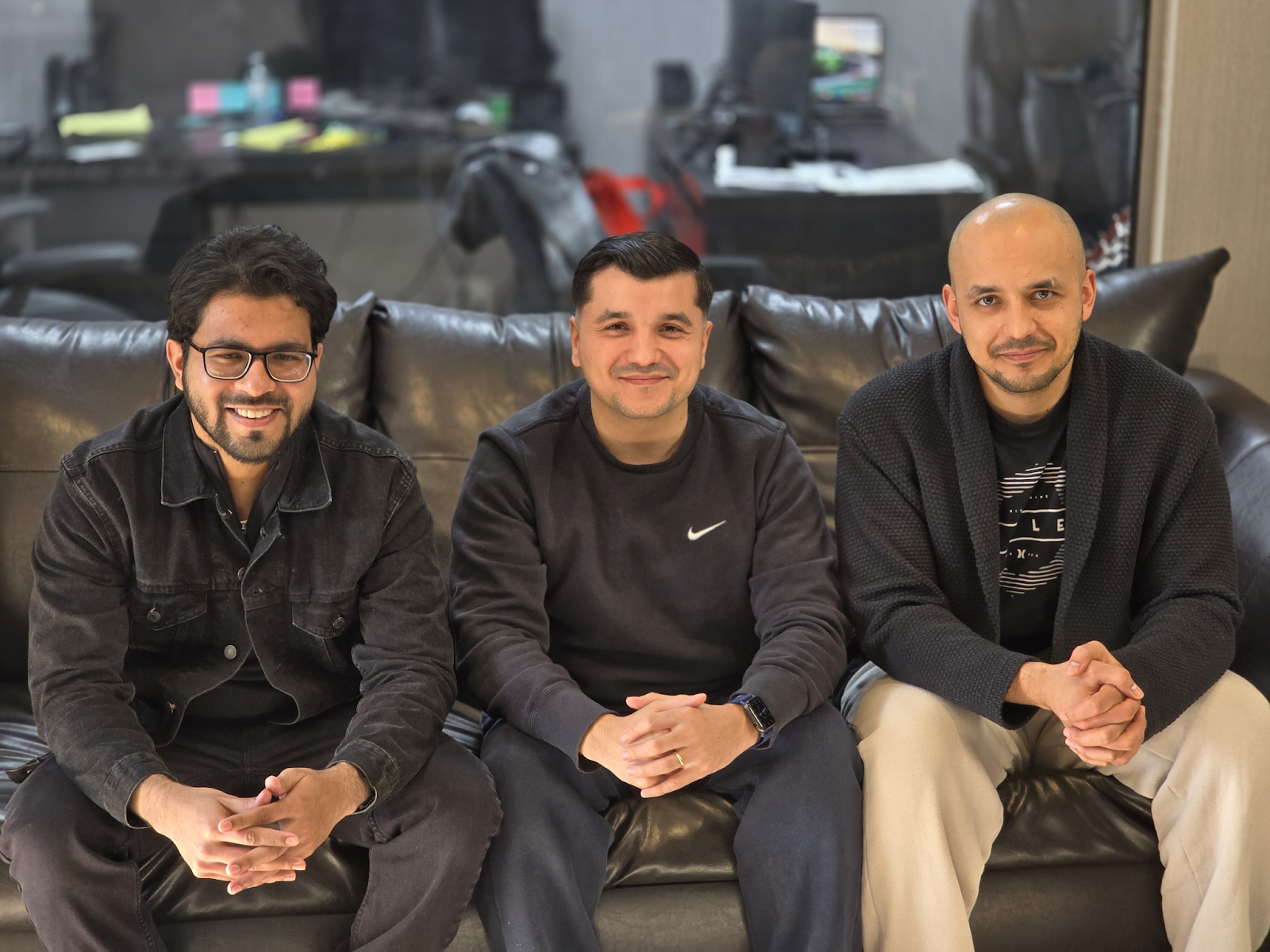

The U.S. trucking industry, an $800 billion backbone of the nation’s supply chain, has long lagged behind other sectors in adopting advanced technology. While finance, healthcare, and retail have embraced artificial intelligence and automation, trucking still relies heavily on phone calls, manual load booking, and outdated processes that collectively cost the industry billions each year. Enter Kayaan, a startup founded by two entrepreneurs from remarkably different backgrounds, who believe they have found a way to solve these persistent inefficiencies.
From Wall Street To The Open Road
Temur Amriev’s journey into trucking was anything but conventional. After five years as an analyst at JPMorgan, he took the bold step of managing his own trucking company. There, he confronted inefficiencies firsthand: brokers still required lengthy phone negotiations, drivers juggled paper logs, and fleet managers struggled to keep costs under control.
“I saw a lot of problems that just slowed everything down,” Temur recalls. His own operation lost roughly $10,000 per truck each year due to inefficient load booking—adding up to nearly half a million dollars across his fleet. Extrapolated across the nation’s roughly two million commercial trucks, these losses highlight a staggering $20 billion problem annually.
The Engineer With A Vision
Sayed Raheel Hussain, a machine learning engineer with a master’s in AI from Yeshiva University, brought the technical expertise needed to tackle this challenge. The two met at a networking event, and their shared vision was clear: use agentic artificial intelligence to solve trucking’s long-standing problems. “We clicked on ideas immediately and realized this could really work,” Temur recalls.
Together, they set out to design a platform that combines cutting-edge AI with practical, real-world trucking experience.
AI That Thinks—And Negotiates—Like A Human
Kayaan represents one of the first enterprise-level applications of voice AI in trucking. The system allows drivers to book loads, optimize routes, and even negotiate rates—all hands-free. Its agentic AI acts autonomously, handling tasks traditionally done manually by drivers or dispatchers.
Temur explains, “The idea that software can call brokers and secure loads on behalf of a driver sounds like science fiction. But that’s exactly what we’re doing today.”
Hussain’s technical expertise powers the platform’s predictive capabilities. Drawing from machine learning, voice AI, and real-time analytics, the system evaluates load opportunities, forecasts conditions such as weather or congestion at delivery sites, and recommends the most efficient options for drivers.
Enhancing Safety And Compliance
Kayaan’s innovations extend beyond efficiency. Its multimodal pre-trip inspection module ensures drivers and fleet managers identify potential issues before they become costly problems. Photos of truck components are analyzed by AI to detect issues like worn brakes or low tire pressure. Immediate alerts help prevent accidents and fines, keeping fleets compliant with Federal Motor Carrier Safety Administration regulations.
By integrating safety, compliance, and predictive analytics, the platform addresses multiple challenges at once, moving the industry from reactive problem-solving to proactive management.
Positioned For A Transformative Future
Kayaan is more than a technology startup—it represents a potential shift in how trucking operates. Its combination of deep industry knowledge, operational experience, and AI expertise gives it the tools to address long-standing inefficiencies while improving driver autonomy and safety.
For an industry that has resisted technological change for decades, solutions like Kayaan’s may prove critical as freight volumes rise, labor pressures increase, and margins tighten. “Our goal is simple,” Temur says. “We want to make trucking smarter, safer, and more efficient—for the drivers, for the fleets, and for the country as a whole.”