

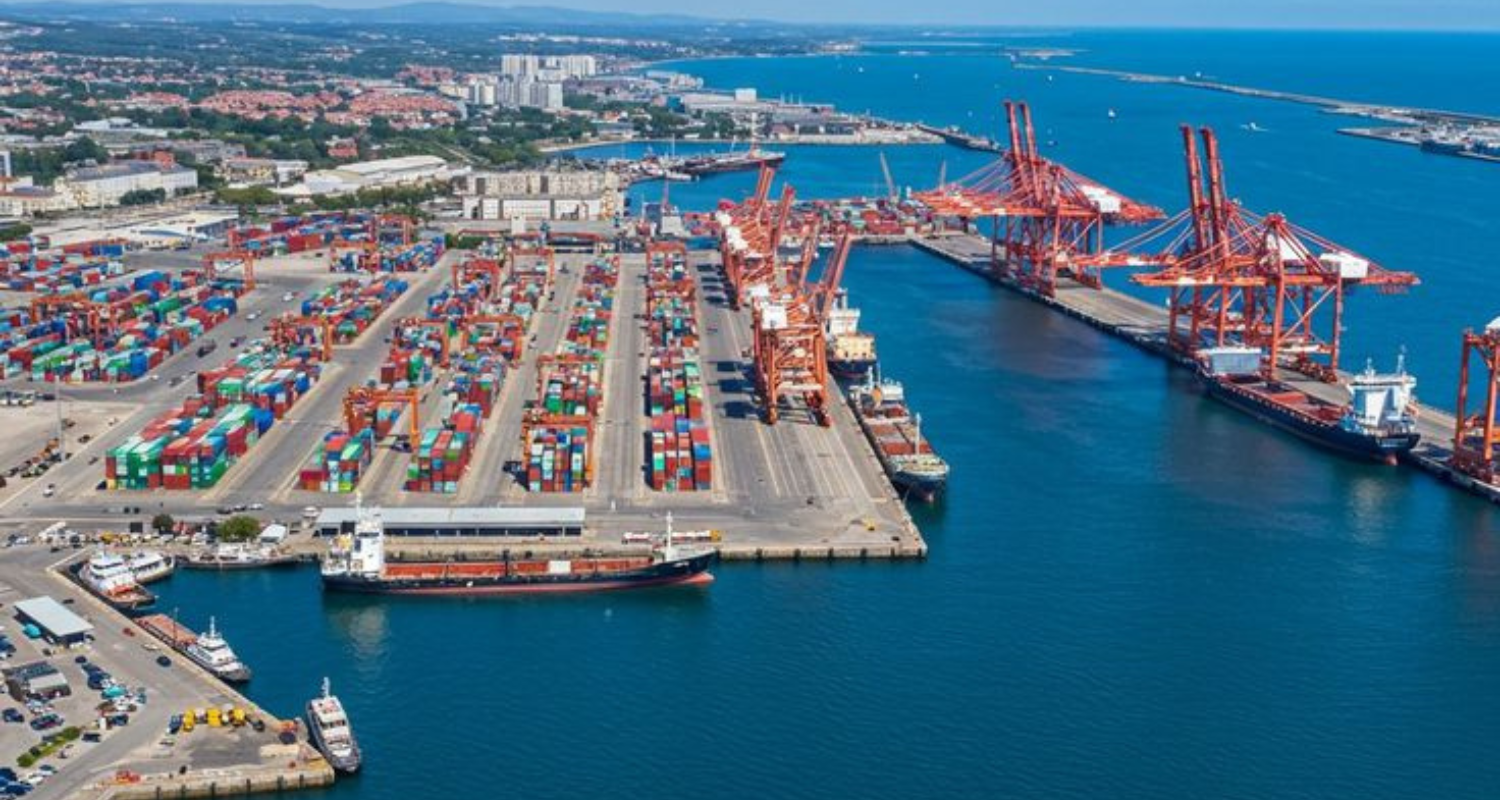

When maritime uncertainty began constricting trade flows around the Strait of Hormuz, AD Ports Group faced a challenge that could not be solved by simply waiting for normal traffic to return. The company moved to redraw the logistics map, shifting cargo through a coordinated network of ships, trucks, rail services, storage facilities and chartered aircraft designed to keep essential goods moving across the UAE and the wider Gulf.
The response reflects a broader reality for regional trade: resilience now depends less on a single port or shipping lane and more on the ability to move cargo seamlessly between sea, land, rail and air. For businesses relying on food, pharmaceuticals, industrial inputs and consumer products, that flexibility has become a critical line of defence against disruption.
A New Route Around the Bottleneck
The Strait of Hormuz has long been among the world’s most strategically important maritime corridors, linking Gulf ports with international markets. When vessel traffic came under pressure, the impact was felt far beyond shipping schedules. Importers, manufacturers, retailers and healthcare suppliers all faced the risk of delayed deliveries, higher transport costs and limited inventory availability.
AD Ports responded by redirecting cargo operations and feeder shipping services through Fujairah Terminals and Khor Fakkan Port, two gateways located on the Gulf of Oman. Their location allowed the company to create alternative access points for cargo that could then be transported onward to major commercial centres across the UAE.
Rather than treating the disruption as a purely maritime issue, the group positioned its eastern ports as the beginning of a wider logistics corridor. Containers arriving at Fujairah or Khor Fakkan could be transferred through bonded customs routes to Khalifa Port, Jebel Ali and Sharjah, reducing the dependence on a single maritime entry point and helping customers preserve continuity in their supply chains.
The strategy also underscored the importance of port geography in a period of volatility. A port is no longer simply a place where ships berth and containers are discharged. It is increasingly part of a connected national infrastructure system, where the speed of onward movement can matter as much as the ship’s arrival itself.
Trucks and Rail Take on a Bigger Role
As cargo was diverted away from conventional routes, road transport became a central part of the contingency plan. AD Ports added 400 trucks during the second quarter, strengthening its capacity to move containers and essential goods from eastern ports toward the country’s main logistics and distribution hubs.
The added trucking capacity was particularly significant for time-sensitive cargo. Food products, medical supplies and other critical imports cannot remain idle for long periods while shipping routes adjust. By expanding its road network, the company created a more immediate bridge between coastal terminals and customers inland, helping to reduce the risk that port delays would become shortages on store shelves or in warehouses.
Rail also became a more prominent part of the response. AD Ports increased service frequency with Etihad Rail, adding another layer of transport capacity as road corridors faced higher demand. The rail link offered a way to move cargo at scale while easing pressure on trucking fleets and highway networks.
This combination of truck and rail capacity offered more than a temporary workaround. It demonstrated how logistics operators can use multiple modes of transport to reduce exposure to a single point of failure. In practical terms, a shipment that could not follow its usual sea route still had options once it reached an alternative gateway, whether that meant a rail transfer, a bonded truck movement or a combination of both.
Feeder Ships Keep Regional Trade Moving
At sea, AD Ports strengthened its feeder shipping network to maintain connections between the UAE and regional markets. The group deployed 27 container vessels and five bulk cargo vessels across alternative trade corridors linking the UAE with India, Pakistan, Oman, Red Sea ports and destinations in the Upper Arabian Gulf.
Feeder services often operate behind the scenes of global trade, but their role becomes highly visible during disruption. They connect major shipping hubs with smaller ports and regional markets, allowing cargo to bypass constrained routes and continue its journey through alternative channels. In this case, the expanded fleet helped AD Ports preserve maritime links while larger shipping patterns were being reshaped.
The company’s approach was not simply about replacing one route with another. It was about maintaining optionality. A flexible feeder network can be scaled, redirected or combined with land-based transport according to where congestion, security concerns or capacity shortages emerge.
That agility matters in a region where trade disruptions can evolve quickly. When shipping companies, freight forwarders and cargo owners are forced to make decisions in real time, access to an integrated operator with ports, vessels, warehouses and inland logistics assets can reduce uncertainty and provide a more coherent alternative to fragmented transport arrangements.
Air Cargo Protects Critical Supplies
For the most urgent shipments, AD Ports turned to air freight. The group introduced air cargo solutions focused on essential commodities, including food and pharmaceuticals, using six chartered aircraft to date. While air freight cannot replace ocean shipping for high-volume cargo, it can provide a vital safeguard when speed is more important than cost.
The air cargo operation was supported by more than 54,000 square metres of added warehousing and storage capacity, along with additional refrigerated and dry containers. This infrastructure is especially important for temperature-sensitive goods, where a logistics delay can affect product quality, safety and commercial value.
The multimodal model allowed AD Ports to match each type of cargo with the most appropriate route. Bulk goods could move by ship and rail, containerised imports could be transferred by truck, and urgent medical or food supplies could be prioritised for air transport. In a disrupted environment, that ability to allocate capacity across different modes can make the difference between a delayed delivery and a broken supply chain.
The strain on the port sector remained clear, with UAE container throughput falling sharply during the period. Yet the response from AD Ports illustrates how infrastructure operators can turn a complex disruption into a test of operational adaptability. By connecting eastern ports, feeder vessels, road fleets, rail services, air cargo and warehouse capacity, the company has built a practical logistics lifeline for a region navigating one of trade’s most difficult chokepoints.