
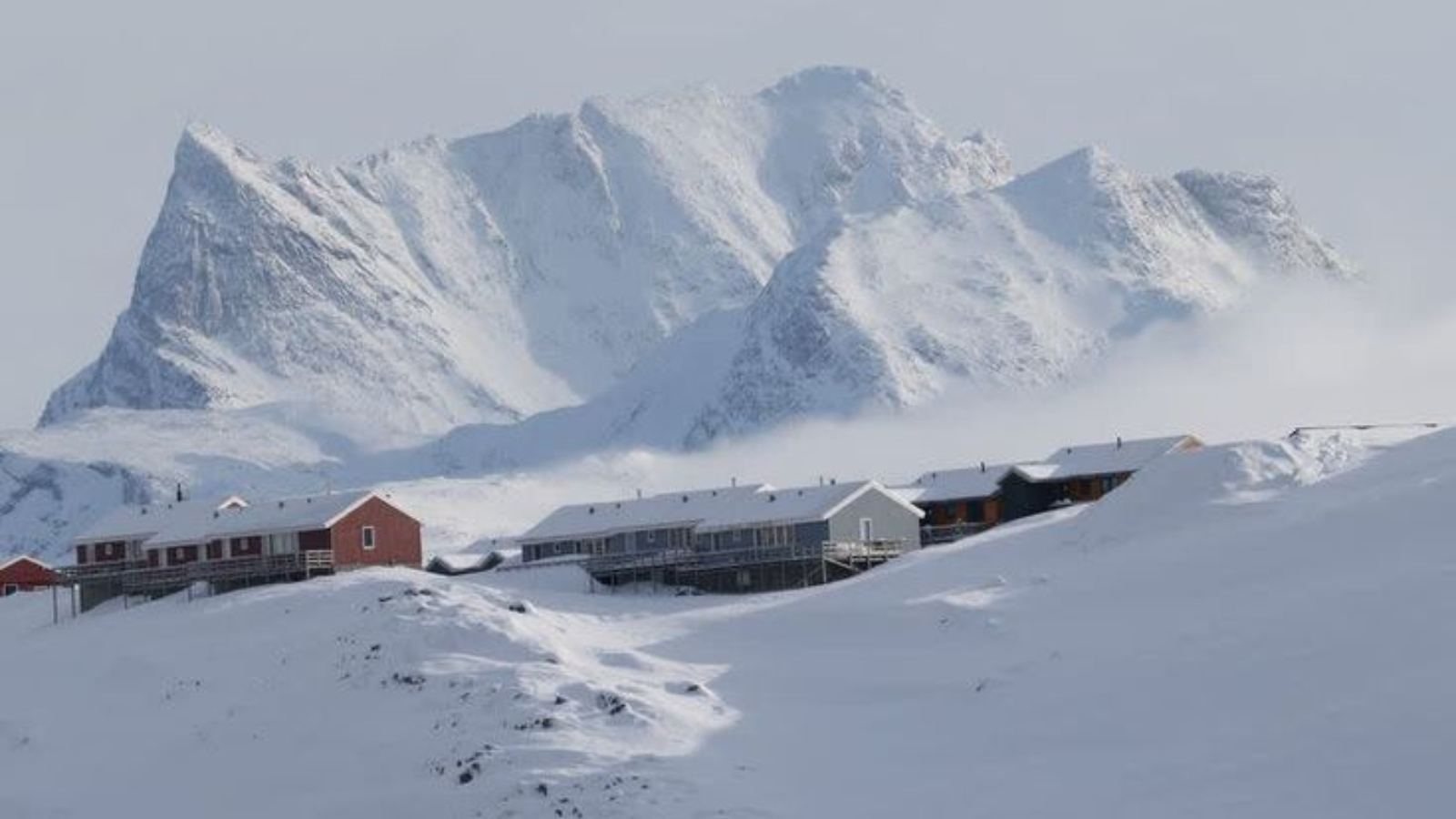

Long before Greenland became a talking point in modern geopolitics, its vast ice sheets and isolated settlements were quietly pulled into one of the most consequential rivalries of the 20th century. During the early years of the Cold War, as Washington and Moscow raced to outmaneuver each other across continents, Greenland emerged as a strategic prize hiding in plain sight. Its location, wedged between North America and Europe, made it an ideal vantage point for military surveillance and defense.
The turning point came through a little-known agreement between the United States and Denmark, the sovereign power over Greenland. Signed in 1951, the defense pact granted the U.S. extensive rights to build and operate military installations on the island. While framed as a mutual defense arrangement within the broader NATO alliance, its implications stretched far beyond routine cooperation. It effectively transformed Greenland into a forward operating base at the edge of the Arctic frontier.
Building America’s Arctic Shield
With the agreement in place, the U.S. moved swiftly to establish a military presence that would anchor its northern defense strategy. The most prominent result was Thule Air Base, constructed in the island’s northwest. Positioned deep within the Arctic Circle, Thule became one of the most critical outposts in America’s early warning system against potential Soviet attacks.
The base was not just a symbol of military might, but also a technological hub. Radar systems installed there were designed to detect incoming ballistic missiles, offering precious minutes of warning in the event of a nuclear strike. In an era defined by the constant threat of mutually assured destruction, those minutes could mean the difference between retaliation and catastrophe.
Yet the rapid militarization came at a cost. Indigenous Inuit communities living near the construction zones were displaced, often with little consultation or compensation. Entire settlements were relocated to accommodate the expanding base, leaving lasting social and cultural scars that continue to shape Greenlandic perspectives on foreign presence today.
Quiet Diplomacy, Lasting Consequences
The agreement itself was a product of quiet diplomacy rather than public debate. Denmark, recovering from the devastation of World War II, saw alignment with the United States as both a security guarantee and a political necessity. For Washington, securing Greenland was less about partnership and more about strategic inevitability. The Arctic had become a potential pathway for Soviet bombers and missiles, and Greenland was the linchpin in closing that gap.
What made the arrangement unique was its asymmetry. While Denmark retained formal sovereignty, the U.S. operated with significant autonomy within designated defense areas. This blurred line between cooperation and control sparked debates that would resurface decades later, particularly as Greenland began asserting greater self-governance.
Over time, the agreement evolved, but its core framework remained intact. Even after the Cold War thawed and the immediate threat of nuclear confrontation receded, the infrastructure and strategic logic it created did not disappear. Instead, they adapted to new realities, including missile defense systems and space surveillance capabilities.
A Legacy That Still Shapes the Arctic
Today, the echoes of that Cold War pact are impossible to ignore. Greenland has reemerged as a focal point in global strategy, this time amid rising competition in the Arctic involving not only the United States and Russia but also China. The same geographic advantages that once made it vital during the Cold War have taken on renewed significance in an era of shifting power dynamics and climate change.
Melting ice has opened new shipping routes and access to untapped natural resources, further elevating Greenland’s importance. As a result, the U.S. has reaffirmed its interest in maintaining and expanding its presence, while Denmark and Greenland navigate the delicate balance between sovereignty, economic opportunity, and geopolitical pressure.
For Greenlanders, the legacy of the 1951 agreement is complex. It represents both a moment of global relevance and a chapter marked by external control and local disruption. As discussions about independence and international partnerships continue, the island’s Cold War history remains a powerful reminder of how quickly remote places can become central to world affairs.
In the end, what began as a strategic necessity during a tense era has evolved into a lasting geopolitical reality. The agreement that once quietly reshaped Greenland’s role in the world still casts a long shadow, influencing decisions, alliances, and ambitions in the Arctic today.