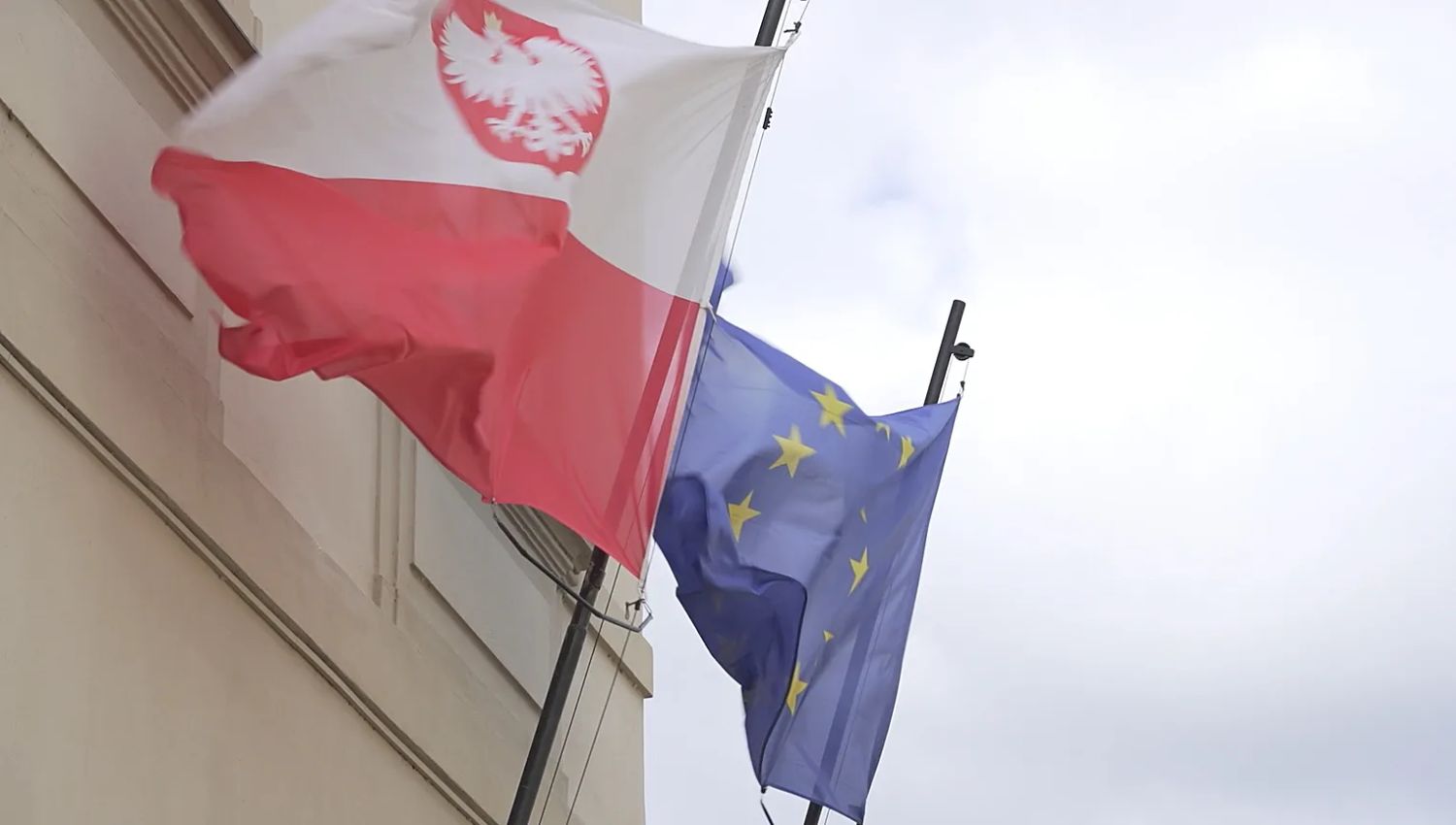
The largest expansion in the history of the European Union took place in 2004, when 10 mainly eastern and central European countries realised long-held ambitions of joining the bloc. Many were emerging from decades of communist rule, carrying hopes that home-grown businesses would flourish in a new climate of free enterprise.
That year proved transformative, enlarging membership to 25 states at the time. For most of the 10 newcomers, it amounted to a political and social revolution, a shift away from decades of Soviet influence towards a future aligned with Western European democracy. It also opened the door to the creation of thousands of new businesses across the incoming member states.
Green shoots of growth
Among those seizing the new opportunities was MADARA Cosmetics, an organic skincare and makeup producer based in Latvia.
“We decided to really focus on local nordic nature for our active ingredient research because this is where we come from, this is where our heart is,” recalls Lotte Tisenkopfa-Iltnere, co-founder of MADARA. Current CEO Gunta Šulte says membership has given the company enormous room to grow: “Being part of the EU from day one has set the thinking of the founders of this company; it’s going to be a global company.”
Based in Riga, MADARA began 18 years ago in a small flat with just a handful of people. Local plants and trees supply some of the key ingredients for its products.
“My favourite is birch water because like tapping birch water is a very particular Nordic tradition,” says Tisenkopfa-Iltnere. “When we did the cellular study, we actually realised that birch water that makes tree revive in springtime does very comparable effects, similar effects to skin cells.”
Making the most of the single market
Membership of the European single market shapes every part of the business, from international expansion to packaging.
“It is much easier to export, to make trade, to make agreements, because the cosmetic regulation is ‘homogene’ across the EU,” Tisenkopfa-Iltnere explains. “It makes less work for us for labelling, for legal departments, for quality department… I could only imagine what a difficult situation it would be if every country had a different regulation.”
A visit to the firm’s Riga headquarters revealed how EU membership allowed Latvian companies to think big.
“MADARA very well represents the sort of companies and entrepreneurship that emerged the mid 2000s with the Baltic countries joining the EU,” Šulte said. “You remove this barrier of physical borders or physical obstacles for goods flow. So it removes that barrier of thinking in your head and you already think global from day one.”
She added that MADARA has expanded across Europe and beyond, helped in part by e-commerce. “Over recent years we have seen very increasing demand for clean but also functional delivering formulas in Western markets. We have been rapidly growing in France and Germany. Last year in France we entered into more than 200 new retail doors,” she says.
A 20-year upward trend
The 10 countries that joined in 2004 have seen substantial economic growth. Trade costs have fallen and supply chains have become better integrated, benefiting both the new members and the existing EU states. The bloc has continued to grow since, with Bulgaria and Romania joining in 2007 and Croatia in 2013. Candidate status has since been granted to a further nine countries, including Albania, Serbia and Ukraine.
The Czech Republic was another member of the “class of 2004,” and Prague-based photovoltaics wholesaler Raylyst Solar is now Europe’s fastest-growing company, according to this year’s FT 1000 list. Germany has become Raylyst’s biggest market, says Marketing Manager Michal Petřek.
“The single market is very crucial for us. It’s free movement of products, it helps us to be faster, no taxes on the borders, it makes everything cheaper and in the end we hire a lot of people from foreign countries, including Germans and Italians.”
Towards a green economy
Surging demand for renewable power in Europe, driven by the move away from fossil fuels, allowed Raylyst to report annual compound growth of more than 800 percent between 2019 and 2022, according to Petřek.
“This market is successful because we need to make a transformation of our energy infrastructure and actually photovoltaic power plants offer a very interesting possibility to make this decentralisation of our grids,” he says.
Joining the EU in 2004 proved a game-changer for Latvia, the Czech Republic and the other member states, enabling the creation and growth of new businesses and new business models that continue to thrive two decades on.