

Poverty does not arrive as a teacher. It arrives as a condition, stripping away everything until what remains is only what cannot be taken: the night sky above a public park where a homeless child sleeps on her back, the specific weight of a worn piece of fabric pulled from a thrift store bin, the stubborn human refusal to stop finding things beautiful.
Robin Brown grew up in that condition. She raised her younger siblings while still a child herself, fed by neighbors and sustained by whatever beauty the margins of American life could offer. When she eventually sat down at a kitchen table and began stitching fabric together, she was not starting a business. She was continuing what she had always done: making something from nothing, and refusing to pretend otherwise.
What the Hands Remember
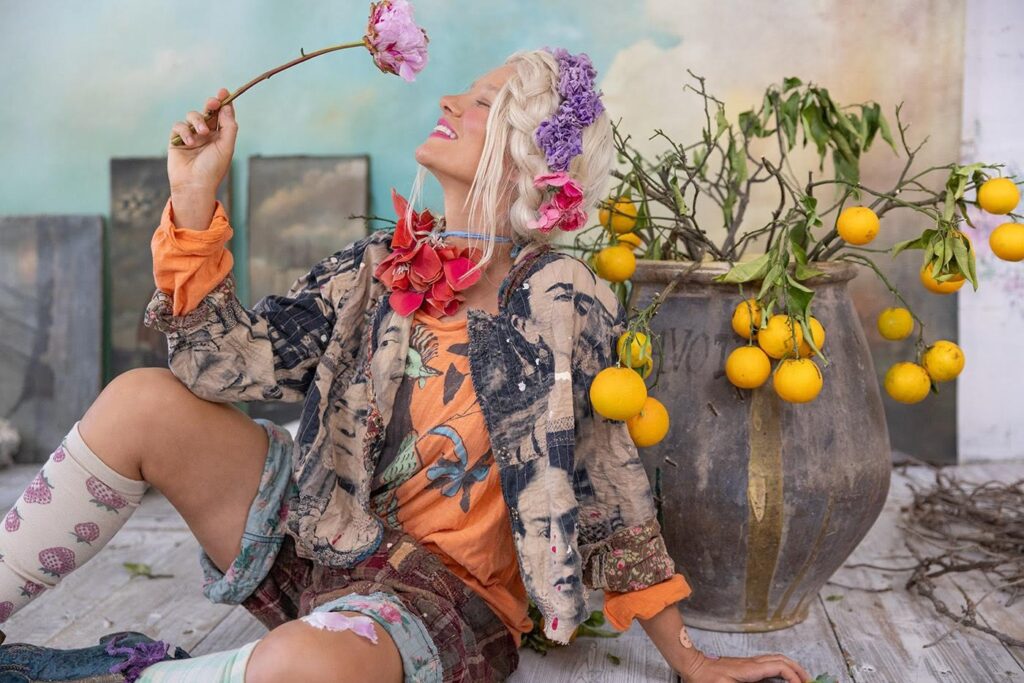
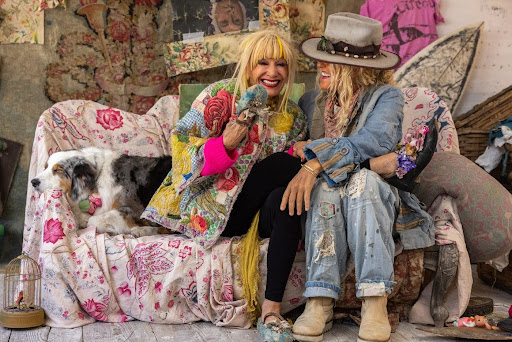
Magnolia Pearl began in 2002 with a backpack Brown stitched from a Last Supper tapestry and kite string, and the brand’s founding moment is almost too symbolic to believe. A stranger offered to buy that backpack for the exact amount Brown needed to retrieve her mother’s ashes from the funeral home. That is not a metaphor; that is the founding document of an enterprise that now sells in over 350 boutiques worldwide, counts Taylor Swift and Whoopi Goldberg among those who wear its pieces, and has raised over $550,000 for people living at the sharpest edges of American life.
The clothes themselves are the argument. Each piece is finished by hand, mended visibly, patched and painted with the kind of care that insists imperfection is not a flaw to be concealed but a truth to be honored.
The Market Rewards What Lasts
Fashion, as a system, is built on forgetting. Last season’s garment is this season’s embarrassment, and the landfill is the industry’s most honest product. Magnolia Pearl operates on entirely different logic. Pieces that originally retailed for $600 now resell for $1,400 or more, and earlier production runs command the highest premiums precisely because they are older, more worn, and more fully themselves. The global secondhand market is projected to reach $393 billion by 2030, and collectors who recognized Brown’s work early are sitting on something that appreciates the way art does, because it is art.
Magnolia Pearl Trade, the brand’s authenticated resale platform launched in 2023, charges the lowest seller fees of any online resale site, and every cent of those fees goes directly to the Magnolia Pearl Peace Warrior Foundation, the brand’s registered nonprofit. Twenty-five percent of proceeds from exclusive listings follows the same path. The architecture of the business is moral. The transaction and the donation are the same act.
What Survival Builds
Brown published her memoir, Glitter Saints: The Cosmic Art of Forgiveness, in 2024, with a foreword by Grammy Award-winning songwriter Patty Griffin. The book is, among other things, a record of what it costs to build something beautiful from conditions arranged to produce nothing of the kind.
The Foundation has directed its resources toward permanent housing for Indigenous American veterans, medical care for people experiencing homelessness, arts education for children in Brooklyn, and wildfire relief in California. These are not causes chosen for optics. They are the causes of someone who has been cold and hungry, and who watched the country’s most vulnerable populations disappear from the stories America tells about itself.
Magnolia Pearl is not a redemption story, because redemption implies something was broken and then fixed. What Brown built is closer to testimony: evidence that beauty, made by hand and given freely, is not a luxury the world can afford to waste.