

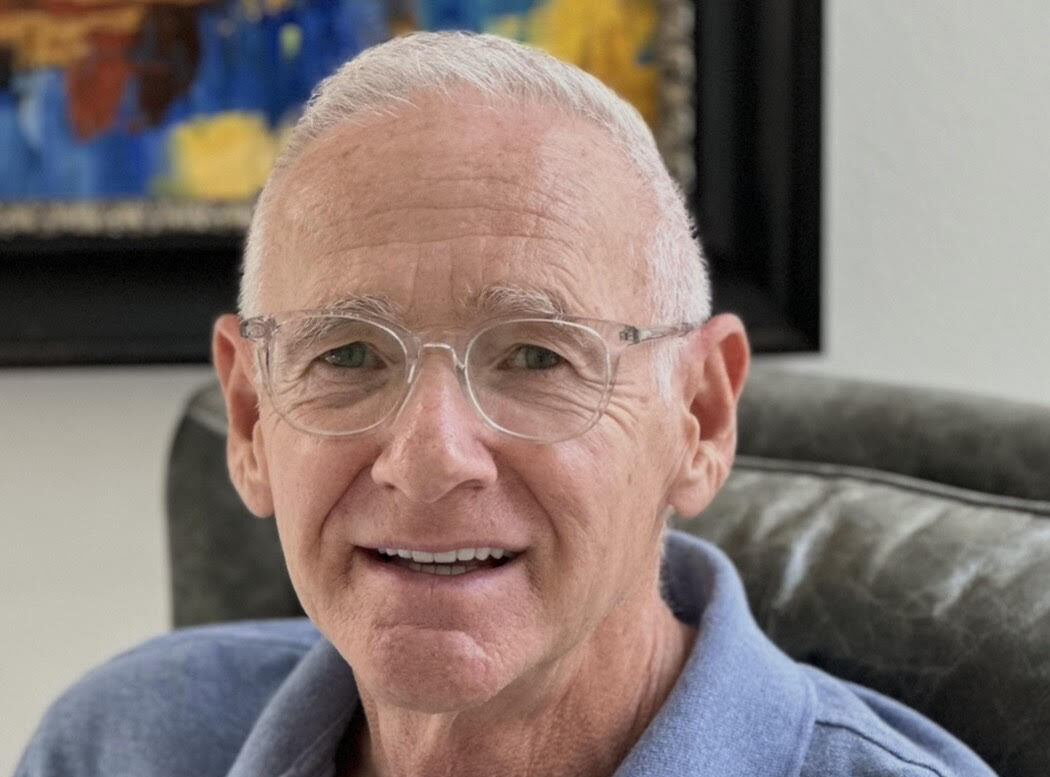

When antibiotics stop working, patients and families are often told there is nothing left to try. For Chris Shaffer, founder of Phage One Voice, that reality raises a difficult but necessary question: could race car driver Kyle Busch have been saved by a treatment he likely never heard of?
Shaffer does not claim certainty. Without full access to the details of Kyle Busch’s medical case, no one can say definitively whether phage therapy would have changed the outcome. But Shaffer believes the more urgent point is this: when a patient is running out of antibiotic options, they should at least be told that another therapy exists.
That conviction comes from experience. Shaffer himself endured a multi-year drug-resistant infection and reached a point where conventional antibiotics were no longer solving the problem. With few viable options left, he turned to phage therapy. He says it cured him. Today, that experience drives his mission to make sure no patient dies of a bacterial infection without first hearing the words “phage therapy.”
When antibiotics fail
Kyle Busch’s case, at least as it is publicly understood, points to a broader crisis that doctors already know too well. A bacterial infection can begin as manageable, then become persistent, resistant, and eventually unresponsive to the strongest drugs available. When that happens, physicians are often left trying one antibiotic after another while the patient grows weaker and time disappears.
Shaffer says that is exactly where the medical conversation must change. He believes phage therapy should not be treated as a fringe idea or a last-minute internet search. It should be part of the discussion whenever a serious bacterial infection is no longer responding to standard treatment.
The need is larger than any single case. Bacterial infections kill more than 1,000 people every day in the United States, and antimicrobial resistance has become one of the defining medical threats of the modern era. Many of those deaths occur after patients have already cycled through multiple antibiotics. For Shaffer, that makes silence about phage therapy harder to justify.
Phage therapy uses bacteriophages, viruses that infect and kill specific bacteria. Because phages can be matched to the strain causing the infection, they offer a level of precision that broad-spectrum antibiotics often cannot. The treatment is not experimental in the sense of being newly imagined; it has been studied and used for decades, though access in the United States remains limited.
That gap between scientific possibility and real-world access is where Busch’s story becomes emblematic. Shaffer’s argument is not that phage therapy guarantees survival. It is that patients should not die without being told that it may be an option worth pursuing.
Building a path from doctor to phage
Phage One Voice was created to close that gap. Its goal is straightforward but ambitious: build a real pathway from physician to phage treatment so doctors are not forced to improvise when a patient is running out of time.
Today in the United States, phage therapy is mostly confined to academic centers, research programs, and compassionate-use cases. That means patients often need a rare specialist connection, a research institution willing to help, or the ability to navigate a slow regulatory process while critically ill. Shaffer wants to change that by helping create a system that is faster, clearer, and more accessible.
His nonprofit advocates for a larger therapeutic and teaching phage library, better diagnostics, clearer application protocols, and more widespread education for doctors and veterinarians. The idea is to make phage therapy something clinicians can realistically reach, rather than something they only discover in moments of desperation.
Shaffer often points to his own story as evidence of why that system matters. After more than two years of failed antibiotic treatment for a stubborn, resistant infection, he traveled to Tbilisi for custom phage therapy. He says the infection was eradicated in roughly four months. That experience shaped his belief that other patients deserve the same chance before it is too late.
One voice, many lives
Phage One Voice is still building, but its message is already clear. The organization does not present phage therapy as a replacement for antibiotics. Instead, it sees phages as a critical companion to conventional medicine, especially when standard drugs stop working.
In the short term, the group wants to raise public awareness so families facing resistant infections know to ask about phage therapy. In the medium term, it is seeking support for infrastructure, including phage libraries, diagnostics, and clinical training. In the long term, Shaffer envisions a healthcare system where no physician has to tell a patient that all options are gone without first considering whether phages could help.
“We are moving beyond academic walls and clinical-trial walls to make the public aware of the potential of phage therapy to be a game changer in the treatment of infectious disease in all areas of human health, animal health, farming and agriculture, aquaculture and cosmetics,” Shaffer says.
For him, the moral issue keeps returning to the same question: is it acceptable for a patient to die of a resistant bacterial infection without ever hearing that another treatment exists? His answer is no.
“We aim to make the public and medical community aware of phage therapy so that demand for the therapy rises,” he says. “Phage work should be commonplace, not hidden in a few labs while people run out of time.”
Kyle Busch’s case may never come with complete public answers. But Shaffer believes the lesson is still unmistakable. When antibiotics fail, patients deserve to know what else is possible. And if Phage One Voice succeeds, more families will hear about phage therapy before hope runs out.