
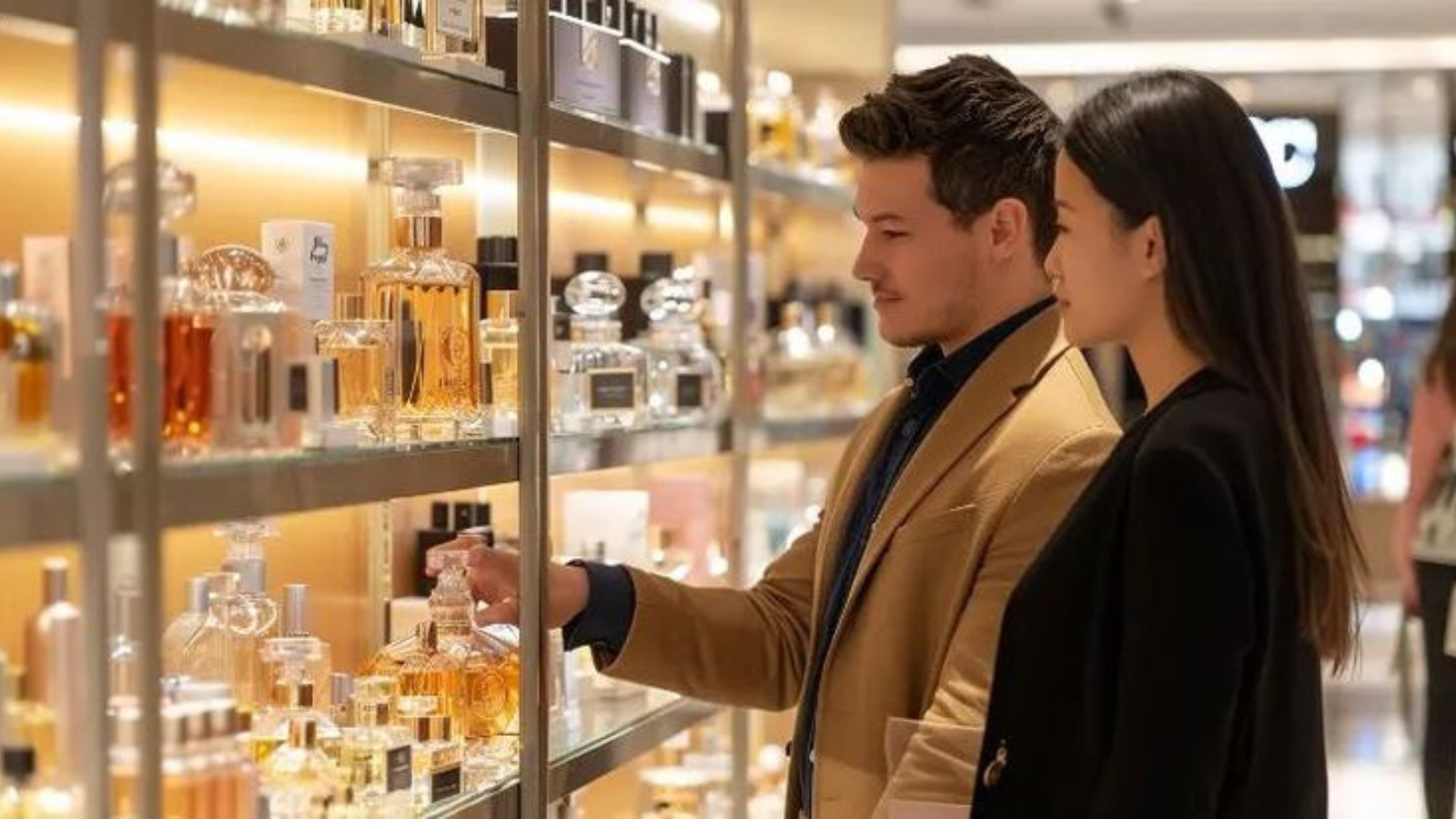

On a department-store fragrance floor, the experience can feel like sensory overload. You are surrounded by counters offering blotter strips from every angle, and even the ritual bowl of coffee beans is not enough to reset your nose between tests. With thousands of bottles competing for attention, the simple question of “What’s mine?” becomes surprisingly hard to answer.
Plenty of people look for shortcuts. TikTok can point you toward a dupe for Maison Francis Kurkdjian Baccarat Rouge 540, though devotees will tell you the original still stands alone, and glossy descriptions can explain why Glossier You shifts depending on who wears it. Still, scent is stubbornly personal, and the most reliable authority on what smells right has always been you, unless a machine can get close enough to make a case.
That possibility is starting to reshape the old rules of discovery and creation. Artificial intelligence has begun nosing into a field that, for centuries, has depended on human perfumers trained through long apprenticeships, guided by memory, intuition, and their own sense of smell.
A Craft Built by Humans, Pressured by Time
The industry’s legends underline what is at stake. Master perfumer Anne Flipo has created widely recognized fragrances such as Lancôme’s La Vie Est Belle and YSL’s Libre, Dominique Ropion is known for Frédéric Malle’s Portrait of a Lady and Paco Rabanne’s Invictus, and Rodrigo Flores-Roux helped shape scents like Clinique’s Happy and Tom Ford’s Neroli Portofino. Their work may span different styles, but it shares a common requirement: deep knowledge of ingredients, composition, and the ability to evaluate a formula with the nose as the final judge.
Behind the romance, the making of a modern fragrance is often an extensive group project. A brand’s brief moves to a fragrance house, then a network of perfumers, evaluators, sales teams, regulatory specialists, and marketers develops candidates that match what the client asked for. The formula is produced in a lab, shown to the brand, and either approved or returned for revisions, sometimes more than once, which is why even veterans are eager to compress the timeline without losing the craft.
Calice Becker, vice president perfumer at Givaudan and director of Givaudan Perfumery School in Paris, saw that opportunity and pushed for a different kind of support system. In 2018, she helped usher in Carto, an AI-driven platform designed to speed early formulation work by pairing a large touchscreen interface with a system that can produce samples quickly.
When AI Joins the Perfumers’ Table
Carto is often described as a kind of brain for a wide touchscreen experience, built to help perfumers explore ideas visually rather than relying solely on the traditional spreadsheet approach. Givaudan has described Carto as an AI-powered tool that uses an “Odour Value Map,” and the experience includes a wide touch screen plus an instant-sampling robot to produce fragrance trials at speeds traditional sampling cannot match. In practice, the promise is simple: less time stuck in slow loops, more time evaluating what an idea actually smells like.
Becker has framed the tool as a way to create quick, rough sketches of scents that a perfumer can refine, rather than a replacement for artistry. The idea is not that a screen becomes the author of a perfume, but that it can widen the field of combinations a perfumer can test and make experimentation feel immediate. The shorthand comparison is already out there, with some calling it the ChatGPT of fragrance development.
There are also practical pressures that make speed and flexibility more than a luxury. In Europe, lawmakers have reevaluated regulation around the classification, labeling, and packaging of chemicals, including how natural substances used in fragrance are treated, which could affect large numbers of existing formulas that would need changes to remain on shelves in Europe and in other markets that follow EU standards. For brands facing reformulation, AI tools could theoretically help model alternatives and adjust formulas faster as rules evolve.
Even enthusiasts of the technology draw a line around what it can do. Carlos Huber, the founder of Arquiste, has called using AI as a tool exciting and sees room for more refined, precise perfumery, while also arguing it will never fully substitute for the human touch.
From the Lab to Your Brainwaves
AI’s ambition does not stop at efficiency. International Flavor & Fragrances has used its Science of Wellness program to develop tools that combine an expansive fragrance palette with consumer and neuroscience data, aiming to build scents tied to emotional response. One example described in this vein is Paco Rabanne’s Phantom eau de toilette, which involved an EEG-measuring device taking 45 million brain measurements from men aged 18 to 35 while an algorithm proposed ingredient adjustments, with results that supported increasing a molecule called styrallyl acetate alongside a creamy lavender accord to amplify feelings like sexiness and energy.
That same logic is now being translated into retail, where the question is not only how a fragrance is made, but how it is matched to a person. YSL Beauty’s Scent-Sation has been presented as an in-store experience built around a neuro-connected headset that uses EEG. In a separate description of the experience, customers answer preference questions, then wear an EMOTIV EEG headset while testing scent accords, after which the system recommends three Yves Saint Laurent fragrances based on biometric reactions.
In the version described in your article, the customer smells six accords without labels while the headset reads neural activity, and the model narrows the field from a larger set into a short list in about 20 minutes. However futuristic it looks, the pitch is familiar: fewer random guesses, less fatigue, and a quicker path to something that feels like it was chosen with you in mind.