
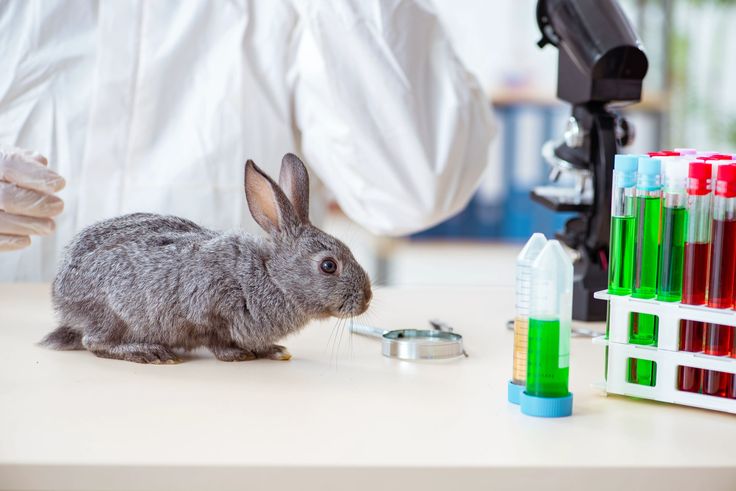

AI is starting to change how scientists use past animal-test results, with researchers increasingly viewing AI-driven analysis of existing data as a practical way to avoid running new, potentially unnecessary animal experiments.
When old experiments become searchable
For decades, the scientific world has searched for credible ways to reduce reliance on animals in research, but progress often ran into a simple problem: the evidence already exists, scattered across countless studies, journals, and archives. Now AI is accelerating that hunt by taking on a task that is both basic and transformative, scanning and organizing worldwide animal-testing findings so researchers can see what has already been learned before starting another experiment.
In practice, this kind of AI use does not require a futuristic lab or a single breakthrough discovery. The immediate value is logistical and human: instead of teams spending months combing through decades of papers, AI systems can help locate, pull together, and interpret relevant details in a way that supports quicker decisions about whether a new animal study is truly necessary.
That benefit matters because scientific research is not only limited by ideas; it is limited by time, attention, and the sheer volume of published material. Joseph Manuppello, a senior research analyst at the Physicians Committee of Responsible Medicine, has pointed to this exact challenge, noting that it can be difficult for scientists to search across decades of data and isolate precisely what they need.
AI as a reader, not just a calculator
The promise here is not simply that AI can “find” studies, but that it can behave like a tireless reader that extracts meaning from scholarly work at scale. Thomas Hartung, a toxicology professor at Johns Hopkins University who also leads the Center for Alternatives to Animal Testing, has argued that AI can be as good as, or even better than, humans at pulling information out of scientific papers.
That claim signals a shift in how AI is being discussed inside research circles. Instead of treating AI as a narrow tool for statistics or pattern matching, the conversation is turning toward AI as a system that can summarize, connect, and retrieve scientific evidence across large bodies of literature, turning dispersed findings into something researchers can actually use.
Even so, the underlying goal remains straightforward: reduce redundant experiments by making existing results easier to access and interpret. If researchers can confirm that a question has effectively been answered already, or that a specific toxicity signal has been documented elsewhere, then new animal testing becomes harder to justify on scientific grounds.
The pressure point: new chemicals
One reason animal testing persists, Hartung has said, is the practical requirement to assess new substances entering development pipelines. The testing burden is not small, because there are more than 1,000 new compounds arriving on the market each year, creating a constant stream of materials that need evaluation.
In that context, AI’s appeal is not just ethical or administrative; it is operational. With so many new compounds to review, the ability to quickly predict risks could help researchers and developers decide what deserves deeper scrutiny and what might be ruled out, or deprioritized, earlier in the process.
Hartung has also noted that trained AI systems are beginning to predict the toxicity of new chemicals. That matters because toxicity evaluation is one of the most common reasons animals are used in preclinical work, so even partial improvement in prediction could reduce the number of animals used for experiments that merely repeat established patterns or confirm already well-known dangers.