
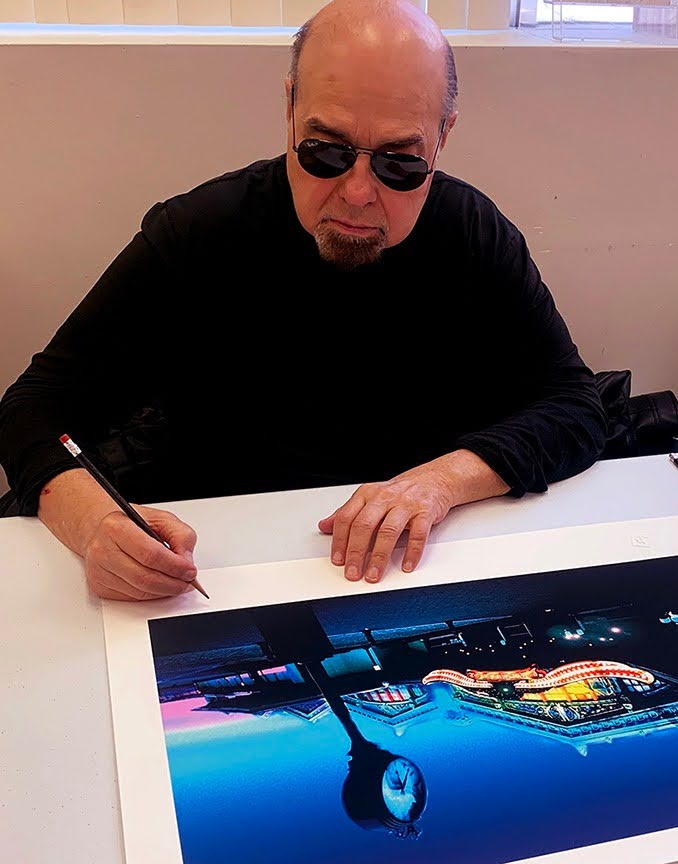

In 1994, renowned album cover artist, creative director, and rock historian Ioannis [Vassilopoulos] stood before executives at a record label, watching their faces contort with uncertainty as they studied his latest creation. The painting—a surreal, fantastical landscape meant to adorn The Allman Brothers Band’s album “Where It All Begins”—represented everything the Greek-born artist believed album art should be: immersive, emotional, transcendent.
The label representatives, however, saw only risk. Too abstract, they thought. Too removed from the band’s established visual identity. The painting seemed destined for rejection until Gregg Allman himself intervened.
However, that once-contested artwork hangs in The Allman Brothers Band Museum today, a testament to Ioannis’ artistic vision and his ability to connect music and its visual representation. It’s just one chapter in a four-decade career spent translating sonic vibrations into visual storytelling, creating over 350 album covers that have become as iconic as the music they house.
From Athens To Rock Royalty
Ioannis’s journey to becoming a rock visual artist began far from the recording studios in America. Born in Greece, he immigrated to the U.S. as a child in 1967, carrying little but an imagination.
“When you’re torn from one world and placed in another, you develop a unique perspective,” Ioannis shares. “You’re always translating between cultures, which is essentially what I do when translating music into visual language.”
His professional breakthrough came while still in college, painting his first album cover for the band Art in America in 1983. This early work caught industry attention, placing him at management company Lieber and Krebs, where he designed for rock titans, including Aerosmith and AC/DC. By 1995, his reputation had grown such that Bon Jovi tapped him as creative director for their world tour—placing his imagery on everything from merchandise to stadium banners.
For a Greek immigrant who once struggled to find his place in American culture, seeing his art projected onto Madison Square Garden represented both personal validation and professional growth.
The Emotional Architecture Of Sound
Art in the U.S. is already a crowded field, but what distinguishes Ioannis in the industry isn’t merely his technique but his conceptual approach. Unlike commercial illustrators who prioritize literal representation, the renowned album cover artist functions more as a visual translator, designing “emotional architecture” for each album.
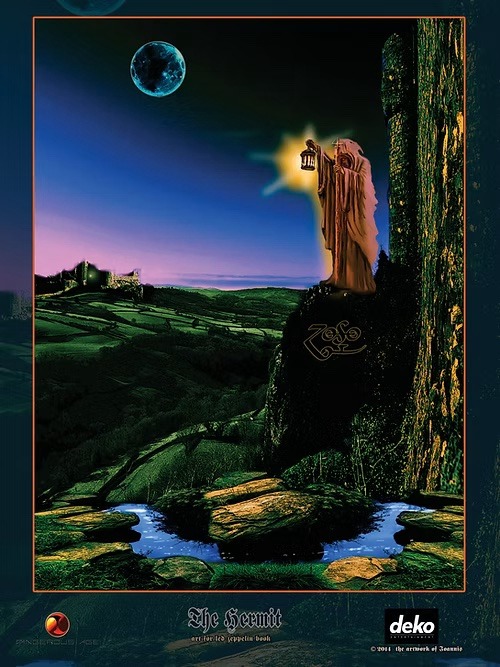
Photo courtesy of Dangerous Age
“I don’t just paint what the band members look like or what the lyrics describe,” Ioannis mentions. “I’m trying to capture how the music makes you feel—the emotional resonance, the psychological landscape you enter when listening.”
For instance, Ioannis’ 1986 album cover for “Awaken the Guardian” for progressive metal pioneers Fates Warning depicts a cloaked, mysterious figure holding a mystical orb against a fantastical backdrop. What makes this cover extraordinary is how it captures the band’s mystical themes and technical complexity through unique imagery.
The artwork didn’t just sell an album; it defined an entire subgenre’s visual identity and continues to influence metal aesthetics decades later. This album cover became one of the most recognized images in metal history, often appearing on lists of the greatest prog-metal album covers of all time.
Additionally, Ioannis’ “The Freddie Mercury” collaboration with legendary photographer Mick Rock represents his most poignant storytelling. Starting with one of Rock’s never-before-released photographs of Mercury, Ioannis hand-painted layers of color and texture over the image.
The resulting portrait captures not just Mercury’s iconic presence but the emotional resonance of his performances. This hybrid creation demonstrates Ioannis’s ability to enhance existing narratives through artistic intervention, adding emotional depth to documentary photography.
This approach explains why, for collectors, owning an Ioannis original or limited-edition print represents more than decorative value—it possesses a physical manifestation of an emotional experience. His limited editions, typically producing just 300 hand-signed prints, regularly sell out within days of release, with original paintings commanding five-figure sums at auction.
The Last Guardian Of A Classic Art Form
As digital templates and AI-generated imagery dominate visual media, Ioannis, through his platform, Dangerous Age, remains among the last practitioners of traditional hand-painted album artwork. From his Massachusetts studio, brushes splayed in paint-spattered jars, he creates the way craftsmen did before Photoshop existed—one meticulous brushstroke at a time.
“Digital tools are incredible for what they do,” Ioannis acknowledges. “But there’s something about the physical engagement with paint that creates imperfections, happy accidents, and a tactile connection you can’t replicate with pixels.”
This philosophical stance has made him both an outlier and a sought-after commodity in today’s music industry. At the same time, many contemporary artists outsource cover design to digital agencies. Legendary acts like Deep Purple, Styx, and Dream Theater commission Ioannis when they want artwork that feels as painstakingly crafted as their music.
Reimagining What Is Possible In Album Art Cover
Despite his mastery of traditional craftsmanship, Ioannis approaches the digital frontier with profound curiosity. His forthcoming “Digital Gothic” project is a big leap that embodies the philosophical belief that true artistry requires constant exploration beyond comfortable boundaries.
Ioannis brings classic rock art into the digital age and understands how emotional connections form in contemporary digital spaces by venturing into immersive multimedia that merges his hand-painted surrealism with original music and AI-enhanced animation.
As streaming continues to flatten music into algorithmic playlists without visual context, Ioannis’s hand-painted covers remind people of the power of imagery to deepen their connection to music. Through art, songs remain not as sounds but as something people can see and almost touch, making them still vibrantly human.