

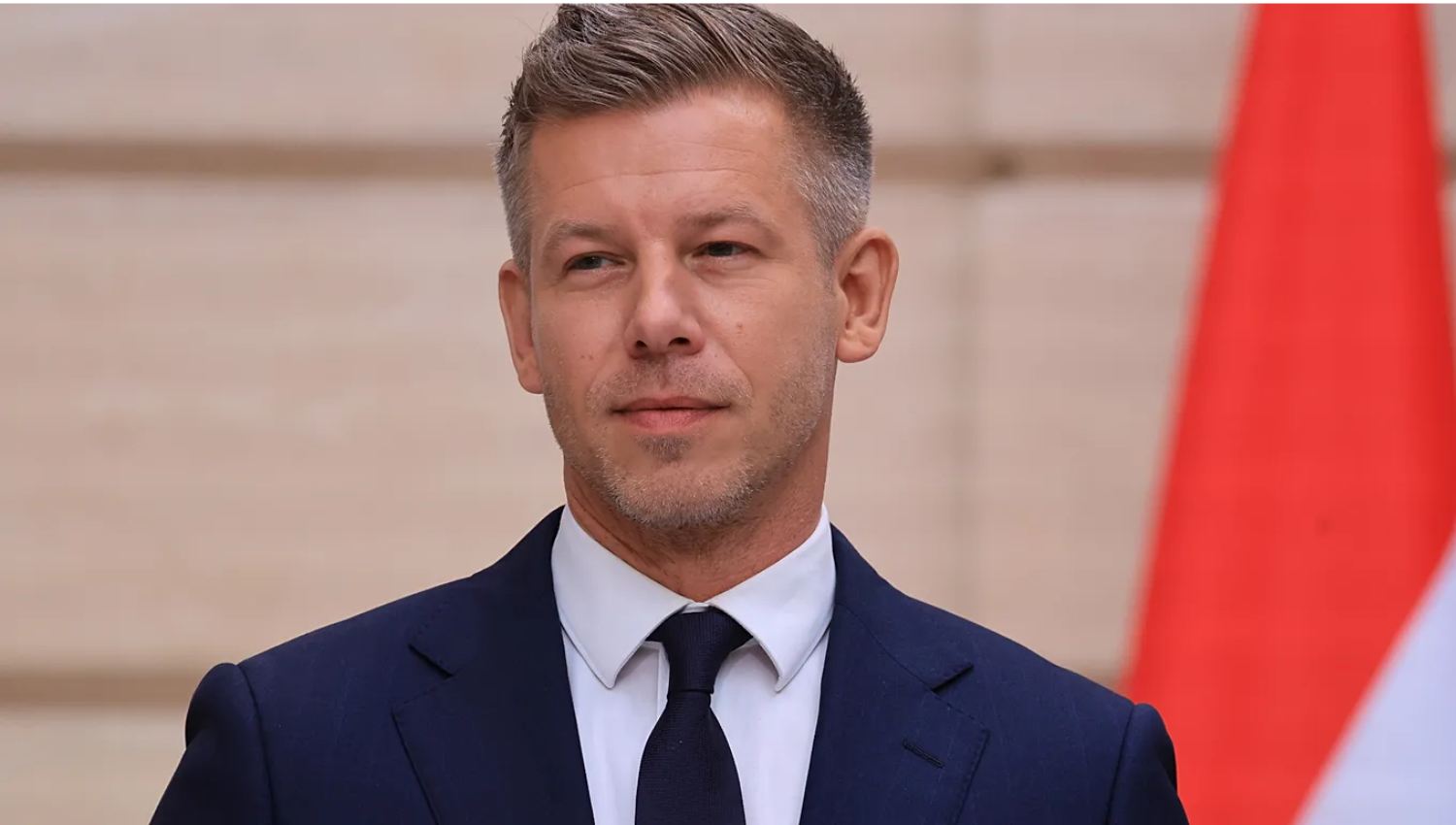
On the evening of 12 April, Viktor Orbán picked up the phone and spent about a minute congratulating Péter Magyar on the centre-right Tisza Party’s election win, conceding defeat after a long run as Hungary’s far-right prime minister.
That short call also marked the beginning of the end for the political, legal and economic architecture Orbán had spent 16 years assembling to keep Fidesz in power.
The scale of Magyar’s victory handed him a two-thirds parliamentary majority — the bar Hungarian law sets for amending the constitution and passing the “cardinal laws” that govern the country’s central institutions. It is the same instrument Orbán once wielded, and it gave the incoming prime minister room to rewrite the constitution and reshape major legislation with little resistance.
Magyar had not campaigned on replacing a government so much as replacing a system, and he began immediately, demanding the resignation of President Tamás Sulyok along with other senior figures.
“Let them leave, leave. Don’t wait until we send them away,” he said on election night.
He took office in May. Within months the load-bearing walls of Orbán’s structure had come down: the president was out, the chief prosecutor had resigned, and the government’s once-dominant media apparatus had stopped functioning. Here is how it unfolded.
What Orbán built
Orbán won his own supermajority in 2010 and used it to construct the System of National Cooperation, known in Hungary by the acronym NER and marketed as a fresh social contract with voters.
Critics read it differently — as a centralised political and economic machine designed to advance Orbán’s “illiberalism”, his own label for an alternative to classical European liberal democracy.
“Imagine it as a board game in which one player can rewrite the rules at any moment to suit his own interests — moving forward five squares if necessary, sending an opponent back to the start, or removing them from the board altogether,” political analyst Szabolcs Dull told Euronews.
Legislation moved quickly through a compliant parliament. From 2020, Orbán increasingly governed by decree, first under a coronavirus state of emergency and later, after 2022, on the grounds of the war in Ukraine. Loyalists filled key institutions, hollowing out oversight, while the public broadcaster MTVA and some 500 outlets held under the KESMA media group carried the government line.
Dull said tearing that system down, and removing the people who ran it, had been Magyar’s single most popular commitment. “This is what brought him the greatest popularity. This is what voters now expect of him.”
The president and the prosecutor
Removing Tamás Sulyok was arguably Magyar’s biggest political scalp. The former president left office in mid-July following a constitutional amendment — one he signed himself — that declared his mandate at an end.
The same amendment capped parliamentary mandates at 12 years and imposed a retirement age of 70 on constitutional judges, which pushed out Constitutional Court president Péter Polt, a long-standing Orbán ally.
“They terminated the mandate of the sitting president without any legal argument — simply because they politically disagree with him. I find that unacceptable,” Balázs Orbán, formerly Viktor Orbán’s political adviser, told Euronews.
Magyar had argued for months that Sulyok served his party rather than his country. Dull said the removal mattered in practical terms as much as symbolic ones: “The Hungarian president has the right to pardon convicted people. Magyar has promised to hold those linked to the old system accountable — he cannot risk the president pardoning them.”
The new government also removed four secret service chiefs, counterterrorism police (TEK) head János Hajdu, Orbán’s former spokesperson Bertalan Havasi and the head of the Government Audit Office. The Sovereignty Protection Office, which had gone after foreign-funded media and NGOs and drawn sustained criticism from the European Commission, was closed.
June brought another win for Magyar when Chief Prosecutor Gábor Bálint Nagy stepped down under political pressure.
“The prosecution service must not become an instrument in political struggles, nor a stage for day-to-day power games,” Nagy said in a statement.
Dull treated the resignation as a landmark: “In certain cases, investigations were either never opened or were suspended — cases that were plainly inconvenient for the Orbán government.”
Chasing the money
In late July, parliament created the Asset Recovery and Asset Protection Office to examine corruption during the Orbán years and claw back state assets. Hungary has spent years near the bottom of EU corruption rankings, and businessmen in Orbán’s orbit collected a substantial share of state contracts.
The names include Lőrinc Mészáros, Orbán’s childhood friend and Hungary’s wealthiest man, with holdings across construction, tourism and agriculture; his son-in-law István Tiborcz, who became a billionaire over the Fidesz era; and his father, Győző Orbán, a significant figure in mining who won road and rail work. All say they operated within the law, though their affairs are expected to come under scrutiny.
“A key campaign promise of the Tisza party was that those responsible for criminal corruption under Fidesz would be held accountable. What we’re seeing is the start of a process likely to continue for the foreseeable future,” analyst Daniel Hegedűs said.
Investigators are also examining the Matolcsy affair, which concerns the alleged disappearance of roughly 500 billion forints (€1.38 billion) from the Hungarian National Bank and centres on former governor György Matolcsy and his son Ádám.
Within days of the election, Magyar asked the tax authority (NAV) to freeze transfers of Orbán-linked assets heading to accounts in the UAE, Singapore and the United States. NAV went on to block several.
Hungary is set to join the European Public Prosecutor’s Office later this year, which will allow investigations into EU fund fraud dating back retroactively to July 2021.
Prosecutors have opened criminal cases against several former senior officials, with Orbán himself a possible target.
Former TEK chief Hajdu was questioned over the Ukrainian money convoy episode, in which Hungarian commandos stopped two cash-carrying vehicles belonging to Ukraine’s Oschadbank in March, in the closing stretch of the campaign. Seven staff were detained and later expelled, and millions of euros in cash along with gold bars were seized. Hajdu is not a suspect in the unlawful-detention case.
Hungarian media reported that Orbán was at TEK headquarters the day of the raid. “It would not only have been important to detain János Hajdu, but also to investigate and detain three others, including Viktor Orbán,” the lawyer for the Ukrainian couriers told Euronews in June, suggesting that Nagy — who resigned weeks afterwards — may have provided Orbán with a “safety net”. Orbán maintains the operation was lawful.
A separate case involves the alleged diversion of National Cultural Fund money into Fidesz campaigning. Seven people have been detained, among them the chief of staff to former culture minister Balázs Hankó. Prosecutors have also taken Fidesz’s data servers, cutting off much of the party’s internal communication.
“This has nothing to do with the corruption case, which we believe is itself fabricated. Even if you wanted to investigate that, it doesn’t follow that you need access to all of the party’s data,” Balázs Orbán said.
Fidesz comes apart
In late April, Orbán said he would not take his seat in parliament, closing out 36 unbroken years in the National Assembly.
“We don’t need me in parliament right now, but in the reorganisation of the national side,” he said, explaining that he would concentrate on rebuilding Fidesz and had taken the party leadership for a year.
June brought the so-called “lex Orbán”, which limits any prime minister to eight years in office. Because it counts from 1990, it bars Orbán from ever holding the post again. The 12-year cap on parliamentary mandates, applied retrospectively, keeps a number of veteran Fidesz figures off the ballot at the next election.
“Half of the opposition and its most powerful leaders were excluded from politics through personalised, retroactive laws. This is the end of democracy — because if it is not the people who decide who to vote for, but the government that decides who they may vote for, democracy is over,” Orbán responded.
The months since have arguably been the worst in the history of a party founded before communism fell. Parliamentary group leader Gergely Gulyás resigned over the new mandate limits. Former foreign minister Péter Szijjártó left parliament in July for a management post at Chinese electric-vehicle maker BYD, while former transport minister János Lázár and veteran strategist Antal Rogán have largely stepped back from public life.
The media reckoning
In early July, viewers of state broadcaster MTVA were met with a black screen carrying a single message:
“Public media cannot lie. We apologise for having done so.”
MTVA had long been regarded, at home and abroad, as an arm of the government. Its chief executive Dániel Papp was convicted in 2018 of manipulating a news report and resigned soon after the election. The Organization for Security and Co-operation in Europe has criticised the broadcaster repeatedly for systemic bias and for tilting the electoral playing field.
Once the news service was shut down, an interim management team said the company would be rebuilt as an independent and credible broadcaster, delivering one of Magyar’s central campaign promises. Senior editors were dismissed the same day.
The upheaval spread far past MTVA. Mediaworks, which publishes several pro-Fidesz newspapers and runs radio stations under KESMA, cut hundreds of jobs as its finances deteriorated. Mandiner, tied to the Mathias Corvinus Collegium, announced 60 redundancies. Megafon, which had bankrolled pro-Orbán influencers, shut down completely.
Dull traced the collapse to a single revenue stream: “Fidesz media survived because state-owned companies advertised there. Once the government changed, that advertising stopped, and many outlets found themselves in commercial difficulty — they had been living off the state to fulfil a political function.”
Universities, culture and public money
MCC, the educational institute closely associated with Orbán, is under financial strain and may close. The public-interest trust that runs it will be dissolved and its assets taken into state hands — a heavy blow given that a 2020 transfer of state assets left MCC holding 10% stakes in energy company MOL and pharmaceutical firm Richter, worth tens of billions of forints in dividends each year.
Fifteen further public-interest trusts handling non-university functions will also be wound up, and Fidesz appointees are being removed from university boards.
The culture ministry, meanwhile, has started examining how public money was spent under the previous government. Poet János Dénes Orbán, no relation to the former prime minister, received 412 million forints (€1.14 million) from the Carpathian Basin Talent Development Nonprofit, a state body he himself ran. Others received comparable sums during the campaign period.
Is any of this democratic?
Fidesz frames the whole project as an assault on democracy, reserving its sharpest objections for the manner of the president’s removal.
“They terminated the mandate of the president. They banned the former prime minister from returning. They banned roughly half the Fidesz parliamentary group,” Balázs Orbán said. “That’s just the beginning — where does this end?”
Magyar dismisses the charge of authoritarianism outright: “The law is not arbitrariness. Freedom is not oppression. The party is not the state. Justice is not dictatorship. Politics is not plunder. The homeland belongs to every Hungarian. Welcome to the new Hungary.”
Hegedűs contends that what Orbán ran amounted to genuine state capture, which leaves the new government little alternative:
“In dismantling state capture and restoring institutional independence during a re-democratisation phase, removing political appointees of the previous captured regime may be unavoidable.”
Orbán’s allies on the European right, Marine Le Pen and Matteo Salvini among them, attacked Magyar over the seizure of Fidesz’s servers. Dozens of right-wing MEPs wrote to the European Commission about the condition of Hungarian democracy, asking: “Why is the Commission now silent when a government is openly violating European constitutional principles?” A separate letter from Fidesz MEPs claimed that closing the state broadcaster’s news service violated EU law.
The Commission, which pursued multiple proceedings against Hungary over rule-of-law backsliding and corruption during the Orbán years, has largely welcomed the changes, calling them a “radical change” in its annual rule-of-law report in July. Budapest has signed up to a set of rule-of-law and anti-corruption commitments in return for €16.4 billion in previously frozen EU funds.
Justice Commissioner Michael McGrath has defended the president’s removal in comments to Euronews: “It’s inevitable when you have such a seismic change in the political landscape of a country that there will be issues, and there will be changes in personnel.”
Dull said many Hungarians now want assurances written into the institutions themselves, so that Magyar cannot dig in the way his predecessor did — and noted that the prime minister has already accepted certain constraints.
“If we start talking about a ‘Magyar system’, we already know when it will end. The legislation limiting the prime minister’s mandate to two terms applies to him as well,” Dull said.
The real measure of Magyar’s intentions, he added, will be the new constitution, a process likely to run at least 18 months. “We will see from the details whether he intends to build a new system or not.”