
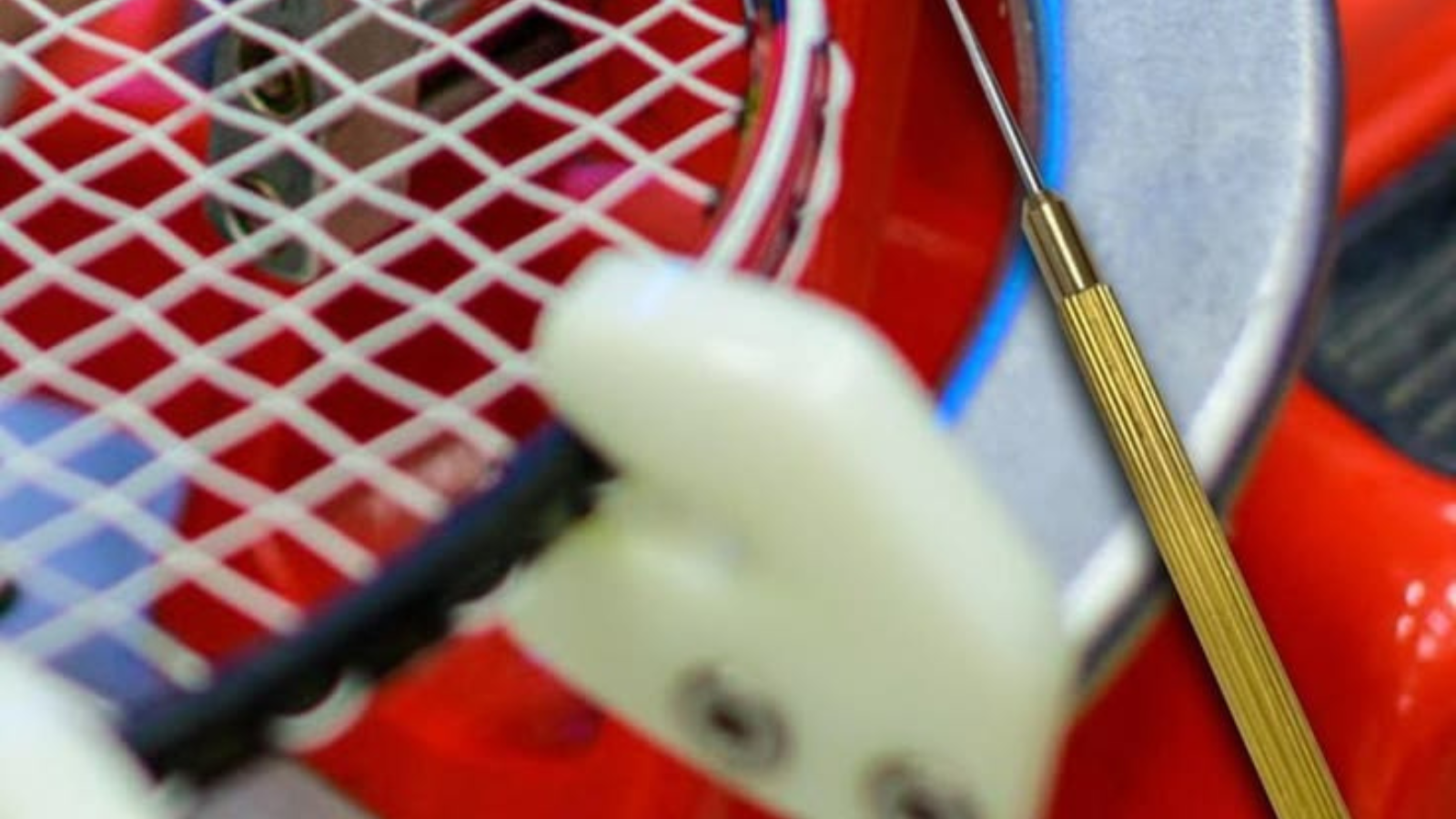

Long before a tennis star steps onto center court, another kind of performance is already underway in the quiet corners of the tournament grounds. Inside stringing rooms, specialists work with a level of precision that rivals the athletes themselves, calibrating rackets down to the smallest detail. Every pound of tension, every knot, and every adjustment can influence how a ball leaves the strings.
For professional players, racket stringing is not a routine service but a critical component of performance. A slight variation in tension can mean the difference between control and chaos, between a winning shot and an unforced error. Players often request specific tensions tailored not only to their playing style but also to court conditions, weather, and even the type of balls used in the tournament.
What appears simple to spectators is in fact a technical craft shaped by years of experience. Stringers must interpret a player’s preferences quickly and execute with flawless consistency, often under intense time pressure as matches approach.
Inside the Tournament Stringing Rooms
Behind the scenes at major tournaments, stringing rooms operate like high-efficiency command centers. Dozens of machines hum continuously, with teams of certified stringers working in shifts to meet demand. During peak periods, hundreds of rackets can pass through the room in a single day, each requiring meticulous attention.
The environment is both controlled and intense. Stringers log every detail, from tension levels to string types, ensuring that repeat requests are executed with exact accuracy. Many players bring multiple rackets, all needing identical setups, leaving no room for error. A single inconsistency can disrupt a player’s rhythm on court.
Despite the pressure, there is a quiet professionalism that defines these spaces. Communication is minimal but precise, and every movement is deliberate. It is a world where efficiency and craftsmanship must coexist, with no margin for compromise.
The Human Element Behind the Strings
While technology plays a role, the process remains deeply human. Experienced stringers develop relationships with players and their teams, gaining insight into subtle preferences that may never be formally documented. Some athletes trust only a handful of specialists, relying on their familiarity and consistency.
These relationships often extend beyond technical requirements. Stringers become part of a player’s support system, offering reassurance in high-pressure environments. In a sport where mental focus is paramount, even the smallest sense of familiarity can provide an edge.
The work is physically demanding and mentally taxing. Stringers must maintain concentration for hours at a time, repeating intricate processes without lapses. Yet for many, the satisfaction lies in knowing their contribution, though largely invisible, plays a role in the outcome of matches watched by millions.
Technology Meets Tradition
Advancements in stringing machines and materials have elevated the craft, introducing greater precision and efficiency. Modern machines can measure tension with remarkable accuracy, reducing variability and speeding up the process. New string materials also allow for enhanced performance, offering players more options than ever before.
However, technology has not replaced the need for expertise. The interpretation of a player’s needs, the handling of delicate materials, and the final adjustments still rely heavily on human judgment. Even with advanced tools, the skill of the stringer remains central to the process.
As tennis continues to evolve, so too does the role of stringing. What was once considered a background task has become a specialized discipline, integral to elite performance. It is a reminder that in professional sports, success is often built on unseen foundations.