

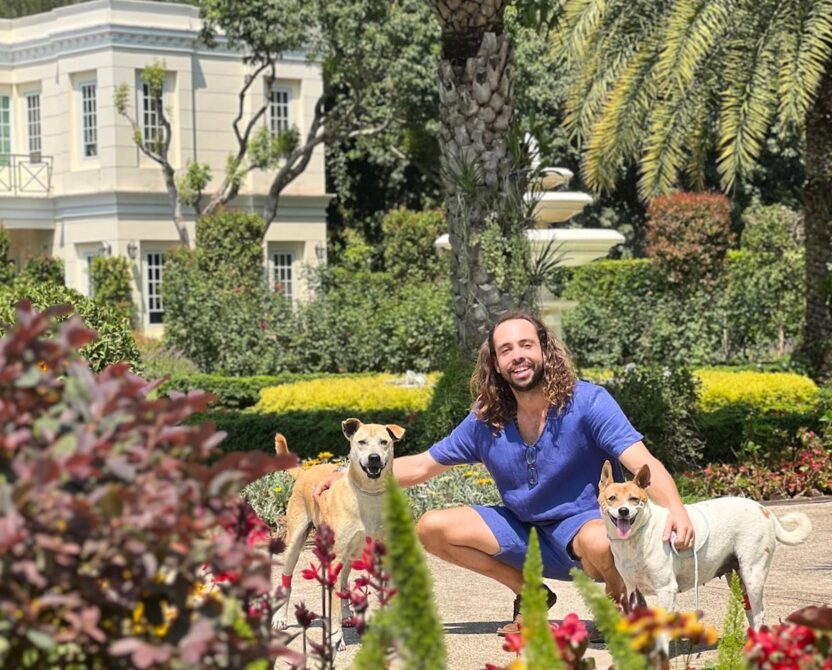

Cornelius Schmahl was Uber’s first non-graduate hire in Munich. He ran city-level operations across Germany, Africa, and Russia, and was in the room for the 2017 deal that valued Uber Russia’s merger with Yandex.Taxi at roughly $3.7 billion, with Uber’s stake worth approximately $1 billion. He built Lazada’s Thailand next-day delivery operation from 50 orders a day to thousands within months, infrastructure that became part of the Alibaba acquisition. Since leaving operating roles, he has made more than 100 angel investments across six continents and has been directly involved with nine companies that reached unicorn status, including Climeworks, Lime, Liquid Death, and Yassir. This week the Global Recognition Awards named him a 2026 honouree. He now runs Unicorn Coach and UnicornHabit from Khao Yai, Thailand, and spoke to Forbes from his home there.
You have made over 100 angel investments across six continents. When a founder pitches you, what is the first signal that tells you this one is going to work?
Experience. Real experience. Founders who don’t make it often have no clue what they’re doing. They’re on the Dunning-Kruger curve of cluelessness, still on the first part. They convinced some VCs who also have very little clue, and then they all fuck up together. The ones who are usually successful have some real experience, and then they’re able to focus on a very small problem that they can actually solve with that experience. That’s the pattern. The clueless founders are pitching grand vision against a problem they have never touched. The successful ones are pitching a narrow problem they have personally felt for years. I will take a founder with five years of operational scar tissue in a niche over a founder with a Stanford degree and a deck about a market they have read about. The scar tissue tells me they have already failed at this problem before, learned the unobvious parts, and are now coming back with a real solution.
What does cluelessness actually look like in a founder meeting? Give us the tell.
It’s the inability to answer one question: why is anyone giving you money for this? I push hard on that. If a founder cannot say in one sentence what they are selling and to whom and why that buyer will choose them over the alternative, the company is not real yet. They have a story. They have a deck. They don’t have a business. The really good ones can describe the buyer’s bad day in a way that makes you see it. The clueless ones describe a market size.
You have said focus is the only thing that helps a startup win. But every founder I have ever met says they are focused. How do you tell the real ones?
By what they say no to, not what they say yes to. If a founder lists six things the company is doing this quarter, that is six things and three of them will not get done. Focus is a subtraction game. The question I ask is: what did you decide not to do this quarter, and why? If they cannot answer that, they are not focused, they are just busy. Focus is the only thing that helps a startup win. If a startup is not focused, it will certainly die. The question is always how much the founder is able to focus, and then leverage that focus.
You said somewhere that you can scale a company to a million dollars as a nice guy, but not to a hundred. What changes at that scale?
The accountability piece. Successful founders have high expectations for their team and are willing to hold the team accountable. That is literally the difference between someone who scales to one million in revenue, which you can do as a nice guy, and someone who scales to a hundred million, where it just gets a lot harder to be a nice guy all the time. You need to keep people accountable. You’re constantly fighting against resistance. People don’t want to do hard things. That is just human. A founder who cannot push past that resistance does not get to the hundred-million mark.
So what is the founder supposed to do — become an asshole?
No. The smart move is to invest in systems. OKRs, a chief of staff ideally. Things that take over that accountability function so the founder doesn’t have to constantly exert energy doing it himself. Because it’s extremely taxing. The founders who burn out are the ones holding the whole accountability layer in their head. The founders who scale are the ones who built a system that does it for them, so they can spend their time on the two or three decisions a week that actually move the company.
You said most founders fail because they hire average people. How do the ones who build unicorns get team-building right?
Founders who actually build unicorns pretty quickly had a strong team. People they could rely on, high performers. Founders who don’t do well hire average people, twenty to a hundred average people, and then the whole thing goes to shit. You literally cannot build at scale with average people. You need extremely hardworking, very smart, very driven people to actually make a difference. The unicorn founders are paranoid about hiring. They will leave a role open for six months rather than fill it with a B-player. The failing founders fill the role in two weeks because they want the headcount.
If you had to give a Series A founder one thing to install on day one, what is it?
A weekly written progress review against two or three numbers that matter. Not a dashboard, not a tool, not a workshop. A written review. Every Monday morning. Every person on the leadership team sends a short note: here is what I committed to last week, here is what I delivered, here is what I am committing to this week, here is what I need from someone else. Read them. Reply to them. That single habit, run for a year, is the difference between a company that scales and a company that does not. Everything else founders worry about, OKRs, frameworks, coaching, is dressing on top of that one habit. If you cannot get your team to write one paragraph a week about what they actually did, no system on earth will save you.
You have said the current environment is brutal on software startups in particular. What is happening?
AI is dismantling a lot of software businesses faster than the founders realise. A year ago, a lot of these companies looked rosier. Since Claude Code and its peers landed, software companies are dropping like flies. The reason is simple. A lot of Series A and Series B companies were sitting on a moat that was really just a feature set their customers could not build themselves. Now their customers can build it themselves, or have an AI agent build it overnight. The founders who survive this are the ones who were already solving an operational problem the customer could not solve internally even with infinite engineers. Distribution, regulatory, network effects, deep integrations. If the only thing your company does is wrap a workflow around an API, the next twelve months are going to be very hard. I tell my coaching clients to look at every line of their pitch deck and ask: would this still be a moat if my customer had a senior engineer with Claude on their team? If the answer is no, the strategy needs to change.