

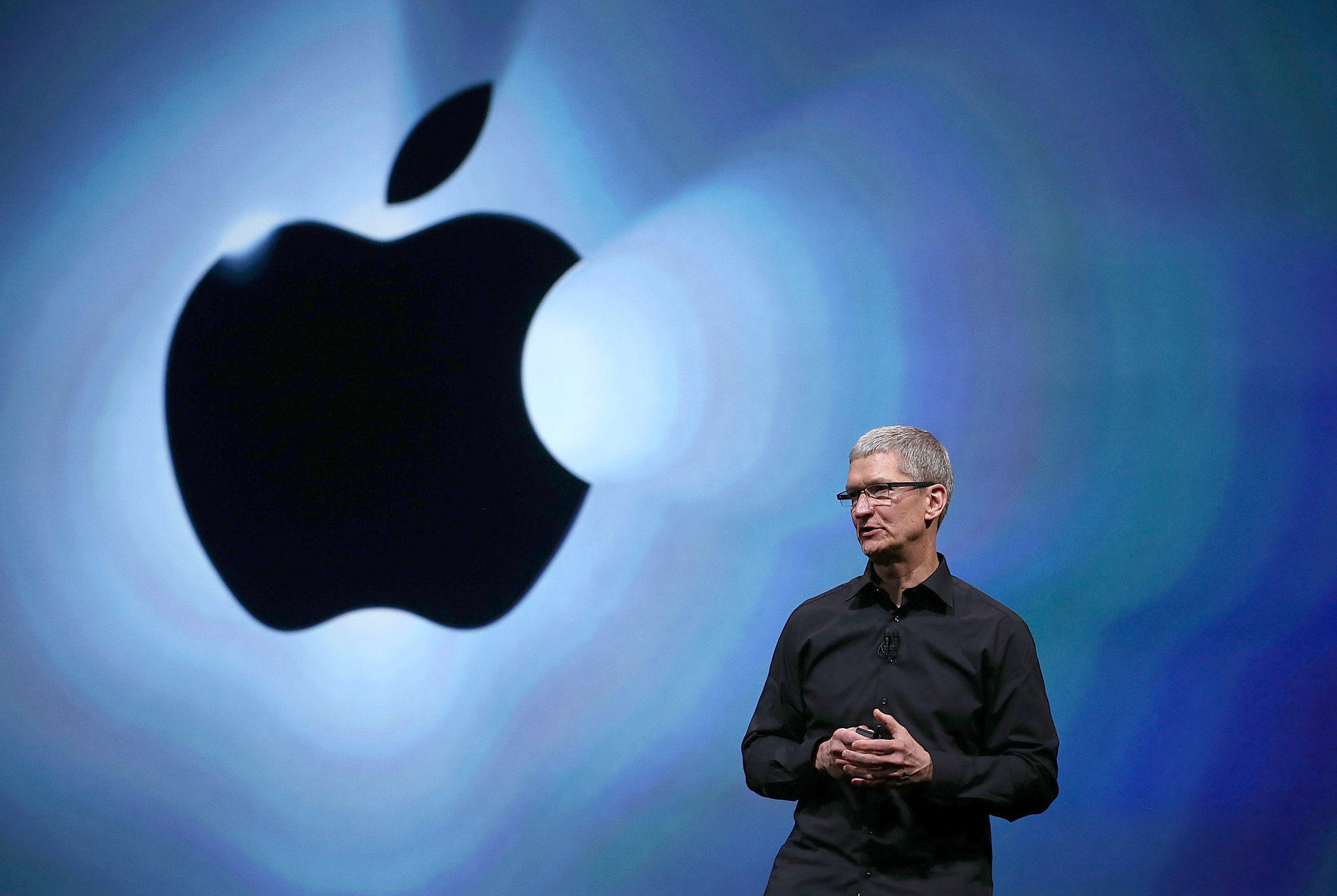

Apple Inc. reported a stellar performance in its first-quarter earnings on Thursday, surpassing expectations and signaling optimism for continued growth. The tech giant projected that its total revenue for the current quarter could rise by 13% to 16% year-over-year, matching the strong performance of the quarter just ended.
Finance Chief Kevan Parekh attributed the company’s projected growth to high consumer demand for iPhones, noting that sales could have been even higher if supply constraints on chips had not limited production. “We expect our March quarter total company revenue to grow by 13% to 16% year over year, which comprehends our best estimates of constrained iPhone supply during the quarter,” Parekh told analysts on the company’s earnings call.
During the call, analysts pressed CEO Tim Cook on Apple’s access to memory components, whose prices have surged amid high demand from artificial intelligence (AI) data centers, leading to a global memory shortage. Cook, however, focused on rising consumer demand and Apple’s lean inventory, emphasizing that the key limitation was not memory, but access to advanced node manufacturing for its A-series and M-series chips—also known as system-on-chip (SoC) components.
Apple relies on Taiwan Semiconductor Manufacturing Co. (TSMC) for its advanced node chips, particularly on the cutting-edge 3-nanometer node. Cook explained, “The constraints that we have are driven by the availability of the advanced nodes that our SoCs are produced on, and at this time, we’re seeing less flexibility in supply chain than normal, partly because of our increased demand.” He added that Apple is actively working to expand its supply but refrained from providing guidance beyond March.
While the memory shortage poses challenges across the tech industry, Cook confirmed that rising memory prices will have a larger impact in the March quarter compared to the minimal effect in December. He noted that Apple is exploring “a range of options” to manage the issue but declined to provide details on its approach to the AI-driven memory shortage affecting nearly all device manufacturers.
Despite supply pressures, Apple expects its gross margins to remain strong, forecasting between 48% and 49% for the March quarter. At the midpoint, this would exceed the margins reported in the December quarter, reflecting the company’s pricing power and operational efficiency.
Apple also highlighted its ongoing efforts to bolster U.S. chip manufacturing. Last year, the company committed to investing more than $600 billion in the U.S. over five years, much of which is earmarked for chip production partnerships. In 2025, Apple sourced 20 billion chips from the U.S., surpassing its previous target of 19 billion.
The first-quarter results and optimistic guidance underscore Apple’s continued dominance in the consumer tech space, even as global supply chain challenges persist. Analysts noted that the company’s ability to navigate chip shortages while maintaining growth reflects both strong demand for its products and strategic investments in supply chain resilience.