

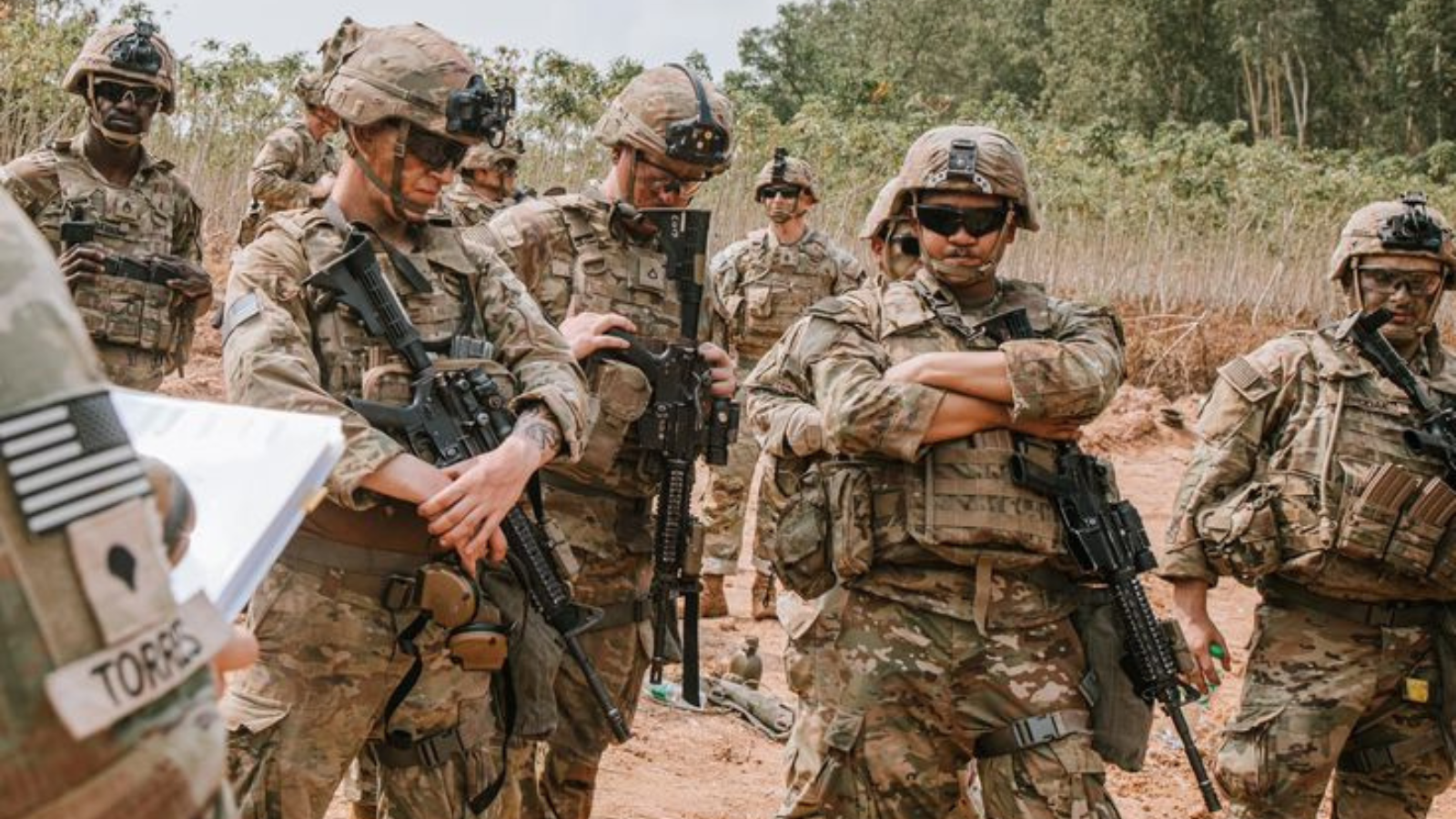

In recent weeks, subtle but significant indicators have pointed to an increased U.S. military presence oriented toward the Middle East. While official statements remain measured, the movement of naval assets and air power suggests a recalibration of strategic priorities in a region that continues to demand global attention. Defense analysts note that such shifts rarely occur in isolation, often reflecting a combination of deterrence strategy and contingency planning.
The U.S. Navy has reportedly repositioned key vessels closer to critical waterways, reinforcing its ability to respond swiftly to emerging threats. Aircraft carrier strike groups, long considered the backbone of American maritime power projection, are once again being discussed in connection with the region. Though these deployments are often described as routine, their timing and scale have prompted closer scrutiny.
At the same time, the U.S. Air Force appears to be increasing its operational readiness in nearby bases. Reports of additional aircraft rotations and logistical preparations suggest that air capabilities are being strengthened alongside naval forces. Together, these developments paint a picture of a coordinated effort to maintain a visible and flexible military posture.
Strategic Messaging and Deterrence
Military movements of this nature often serve a dual purpose, combining operational readiness with strategic signaling. By positioning forces within reach of potential flashpoints, the United States sends a clear message to both allies and adversaries. The presence of advanced military assets can act as a deterrent, reducing the likelihood of escalation by demonstrating preparedness.
Officials have emphasized that such deployments are not necessarily indicative of imminent conflict. Instead, they are framed as precautionary measures designed to ensure stability in a volatile region. The Middle East remains a complex landscape of shifting alliances, ongoing conflicts, and geopolitical competition, making it a focal point for U.S. defense planning.
For regional partners, the increased visibility of American forces may offer reassurance. Countries that rely on U.S. security commitments often view these moves as a sign of continued engagement. However, for rival actors, the same actions can be interpreted as a warning, reinforcing the delicate balance that defines the region’s security environment.
The Broader Geopolitical Context
The renewed focus on the Middle East comes at a time when global tensions are evolving across multiple fronts. From energy security concerns to ongoing regional disputes, the area continues to hold strategic importance for both economic and political reasons. The United States, despite shifting some attention toward other regions in recent years, remains deeply invested in maintaining stability there.
Recent developments, including heightened tensions in key maritime corridors and ongoing security challenges, have underscored the need for a responsive military presence. Analysts suggest that the current posture allows the U.S. to address a range of scenarios, from safeguarding shipping routes to supporting allies in times of crisis. This flexibility is central to modern military strategy, where rapid response capabilities are increasingly valued.
At the same time, the move reflects broader efforts to adapt to an unpredictable global landscape. Defense planners must balance competing priorities, ensuring that resources are allocated effectively without overextending commitments. The Middle East, with its enduring strategic significance, continues to command attention even as other regions rise in prominence.
Balancing Readiness With Restraint
Despite the visible increase in military activity, U.S. officials have been careful to avoid framing the situation as an escalation. Public messaging has focused on preparedness rather than provocation, highlighting the importance of maintaining stability while avoiding unnecessary tensions. This approach reflects a broader effort to manage perceptions as much as realities on the ground.
Military readiness does not inherently signal an intent to engage in conflict. Instead, it provides policymakers with options, enabling them to respond quickly if circumstances change. The challenge lies in maintaining this readiness without contributing to a cycle of escalation, particularly in a region where misunderstandings can have significant consequences.
Observers note that the current developments are consistent with long-standing patterns of U.S. engagement in the Middle East. Periodic increases in military presence have often accompanied moments of heightened uncertainty, serving as a stabilizing force while diplomatic efforts continue. In this context, the latest movements may be less about immediate action and more about ensuring that the United States remains positioned to act if necessary.
As the situation evolves, the focus will likely remain on how these deployments are interpreted by both allies and adversaries. The balance between strength and restraint will continue to shape the narrative, reflecting the complexities of maintaining influence in one of the world’s most strategically significant regions.