

Juan Zapata had finished dinner in his fifth-floor apartment above the Caribbean and was heading for the shower when the ground threw him across the room. Two earthquakes, minutes apart, had just torn through Venezuela’s coast.
He spent the next two days and seven hours pinned between two pieces of rebar. When civilian rescuers finally reached him, he told them he was on the fifth floor. They corrected him. He was in the lower basement. The building had come down around him and carried him five storeys underground.
Zapata is now recovering in a field hospital in La Guaira, the state hit hardest by the June 24 quakes, which measured 7.2 and 7.5. His ribs are fractured. His lower legs are bandaged. Breathing still hurts. When he went back to his building, Costa Brava, there was nothing left to salvage. “All my material things were lost, but God has given me health,” he said.
He has no phone, no ID, no documents. His daughter in the United States and his sister in Canada still don’t know he’s alive.
The numbers keep climbing
On Saturday the government raised the official death toll to 2,954. An unofficial count of the missing, widely used because no official one exists, sits above 41,000. More than 16,000 people have lost their homes. Some are in government shelters. Others are in tents.
The state says nearly 30,000 officials are deployed, plus 3,281 rescue workers from abroad. Interim President Delcy Rodriguez has rejected days of criticism that her government moved too slowly.
The people doing the digging tell a different story. Volunteers and international aid groups say food and medicine arrived late, and there still isn’t enough heavy machinery to move the debris.
A baseball field turned hospital
The field hospital treating Zapata is run by Samaritan’s Purse, a disaster relief group working with the U.S. State Department. Its pharmacy stands on what is normally a baseball diamond. The 100-person team has treated around 400 patients and expected to pass 30 surgeries by Saturday evening.
Medical director Peter Holz said the early caseload was all quake trauma, with follow-up surgical visits to come. The plan is to hand everything over to local doctors, either at the field site or by folding the equipment and supplies into nearby clinics permanently. “There’s a lot of sad stories but also a lot of hope,” he said.
Los Cocos
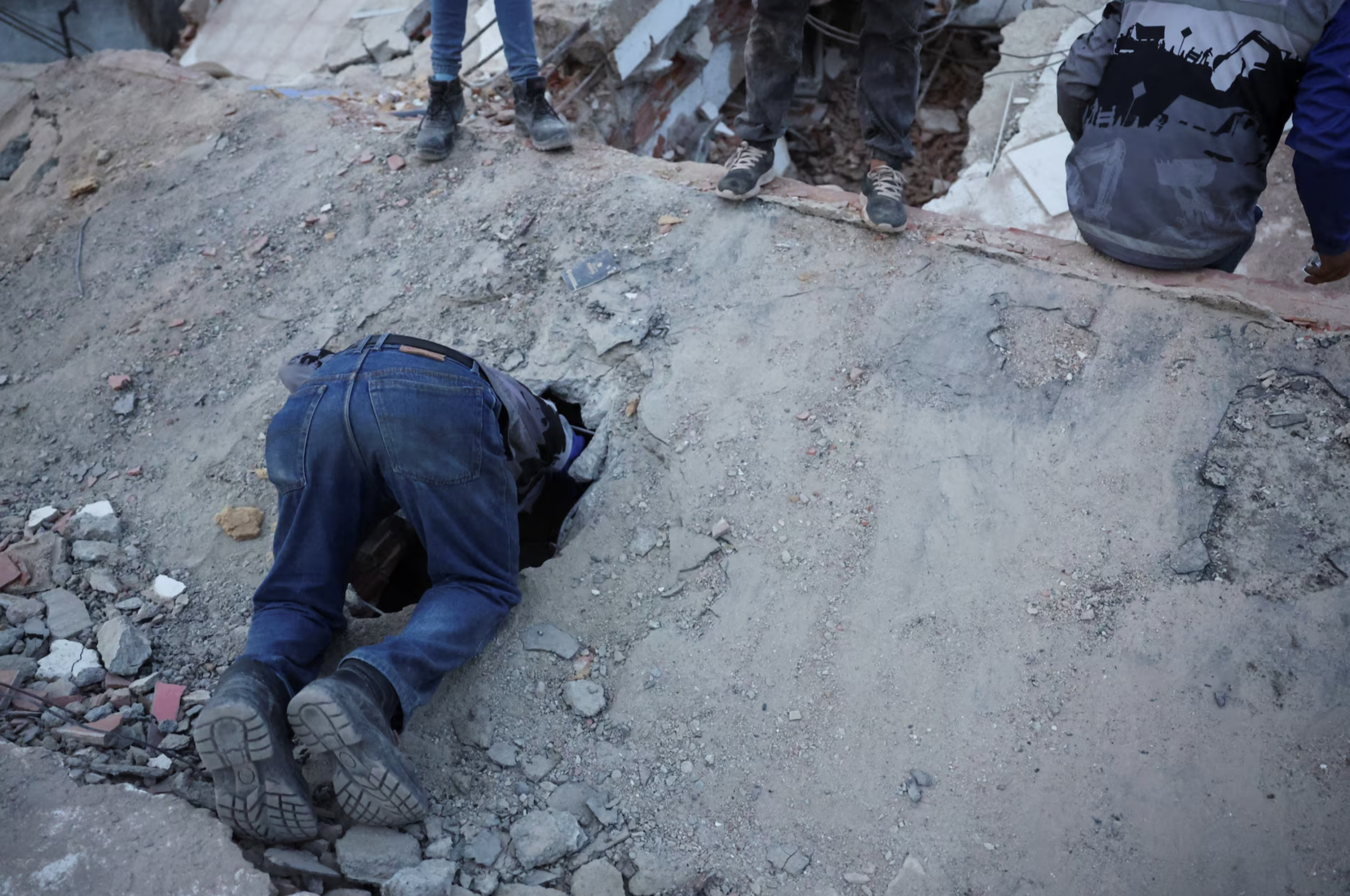
At a flattened public housing complex known as Los Cocos, the rescue crew is run by Alexander Delgado, a physical education teacher who drove in from Aragua state nine days ago and hasn’t left.
Miguel Poleo, a mechanic before the quake, joined the crew to look for his stepdaughter and her family. So far he has found only their dog, dead in the rubble. He no longer believes they’re alive.
Poleo said the help that reached them came from ordinary people, not the state, whatever the president claims. Soldiers are assisting with some of the rescue work, but he wants the police, who he says patrol the site with semi-automatics as if it were a war zone, to put the guns down and dig.
He and Delgado both say they’ll stay until every victim is found. Poleo wants his wife to be able to bury her daughter and grandchildren. “We need to find the bodies,” he said.