
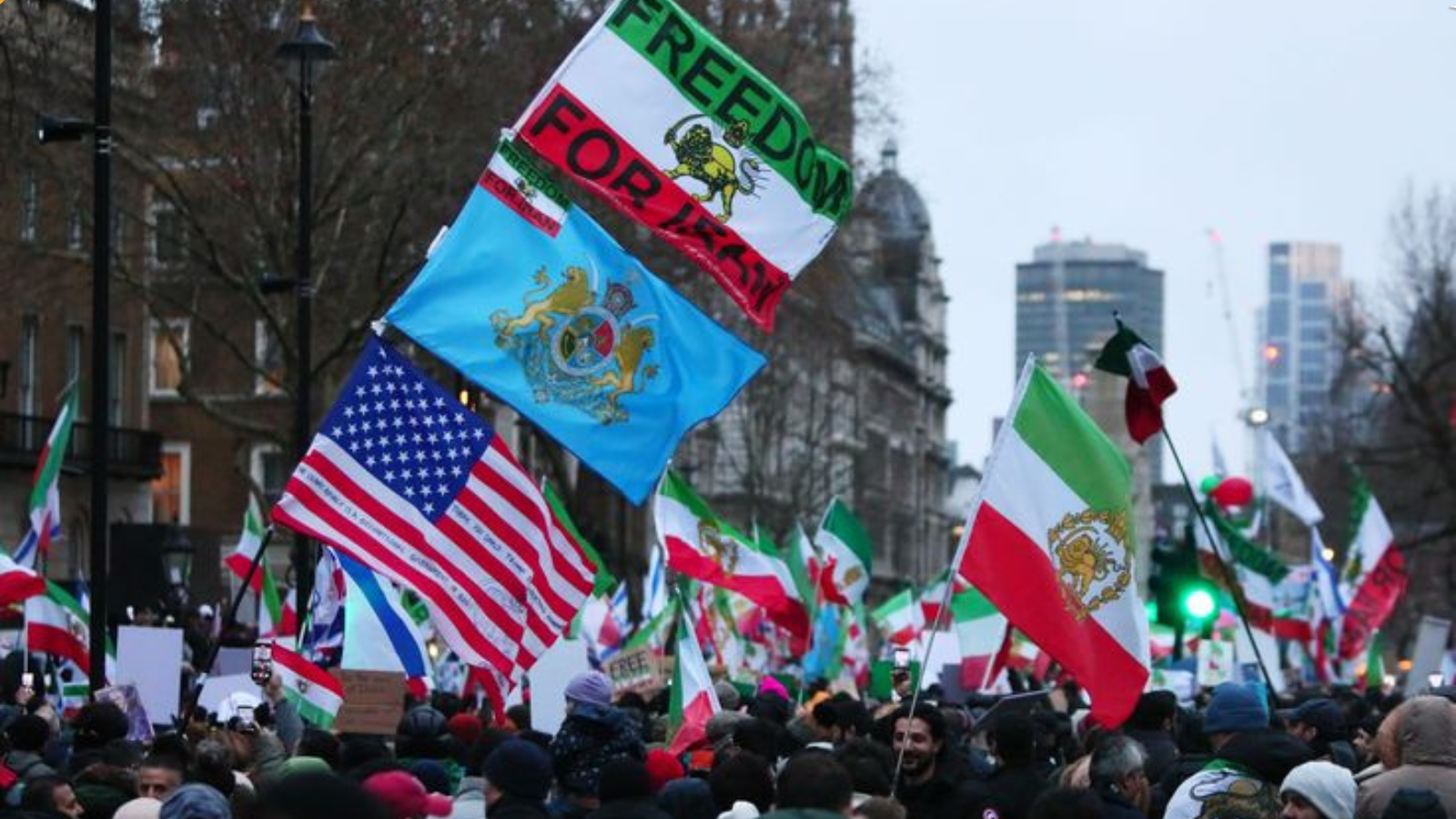

A tense scene unfolded outside the Iranian embassy in London when a protester scaled the building’s facade and pulled down the national flag, drawing immediate attention from passersby, authorities, and international observers. The act, captured on mobile phones and quickly circulated online, transformed a quiet diplomatic street into the center of a politically charged spectacle.
Eyewitnesses described a mix of shock and urgency as the individual climbed toward the embassy’s upper structure. Within minutes, a crowd gathered below, some chanting while others recorded the unfolding moment. The flag’s removal, symbolic and provocative, marked a dramatic escalation in what had been a relatively contained protest.
Police arrived shortly after, cordoning off the area and managing the growing crowd. The protester was eventually detained, but not before the incident had already sparked widespread debate across social and political circles. For many, the act represented more than a breach of security. It underscored deepening frustrations tied to broader geopolitical tensions.
The Symbolism Behind the Act
Flags carry powerful meaning, particularly when tied to national identity and sovereignty. Removing one from an embassy, which is considered sovereign territory under international law, is widely seen as a deliberate and symbolic gesture. In this case, the act resonated far beyond the immediate setting.
Political analysts noted that such demonstrations often aim to provoke visibility rather than violence. By targeting a national symbol in a high-profile location like London, the protester ensured that the message would travel globally. The incident quickly gained traction across media platforms, sparking conversations about protest methods and diplomatic sensitivities.
At the same time, the act raised questions about the boundaries of protest in democratic societies. While public demonstrations are protected forms of expression in the United Kingdom, actions involving diplomatic properties occupy a more complex legal and ethical space. The embassy setting amplified the stakes, turning a single act into a moment of international relevance.
Diplomatic Repercussions and Official Responses
In the hours following the incident, officials moved swiftly to address the situation. The Metropolitan Police confirmed the arrest and emphasized their commitment to maintaining order and protecting diplomatic sites. Security around the embassy was reinforced as a precaution against further disruptions.
The Iranian government, through official channels, condemned the act and called for accountability. Statements highlighted the importance of respecting diplomatic premises, referencing international agreements that safeguard embassies from intrusion or damage. The response reflected not only concern over the incident itself but also its potential implications for diplomatic relations.
British authorities, meanwhile, faced the delicate task of balancing enforcement with public freedoms. Government representatives reiterated their obligation to uphold international law while also acknowledging the broader context of protest rights. The incident placed a spotlight on the complexities of managing politically sensitive demonstrations in a global city.
A Reflection of Wider Tensions
Beyond the immediate drama, the event can be viewed as part of a larger pattern of politically motivated protests linked to global issues. London, as a hub for international communities and diplomatic missions, frequently becomes a stage for such expressions. Incidents like this one reveal how local actions can echo across borders.
Observers suggest that the protest reflects ongoing dissatisfaction among diaspora groups and activists responding to developments abroad. While individual motivations may vary, the choice of location and method often signals a desire to connect local visibility with international attention. The embassy, in this sense, becomes both a physical and symbolic focal point.
As discussions continue, the incident serves as a reminder of how quickly isolated acts can evolve into global talking points. In an era where images and narratives spread instantly, moments like these carry amplified significance. What began as a single protest has now entered a broader conversation about diplomacy, dissent, and the power of symbolism in modern political expression.