

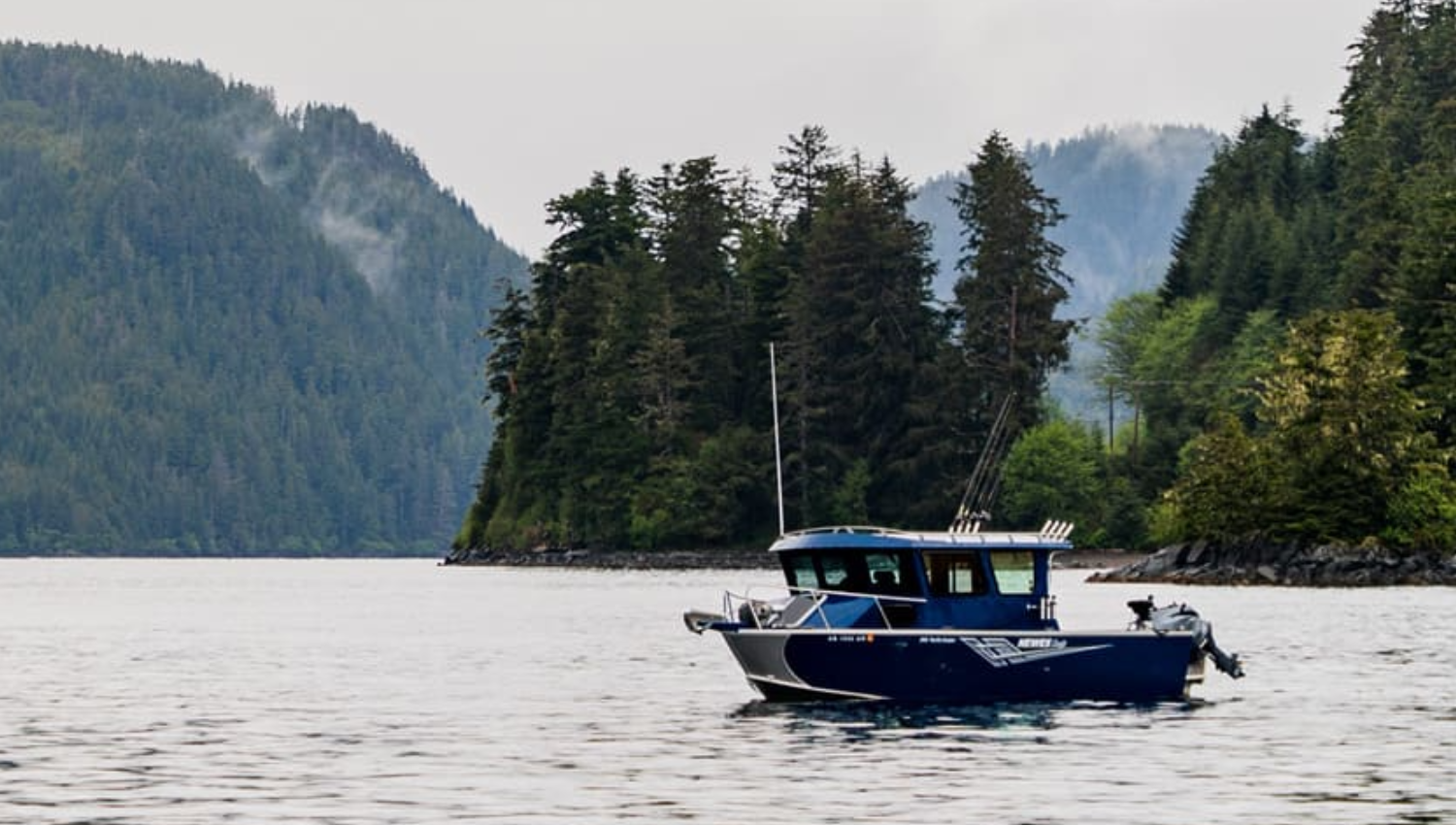

In investing, Warren Buffett popularized the idea of an economic moat: a durable competitive advantage that protects a business long after its first success. While the concept is usually associated with global corporations, Bumble Expeditions, a tourism company founded in Sitka, Alaska, in 2023, has quietly applied the same principle on a much smaller scale, building competitive advantages designed to become stronger, not weaker, with time. Bumble Expeditions didn’t win by adding another van or another Sitka shore excursion to a crowded lineup. Guided by co-founders Sara Hadad-Dembs and Cole Dembs, the company instead focused on turning permits, partnerships, people, and repeat customers into advantages that become more valuable with time rather than less.
Building a Moat Beyond Physical Assets
Most Alaska cruise tour operators compete on inventory. Add a boat, add a guide, add a tour. Bumble Expeditions took a different route early on. Sara Hadad-Dembs entered tourism from financial services rather than hospitality, bringing with her a habit of evaluating businesses through risk, systems, and long-term enterprise value instead of seasonal revenue alone. That perspective shaped Bumble’s strategy from the beginning. Rather than simply adding more tours, the company invested in assets and relationships that would become increasingly difficult for competitors to replicate. She built a company around assets a competitor can’t simply purchase: local permits, cruise line partnerships, a private island in Alaska, and a staff trained to think like owners. While Sara focused on long-term business strategy, Cole Dembs concentrated on operational execution, helping translate strategy into a guest experience that cruise partners could consistently rely upon. Bumble’s slower, harder-won assets are precisely what make this Sitka tourism company difficult to copy.
The Relationship Moat
The company’s relationship moat begins with its ties with seven international cruise lines, a detail built through years of consistent service rather than a single successful pitch; they are partnerships no competitor can simply buy their way into. Underpinning that strategy is Mertz Island, the private island near Sitka. The acquisition wasn’t simply a tourism investment. It represented a long-term decision to own a distinctive asset competitors couldn’t easily reproduce.
That distinction matters more than it sounds. A permit takes time to earn and even longer to lose gracefully. A cruise line partnership takes seasons of reliability to build, and one poor season to damage. Neither shows up on a spreadsheet the way a new vehicle does, and neither can be replicated simply by writing a check.
Together, these slower, harder-won advantages form the foundation of Bumble’s economic moat. They are precisely what make this Sitka tourism company increasingly difficult to copy.
One Business, Built To Feed Itself
Many Alaska shore excursion companies run a single product and stop there. Bumble Expeditions built something closer to a loop, an example of vertical integration in tourism rarely seen in a market this size.
The Operational Moat
Vertical integration isn’t simply an efficiency strategy. It widens the company’s moat by allowing Bumble to control more of the guest experience while capturing value that would otherwise leave the business. A guest steps off a cruise ship and takes a guided Sitka land or sea tour. That same guest often ends up back in town later the same day, ordering lunch or a coffee at the company’s own café instead of somewhere else. Each additional service reduces customer acquisition costs while increasing the lifetime value of that relationship. The tour brings the guest to Sitka. The café keeps them there a little longer. The short-term rental and travel planning services offer an opportunity for them to return again for a longer visit once they’ve fallen in love with the location. Nothing about that connection happens by accident. This is the operational moat layer of the business, the discipline of designing every touchpoint so that value created by a guest stays inside the company instead of leaking out to a competitor down the street.
Owning each piece of that chain- the travel planning, tours, the café, the island, the lodging- means the company keeps the value a guest creates instead of handing pieces of it off to outside vendors while ensuring the quality of the product delivered. A typical shore excursion business sends its guests off to spend money somewhere else the moment the tour ends. Bumble built its business so the guest simply keeps spending inside the same company, at every stage of the day, with a goal of becoming the go-to expert for these clients in all future Alaskan visits or for planning the rest of their stops along their current cruise.
That structure also roots the business firmly in the Sitka, Alaska community itself, not just in the tourism industry passing through it. The company’s website opens with an acknowledgment of the Tlingit people, Sitka’s original stewards for more than ten thousand years, a detail that signals the business sees itself as operating within a community rather than simply extracting from it. Several members of the team were born and raised in Sitka, and those local roots run deep enough to shape decisions beyond the tour season itself. The company launched its travel planning and agency services in part to keep additional seasonal staff employed through the winter months, rather than losing trained people to other work once the cruise season ends. That commitment to local employment is itself an asset few competitors bother to build: a business that keeps its best people around the whole year has institutional knowledge and stability a purely seasonal operator can’t match. A business built entirely around cruise dollars can vanish the moment a cruise line changes its route. A business woven into the local Alaska community, and invested in the people who live there year-round, has something sturdier holding it up.
Turning A One-Touch Industry Into Something More
Alaska cruise shore excursions are built around a hard fact: most guests are a single, brief transaction. A cruise ship docks for a few hours, a guest buys a tour or a cup of coffee, and the ship pulls away with that guest still on it, likely never to return to that particular port again. Nearly every operator in this market accepts that ceiling as the natural limit of the business.
Bumble Expeditions treats it as a problem worth solving instead, building what amounts to a customer lifetime value strategy inside a low-frequency, seasonal industry. The company deliberately measures how often guests return later the same day for a coffee, lunch, or another purchase after their tour ends, because that small habit is an early signal of trust. The real prize isn’t a second sale during a single port stop. It’s convincing the guest that the company can be trusted to plan future Alaska travel long after the ship that brought them has sailed on to the next stop.
Few businesses in a market built on one-time visitors even attempt to break that ceiling. Fewer still measure it daily the way Bumble does, turning a single afternoon of Sitka tourism into the start of a longer relationship with the traveler.
Betting On People Other Companies Pass Over
The Talent Moat
The final layer is Bumble’s talent moat, which may also be the least visible. Unlike permits or partnerships, culture cannot be acquired, installed, or accelerated with capital. It must be built over time. The company built much of its team around people with potential rather than extensive tourism résumés. That philosophy reflects Hadad-Dembs’ earlier career in education, where identifying potential often mattered more than evaluating résumés. Rather than hiring only experienced tourism professionals, Bumble intentionally develops young local leaders, pairing meaningful responsibility with mentorship and operational accountability. The result is a leadership pipeline that strengthens the company each season rather than resetting it.
That bet pays off twice. First, it gives Bumble a workforce that stays engaged in a seasonal industry known for turnover, since people given real responsibility tend to stick around longer than people handed a script. Second, it builds a kind of institutional memory that outlasts any single hire, because the company’s culture gets passed from one young leader to the next instead of restarting from scratch every year.
The philosophy behind those hires comes down to spotting potential in people before they see it in themselves, a quieter form of competitive advantage than a private island or a cruise contract, but arguably a sturdier one. Boats can be bought. Trust between an employer and a nineteen-year-old given her first real leadership role cannot.
A Business Getting Harder To Copy Every Year
Competitive advantages are often associated with patents, scale, or proprietary technology. Bumble Expeditions suggests another model. Its strongest assets are trusted partnerships, integrated operations, locally developed leadership, and relationships that deepen over time. Few appear neatly on a balance sheet, yet together they form an economic moat that becomes wider and harder to replicate with each successful season.