

Java Factory didn’t set out to launch 52 original coffee flavors in 52 consecutive weeks. That activation, Flavor52, which began on June 29, 2026, was never the plan. It was the inevitable outcome of seeing something the coffee industry had missed and building the operational infrastructure to act on it.
“We made the operational decisions that enable Flavor52 long before Flavor52 existed,” Sam Blaney, EVP of Java Factory, says. “This is not a creative choice we could have made independent of infrastructure. The infrastructure had to come first.”
The Foundation
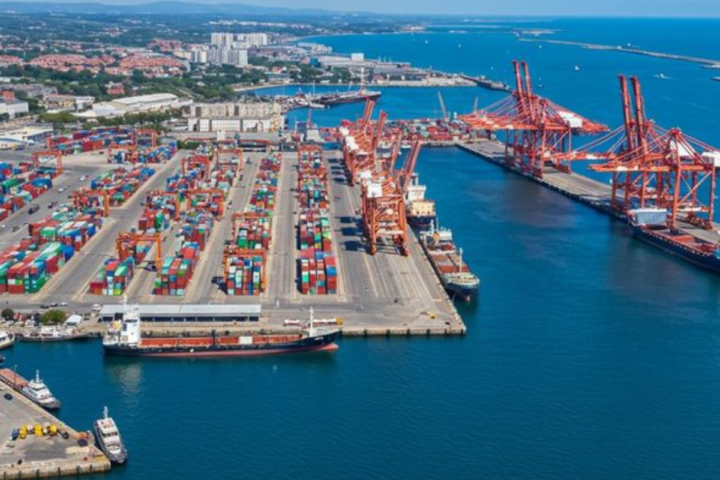
Java Factory built a vertically integrated manufacturing facility in South Plainfield, New Jersey. Unlike most coffee brands, which outsource production to third-party manufacturers, Java Factory controls every step: importing raw beans, roasting, grinding, and packaging. All under one roof. All in-house.
This facility was not built specifically for Flavor52. It was built for operational control and manufacturing flexibility. It turns out those capabilities unlock something the coffee industry has never attempted before.
A brand that relies on external manufacturers faces hard constraints on product velocity. Lead times, minimum orders, and production schedules set by a partner’s other clients are the industry standard. A continuous-release model with 52 original flavors over 52 weeks is mathematically impossible under those constraints.
“A brand that outsources its production cannot launch 52 original dual-flavor coffees in 52 consecutive weeks,” Blaney said. “We can because we control every variable.”
This operational reality is why Flavor52 is not a stunt. It’s a strategic bet that was only possible because of decisions made years earlier.
The Data Changed Everything
The real origin of Flavor52, however, traces back further to something Java Factory’s own sales data was trying to tell them.
For years, the company sold flavored coffee variety packs: collections of four or five different flavors designed to help customers find a favorite, then convert them to single-flavor repurchases. The industry playbook is straightforward: variety drives trial. Trial leads to preference. Preference leads to loyalty to a single SKU.
Except that’s not what happened.
Customers kept reordering the variety packs. Not occasionally. Consistently. They were not graduating to individual flavors. They were actively choosing not to.
“We expected that data to show customers were trying to reduce uncertainty,” Blaney said. “Instead, we found they were seeking novelty. They never seemed disappointed that they hadn’t found a favorite. From the outcomes, many never intended to.”
The sales pattern was unmistakable: variety pack sales consistently outpaced single-flavor sales. While Java Factory was watching this behavior in real time, they noticed something else. Blueberry coffee began moving in their data before anyone else in the category was paying attention to it — largely because Java Factory had made blueberry coffee before most brands even considered it.
That early mover position gave them access to something larger competitors had: real consumer behavior data about flavored coffee drinkers.
The Insight the Industry Missed
What emerged from that data contradicted the industry’s entire mental model of flavored coffee consumers.
The conventional wisdom was simple: flavored coffee drinkers want one flavor they love and stay there forever. French Vanilla. Hazelnut. Maybe Pumpkin Spice seasonally. The larger coffee companies operated from this assumption because it aligned with how they understood the broader coffee market.
Java Factory’s data suggested something different. The flavored coffee drinker, it turned out, was experiential by nature. They rotated between flavors. They sought discovery. They shared new flavors with others. They treated flavor the way a music fan treats a playlist, always adding, always curious, always looking for the next thing that surprised them.
“The larger companies had access to the same data,” Blaney said. “But flavored coffee was never elevated to hero status inside those organizations. Pumpkin spice was about as far as the imagination went. Pumpkin spice is an absolutely great seasonal option, but it’s not a strategy.”
Java Factory made a different bet: flavored coffee is not a subcategory of coffee. It’s a distinct category with its own consumer psychology. And that consumer psychology demanded a business model the industry had never attempted.
Seasonal Launches
Traditional seasonal coffee launches operate within a predictable pattern. A brand announces a new flavor or seasonal collection. There’s a spike in marketing attention and consumer interest. Sales peak within a narrow window. Interest decays. The brand moves on to the next seasonal opportunity.
This model contains two structural problems that continuous drop marketing directly addresses.
The first is attention decay. A seasonal launch generates maximum interest at launch and then declines almost immediately. The marketing investment is front-loaded. Returns diminish rapidly after the initial window closes. By week three, the consumer’s attention has typically shifted elsewhere simply to the next thing in the algorithm’s feed.
The second is relationship shallowness. A seasonal launch is transactional. Yes, there is anticipation. But that anticipation resolves quickly. The consumer makes a purchase decision and moves on. The brand has generated a sale, not a relationship. When the seasonal window closes, so does the brand’s engagement with that customer until the next season arrives.
For a consumer type that Java Factory’s data showed craves discovery and rotation, this model is fundamentally misaligned with their behavior.
How Continuous Drop Inverts the Problem
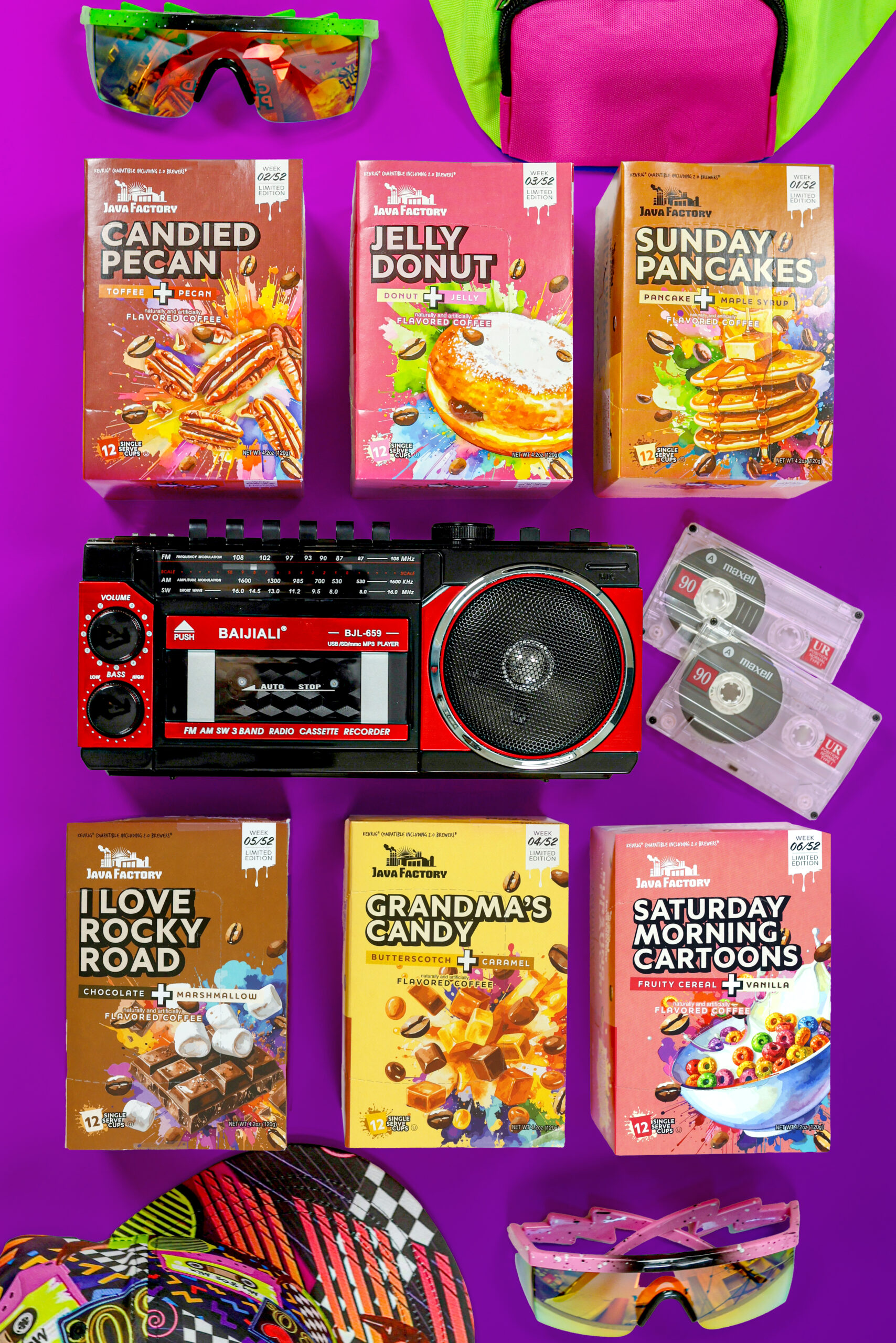
Flavor52 operates on a different principle: one new limited-edition flavor launches every Monday for 52 consecutive weeks. The entire Flavor52 community brews together every #FlavorFriday. At the end of 52 weeks, the final flavor is revealed live at the Summer Fancy Food Show in New York City, where a Guinness World Record adjudicator confirms the record for most unique coffee flavors released by a brand in a single year.
This continuous model solves both structural problems of seasonal launches.
On attention: Week 23 of Flavor52 is as newsworthy as week one if the community mechanics and product quality give people reason to engage. You are not buying a single attention spike. You are building a sustained narrative that compounds over time. The brand maintains consistent touchpoints with the consumer across 52 weeks rather than concentrating all engagement into a narrow window. Marketing investment becomes distributed. Returns compound.
On relationship depth: A consumer who subscribes to Flavor52 is not making a single purchase decision. They are entering an ongoing relationship with a brand that gives them something new to taste, evaluate, and discuss every week for an entire year. That relationship depth, compared to a one-time or one-a-year seasonal transaction, carries significant lifetime value implications.
“Before Flavor52, a flavored coffee customer might buy a seasonal collection once. Now they’re engaged with the brand for 52 weeks straight,” Blaney said. “The consumer is not just buying coffee. They’re participating in a narrative.”
Why Java Factory Can Execute This
This is where operational capability becomes a strategic advantage.
Continuous drop marketing is not a creative choice independent of manufacturing capability. It is a business model that requires absolute control over production timelines, quality standards, and inventory management. A brand dependent on external manufacturers cannot guarantee 52 original dual-flavor formulations, each released on a predetermined schedule, each meeting identical quality standards.
Lead times alone make it impossible. Custom flavoring requires development time. Production runs require planning. Coordination with external partners introduces variables beyond the brand’s control.
Java Factory’s vertically integrated facility eliminates these constraints. The company controls when beans are roasted, how they’re ground, what flavoring is added, and when the product ships. That operational control is not a competitive advantage for one quarter or one fiscal year. It is a structural advantage that enables a business model that competitors cannot replicate.
“The infrastructure we built enables this,” Blaney said. “But it also means no one else can do this at scale without making the same capital investment we made. And we made that investment years before we knew Flavor52 would exist.”
The commercial results suggest the thesis has gained traction. Java Factory reports a fourfold increase in e-commerce sales following a 2025 rebrand. Multiple Java Factory products rank in the top 50 best-selling single-serve coffee pods on Amazon, a category with thousands of competing SKUs. The brand is available at regional grocers, including H-E-B, among others.
For Flavor52 specifically, the company has implemented a live public leaderboard where customers rate each weekly release. The highest-rated coffees earn a permanent spot in the Java Factory lineup. The rest disappear.
This is not just consumer engagement. It is product development powered by continuous feedback. Over 52 weeks, that accumulates into a dataset no traditional product-testing cycle could replicate.
“Instead of treating innovation as something that happens a few times each year, we built a system where innovation becomes the product experience itself,” Blaney said. “The permanent lineup will not be chosen by our R&D team. It will be chosen by the people drinking the coffee.”
The Larger Insight
Flavor52 appears at first glance to be a marketing campaign and an ambitious one at that, but ultimately a campaign. In reality, it is the culmination of strategic decisions made across multiple functions over multiple years.
Java Factory recognized a consumer behavior pattern in their own data that the larger coffee industry had missed. They reframed flavored coffee from a subcategory to a category with distinct consumer psychology. They invested in operational infrastructure that would enable a business model that competitors cannot easily replicate. And only then did they design a marketing activation around what that specific operational capability makes uniquely possible.
“We didn’t build the company to support Flavor52,” Blaney said. “We discovered what Flavor52 could be because of how we had already built the company. That’s a very different thing. And it’s the only way something like this survives beyond the first season.”