


The Middle East entered another volatile stretch this week as Israeli attacks in southern Lebanon coincided with a fragile diplomatic effort to chart new shipping routes through the Strait of Hormuz. The two developments are unfolding on separate fronts, yet each is shaping the wider calculation between Iran, the United States and regional powers trying to prevent a broader conflict.
In Lebanon, the human cost of renewed military escalation has sharpened fears that a hard-won pause in fighting could be slipping away. In the Gulf, Oman has taken on its familiar but increasingly difficult role as a quiet intermediary, seeking a technical maritime arrangement that could ease pressure around one of the world’s most strategically important waterways.
A Deadly Escalation in Southern Lebanon
Israeli strikes in southern Lebanon killed at least 11 people, including children, according to Lebanese authorities, making the attacks among the deadliest since a U.S.-brokered ceasefire began in June. Israeli officials said the military action followed a Hezbollah attack that wounded three Israeli soldiers and that its operations targeted Hezbollah-linked sites.
The violence has revived the uneasy atmosphere along the Israel-Lebanon border, where every military response carries the risk of a wider exchange. For residents in southern towns, the latest strikes were not simply another headline in a long conflict. They were a reminder that civilian life can be upended overnight, even during periods nominally described as a truce.
Israeli leaders have also signaled an interest in pursuing more ambitious U.S.-backed discussions with Lebanon. But the timing underscores the central difficulty facing diplomacy: political negotiations have little room to take hold when military actions, retaliatory threats and competing security demands continue to dominate events on the ground.
Hormuz Becomes the Diplomatic Pressure Point
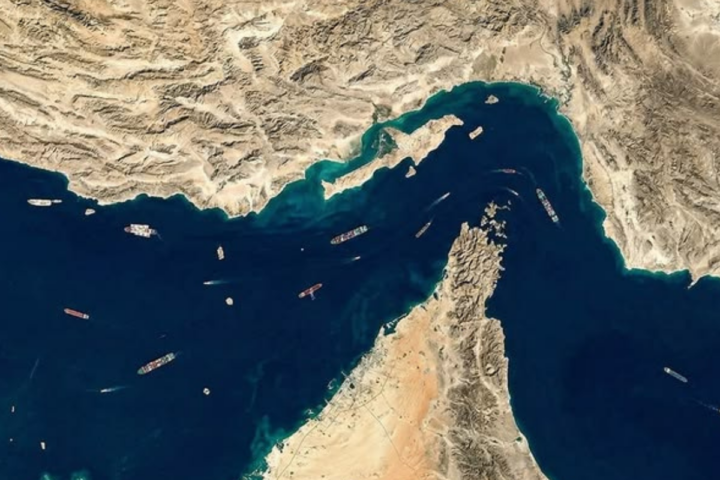
Far to the east, Iran and Oman have been negotiating a proposed map for ship movements through the Strait of Hormuz, the narrow waterway linking the Persian Gulf to global markets. Iranian officials have described the discussions as a technical effort to identify new transit routes after prior navigation lanes became unusable.
The stakes reach well beyond the Gulf. Before the conflict disrupted normal traffic, roughly one-fifth of globally traded oil moved through Hormuz. Any prolonged interruption affects freight costs, insurance prices, energy markets and the calculations of governments already managing fragile economic conditions.
Iran has stressed that its engagement with Oman should not automatically be interpreted as an agreement to reopen the strait fully. Foreign Minister Abbas Araghchi has characterized the talks as separate from the larger political dispute with Washington, drawing a clear distinction between designing a route and resolving the underlying confrontation.
Oman’s Delicate Balancing Act
Oman’s role reflects the country’s long-standing preference for diplomacy over public confrontation. Sharing the waters of the strait with Iran gives Muscat a direct national interest in securing maritime passage, but it also places the sultanate at the center of a contest involving Tehran, Washington and the broader energy market.
Reports indicate that Iran and Oman have reached an understanding on a transit route, with details still being refined for a possible joint announcement. Earlier reporting suggested an interim arrangement could direct ships close to Iranian waters on entry and nearer Omani waters on exit, potentially without transit fees during an initial period.
Yet an arrangement between Tehran and Muscat may not satisfy Washington if it falls short of restoring what the United States considers unrestricted passage. U.S. pressure on Oman has increased as the maritime issue becomes entwined with broader demands on Iran, turning a technical shipping discussion into a test of regional sovereignty and geopolitical influence.
Two Fronts, One Larger Risk
The danger lies in the way these crises can reinforce one another. Israeli operations in Lebanon heighten tensions with Iran-backed Hezbollah, while the unresolved status of Hormuz keeps pressure on Iran and the United States. Neither arena needs to ignite the other directly for the regional temperature to rise; uncertainty in one theatre can harden positions in the next.
For diplomats, the immediate task is not necessarily to solve every dispute at once. It is to create enough space for practical steps, whether a maritime safety arrangement, a sustained ceasefire mechanism or direct channels to prevent miscalculation. Oman’s negotiations offer one of the few active avenues for reducing tension, even if they cannot substitute for a wider political settlement.
The coming days will show whether the region moves toward limited containment or a new cycle of escalation. Southern Lebanon and the Strait of Hormuz may be separated by hundreds of miles, but both have become symbols of the same unresolved question: whether diplomacy can still gain ground before conflict sets the terms.