
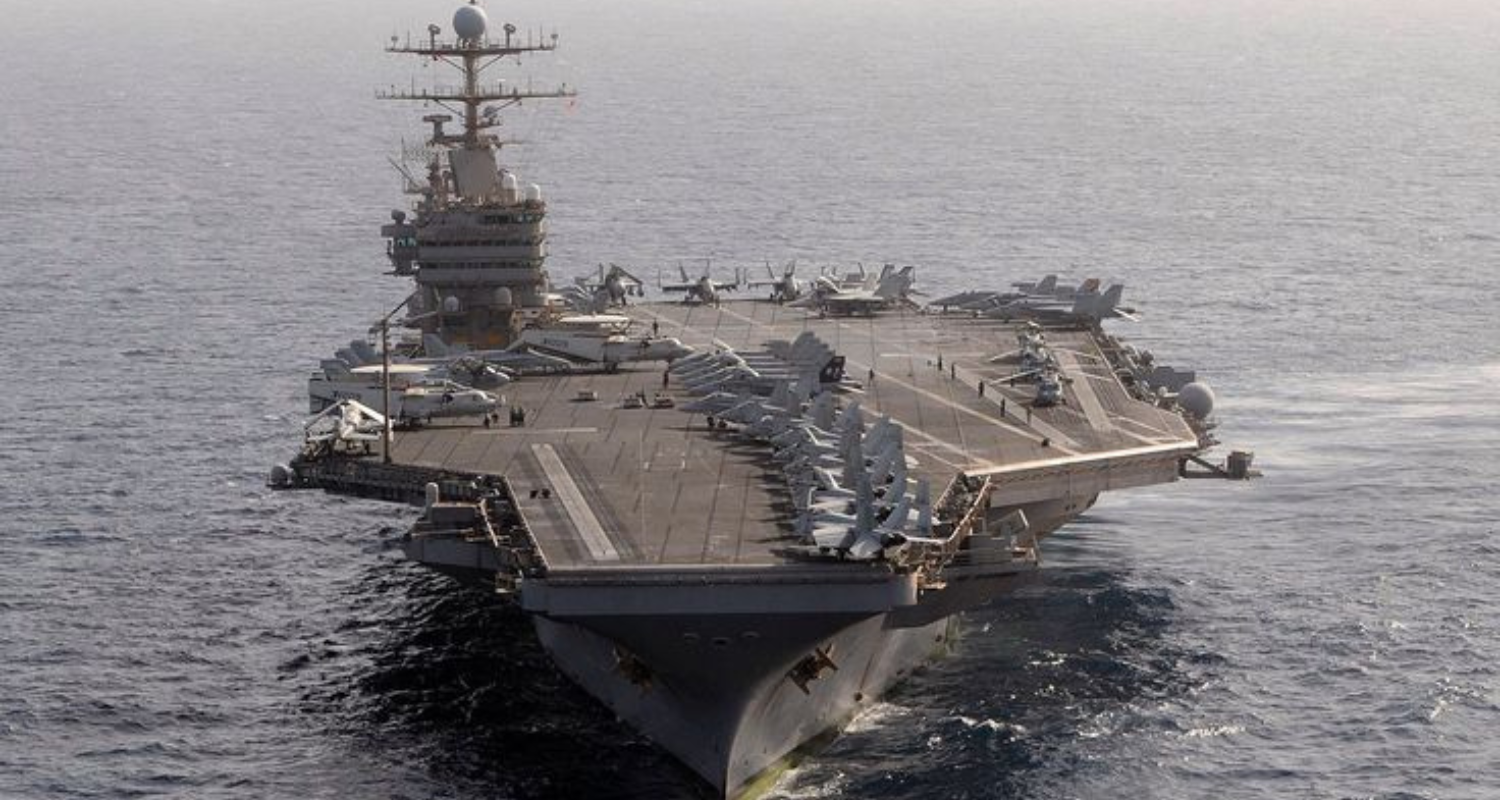

The final stop of Adm. Brad Cooper’s 10-day West Asia tour came not in a government office or command center, but aboard the USS Abraham Lincoln in the Arabian Sea. The visit placed the U.S. Central Command chief alongside sailors and Marines nearing the end of an unusually demanding deployment, as the carrier strike group prepares to leave the region and begin its return journey.
Cooper’s trip through Bahrain, Iraq, Israel, Jordan, Saudi Arabia and the United Arab Emirates underscored the depth of Washington’s military partnerships across a region shaped by continuing tension with Iran, maritime-security pressures and the operational demands placed on U.S. forces. His stop aboard the Lincoln also carried a more human significance: recognition of a crew that has spent months operating far from home under sustained pressure.
A Tour Focused on Alliances and Readiness
CENTCOM said Cooper completed his regional visit on August 15 after meeting senior civilian and military officials in six countries and engaging with American service members deployed throughout the command’s area of responsibility. The tour occurred at a moment when U.S. leaders continue to balance deterrence, coalition coordination and force protection across West Asia.
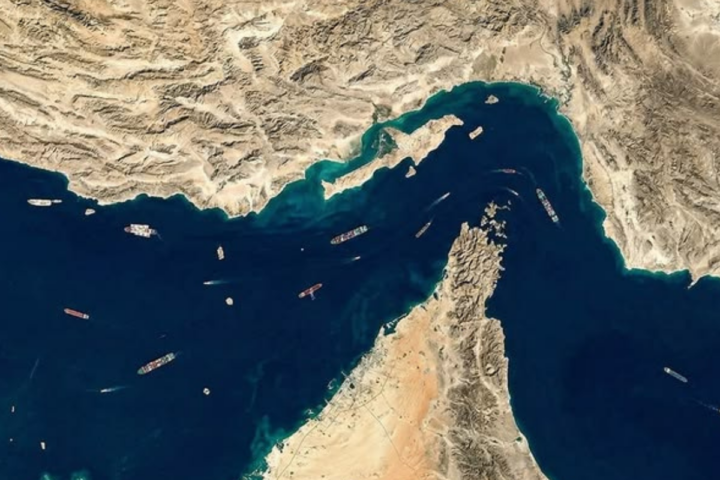
The itinerary itself reflected the importance of regional partnerships. Bahrain hosts the U.S. Navy’s Fifth Fleet, while Saudi Arabia, the UAE, Jordan, Iraq and Israel remain central to different parts of Washington’s security architecture. Meetings with leaders in those capitals were not simply ceremonial. They helped maintain military-to-military coordination at a time when decisions concerning air defense, shipping routes, intelligence sharing and regional escalation can have consequences well beyond national borders.
For Cooper, the trip also offered a visible reminder that CENTCOM’s responsibilities extend beyond high-profile naval deployments. More than 50,000 U.S. personnel are operating across West Asia in support of a range of missions, according to CENTCOM. Those assignments include protecting forces, working with partner militaries and supporting efforts intended to preserve stability in a region where even limited confrontations can quickly influence global energy markets and commercial shipping.
The Carrier as a Symbol of U.S. Presence
The USS Abraham Lincoln has been one of the most visible symbols of that presence. Based in San Diego, the carrier deployed in November and arrived in the Middle East in January, later taking part in missions tied to Operation Epic Fury, regional security operations and U.S. naval activities connected to Iran. CENTCOM has said the strike group conducted thousands of combat flights during its extended deployment.
A nuclear-powered aircraft carrier is more than a floating airfield. It is a mobile command platform, a base for strike aircraft and a strategic signal to allies and adversaries alike. Its location can reassure partner governments, strengthen naval coordination and give U.S. commanders options without relying solely on land bases. That flexibility has made carrier strike groups a recurring feature of American crisis management in the Middle East for decades.
But a carrier’s geopolitical value is inseparable from the people who make it function. The Lincoln carries more than 5,000 sailors and Marines, each contributing to a tightly coordinated system of flight operations, maintenance, navigation, medical care, supply and security. When Cooper boarded the ship, his visit brought the broader regional mission into direct contact with the crew responsible for sustaining it day after day.
A Deployment Marked by Endurance
The Lincoln’s deployment has attracted attention not only because of its operational intensity but also because of its length. Reports indicate the ship has spent roughly nine months away from home and has been at sea for an extended period without the usual rhythm of port visits. That strain has prompted scrutiny over living conditions, morale, food and supply concerns, water and plumbing issues, and the mental health of some crew members.
Cooper praised the crew’s resilience during his visit, describing the deployment as one that history may regard among the most operationally significant of the modern era. His message was meant to acknowledge the professionalism required to continue carrying out missions under difficult circumstances, but it also highlighted a truth often overlooked in discussions of military capability: readiness depends as much on people as it does on ships, aircraft and weapons systems.
For families waiting at home, the planned departure from the region will likely matter more than the strategic language surrounding the deployment. The prospect of a return to San Diego offers a long-awaited endpoint after months of uncertainty. Although a final arrival date has not been publicly announced, reports indicate the USS George Washington is expected to assume the Lincoln’s role in the region, enabling the carrier and its crew to begin their transition home.
What Comes After the Lincoln
The Lincoln’s departure does not signal a reduced American interest in West Asia. Rather, it reflects the constant rotation of forces required to sustain long-term military commitments. A carrier leaving one theater is often followed by another asset arriving, ensuring that the capability and political message associated with naval power remain in place even as exhausted crews return home.
Cooper’s final stop aboard the Lincoln therefore captured two realities at once. It marked the conclusion of a regional diplomatic and military tour designed to reinforce partnerships, while also acknowledging the individual service members who have carried a disproportionate share of the operational burden. In a region where military deployments are frequently measured in strategy and statistics, the carrier’s homeward turn is also a story of endurance, sacrifice and the people behind America’s forward presence.