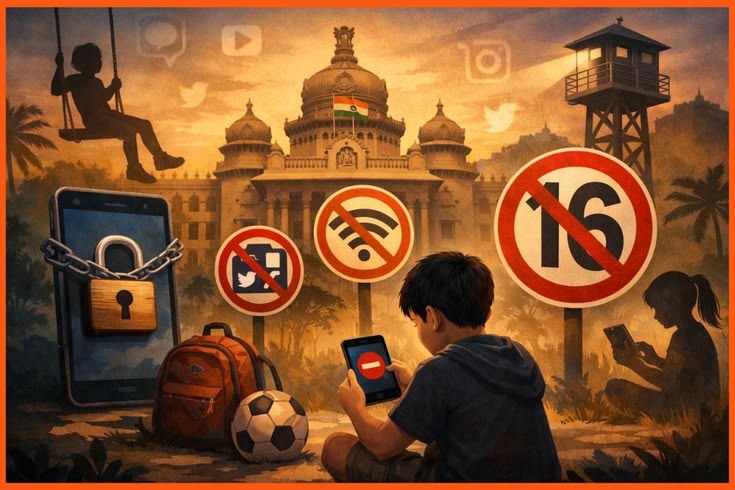

On 10 December 2025, Australian teenagers woke up to find something unexpected missing from their phones: their social media accounts. Overnight, a world‑first law had taken full effect, making it illegal for platforms to allow anyone under 16 to hold an account on most major social apps, from TikTok and Instagram to YouTube, Reddit, Snapchat and X. For parents who had long worried about toxic content, cyberbullying and addictive design, the move felt like a long‑overdue correction; for many young people, it felt like a blunt‑force reset of their social lives.
The new rules grow out of the Online Safety Amendment (Social Media Minimum Age) Act 2024, which set 16 as the minimum age for access to a defined class of “age‑restricted social media platforms.” Unlike earlier, softer efforts in other countries that leaned on parental consent or self‑declared ages, Australia’s law places the burden squarely on platforms, not parents or teenagers, to keep under‑16s out. Companies that fail to take “reasonable steps” face penalties that can reach up to 49.5 million Australian dollars, instantly turning youth safety from a policy talking point into a serious balance‑sheet risk.
How The Ban Actually Works
Behind the headlines, the mechanics of the law are quietly reshaping how the biggest platforms operate in Australia. To comply, social media firms must roll out some form of “age assurance” for all users that is robust enough to reliably distinguish adults from minors, yet still acceptable to regulators and the public. That has pushed companies to experiment with tools like facial age estimation, video selfies, government ID checks and AI‑based verification systems, often in combination, while trying not to create new privacy nightmares in the process.
The legislation defines “age‑restricted social media platforms” in functional terms: services whose core purpose is online social interaction, that allow users to connect and share content and that distribute that content to people in Australia. That captures the major global players such as Facebook, Instagram, TikTok, Snapchat, X, YouTube, Reddit, Threads, Twitch and Kick, while leaving out messaging‑first tools like WhatsApp and more niche services that don’t fit the definition. From December 2025, those platforms must not only block new under‑age sign‑ups but also remove existing under‑16 accounts, a task that has triggered waves of account suspensions, appeals and, inevitably, attempts to bypass restrictions.
Regulators have signalled they are willing to test the limits of what “reasonable steps” means in court. In early 2026, the eSafety Commissioner indicated that Facebook, Instagram, Snapchat, TikTok and YouTube were under scrutiny for not doing enough to stop minors accessing their services under the new regime. How those cases unfold will help determine not just the Australian enforcement standard but the global bar for youth protection on commercial platforms.
The Promise: Less Harm, More Childhood
Politically, the ban has been framed as a protective shield at a “critical stage of development” for young Australians. The government points to research showing that a vast majority of 10‑ to 15‑year‑olds were already active on social media, often exposed to self‑harm content, harassment, unrealistic body standards and relentless algorithmic feeds that reward outrage and extremity. By pushing the minimum age to 16, policymakers hope to delay first contact with those forces, giving adolescents more time to develop emotional resilience and media literacy before facing the full intensity of the attention economy.
The law also sends a clear market signal about design responsibility. Features such as infinite scrolling, autoplay and hyper‑personalised recommendations, once celebrated as growth engines, are now being cited explicitly as risk factors that justify age‑based exclusion. In that sense, Australia’s move is not just about who gets access but about what kinds of engagement‑driving techniques are considered acceptable when minors are involved. The hope among child advocates is that, under regulatory pressure, the same creativity that once optimised for time‑on‑platform will pivot toward healthier, age‑appropriate experiences.
Parents, for their part, often describe the law as a rare instance of the state taking their side in a battle they felt they were losing. Faced with peer pressure, persuasive product design and the ubiquity of smartphones in schools and social circles, many families had struggled to hold the line alone. A legally enforced minimum age offers a new script: it is no longer just “our house rule,” but a national boundary.
The Backlash: Privacy, Autonomy And Loopholes
For all its ambitions, Australia’s ban lands in a minefield of unresolved questions. To verify age at scale, platforms are being nudged towards systems that collect or infer sensitive biometric and identity data, raising the stakes for privacy and security breaches. Regulators have tried to pre‑empt this by baking strong privacy safeguards into the framework and limiting how “age assurance providers” can use the data they gather, but skepticism remains high among civil liberties groups and technologists.
Young people themselves have emerged as some of the policy’s most vocal critics. Many argue that social media is not just entertainment but infrastructure: a place where they organise around causes, find communities that may not exist offline and access information that is absent from school curricula or family conversations. Locking them out, they say, does little to address underlying harms and instead pushes their digital lives into more opaque spaces, from VPN‑routed accounts to fringe platforms beyond the law’s reach. Early anecdotal reports of teenagers quickly finding workarounds suggest that enforcement will be a long, iterative process rather than a clean break.
Globally, policymakers are watching closely. In Europe and the United States, governments at every level are experimenting with age‑based limits, parental consent rules and design codes for platforms used by minors, but few have gone as far as a hard nationwide ban below 16. If Australia’s model is seen to reduce harm without producing disproportionate side‑effects, it may become a template. If the costs to privacy, youth autonomy and practical enforceability mount, it could instead be remembered as an overcorrection in the messy evolution of digital childhood.