
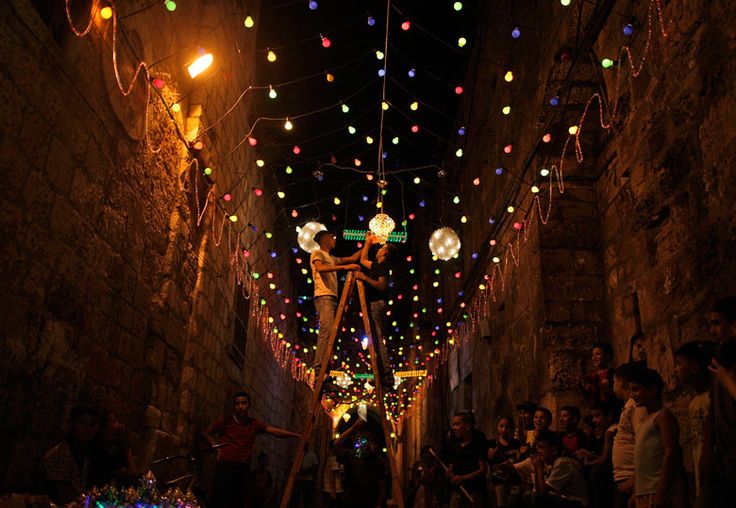

As the arrival of Ramadan 2026 draws near, Muslim communities from the Middle East to Southeast Asia and beyond are once again focused on a familiar question: will the holy month begin on February 18 or February 19? The answer depends on the sighting of the new crescent moon — a practice influenced by geography, spiritual interpretation, and scientific observation.
At the center of this annual discussion lies the enduring divide between visual moon sighting and astronomical calculation, a discourse that has persisted for centuries across the Islamic world. For many, it remains a defining intersection of tradition and modernity.
Diverging Practices Across Nations
In Saudi Arabia, where the Islamic calendar remains grounded in physical moon observation, authorities have reaffirmed their steadfast adherence to direct sighting. The Saudi Supreme Court reiterated its guidance in anticipation of the crescent, calling upon citizens to look for the moon on the evening of the 29th of Sha’ban.
Comparable instructions have been released across Gulf nations, reinforcing the longstanding view that observing the crescent by eye is central to faith and practice.
Elsewhere, however, some Muslim-majority regions and organizations are increasingly integrating astronomical data into their decision-making. The Indonesian Ulema Council, for example, advocates a hybrid model in which religious tradition is upheld while astronomical methods help clarify visibility and timing. Council members often note that scientific tools aid observation without replacing religious judgment.
Faith in a Global Context
These varying approaches mean that Ramadan’s start can differ by location. In parts of South Asia, Europe, and North America, local moon sighting committees or recognized international authorities often make independent announcements, sometimes leading to differing start dates for fasting.
The International Astronomical Center in the United Arab Emirates has long emphasized the impact of geography on moon visibility. Its director, Mohammed Shawkat Odeh, has observed that the crescent may be visible in one region but remain unseen in another on the same night — an example that underscores how science and topography interact with faith.
While this variability can lead to logistical differences, it also reflects the increasingly global character of the Muslim community and the diverse ways believers express a shared tradition.
Harmony Between Religion and Reason
For religious scholars, the discourse is less about disagreement and more about coexistence. Egypt’s Dar al-Ifta has stated that moon sighting is a devotional act that aligns with, rather than opposes, astronomical understanding. Scientific calculations, the institution asserts, can support accuracy while maintaining the sanctity of ritual observance.
That perspective is finding broader acceptance as Muslim populations span continents and seek consistency across different environments and calendars. Communities now view the connection between observation and calculation as complementary rather than contradictory.
More Than a Date
The beginning of Ramadan carries practical effects well beyond personal devotion. Governments alter work and school timetables, businesses prepare for shifts in spending, and travel plans are adjusted across Muslim-majority countries. A single day’s difference can shape public life for millions.
Yet the yearly debate itself has become a cherished part of Ramadan’s character — a moment when faith, scholarship, and anticipation intersect. As one scholar recently noted, “The moon reminds us that Islam exists under real skies, shared by communities that are both connected and distinct.”
Whether the crescent is first seen on February 18 or 19, the 2026 discussion once again reflects Islam’s global reach and the careful balance it continues to strike between enduring tradition and evolving knowledge.