
The Warsaw skyline has always worn its history on the surface. Gothic spires rise beside glass towers, tram lines trace the scars of past crises, and construction cranes sketch out a future that is never guaranteed. In that uneasy space between rubble and renewal, Fedlan Kılıçaslan made a decision that recast his role in global finance. It was not the decision to launch Akif Capital in 2023, nor the choice to anchor it in a city that knows something about rebuilding. It was the moment he chose to treat volatility not as a storm to survive, but as a moral test of what finance is for.
The Choice At 16,000
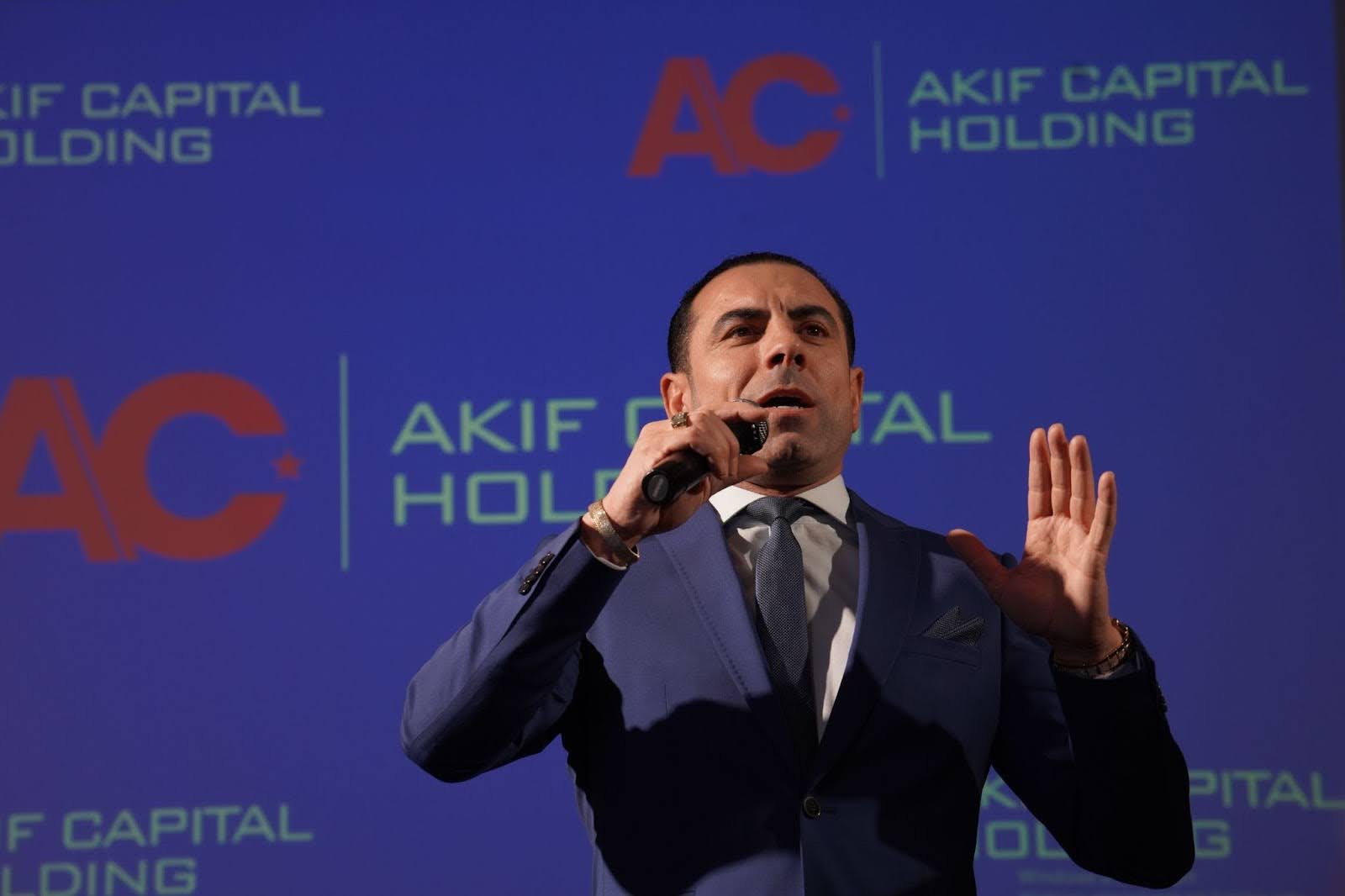
During April 2025, when the Nasdaq hovered near 16,000, and panic rolled through trading floors, most investors did what fear trains them to do. They pulled back, hoarded cash, and waited for central banks to rescue their models. Akif Capital, under Kılıçaslan’s chairmanship, did the opposite. Its internal framework suggested a 73 percent probability that artificial intelligence and productivity gains would reignite growth by 2026, even while headlines warned of collapse.
The firm deployed $450 million into cloud computing and robotics stocks at the trough. Six months later, the index had rebounded 19 percent, and that single, contrarian allocation accounted for 41 percent of Akif’s annual gains. In purely financial terms, it was a masterstroke. In moral terms, it was something else entirely. The move signaled that Kılıçaslan was prepared to stake capital, jobs, and reputation on a long-term reading of human potential rather than short-term fear.
He has described crises as breathing cycles rather than cliff edges, insisting that “markets breathe in and out” and that what many called chaos was, in fact, a recalibration. That language matters. It rejects the fatalism that often accompanies downturns and replaces it with responsibility. If markets function as an ecosystem instead of a casino, then investors become stewards, not just winners or losers.
From Speculation To Stewardship
The decision at 16,000 did not emerge from a vacuum. It rested on years of work decoding 32-year economic cycles that track technology, debt, and generational behavior. Where others saw trade wars and tariff shocks as random, Kılıçaslan treated them as structural corrections in an overextended system. When the United States reimposed tariffs on Chinese goods, triggering a 10 percent plunge in oil prices and a sell-off in global equities, Akif Capital doubled down on what he calls the “three Ps”: productivity, population shifts, and policy pivots.
That lens moved the firm into European renewable energy projects, Polish wind farms, Spanish solar parks, and Brazilian green hydrogen, while the European Union accelerated its green transition and emerging markets sought new growth engines. The strategy does not resemble philanthropy because it still pursues returns. It reflects a different kind of financial imagination that assumes the next bull market will rest on innovation and efficiency rather than cheap money and consumer overextension.
The numbers suggest the strategy works. While the MSCI World Index dipped 3.1 percent in one turbulent quarter, Akif’s portfolio gained 14.3 percent, powered by disciplined exposure to artificial intelligence infrastructure and renewables. It holds positions for an average of 5.2 years, triple the horizon of a typical hedge fund, and uses a 32-year model that contemplates futures as stark as Japan’s population dropping below 100 million and central bank digital currencies reshaping money itself. In a field that often treats time as the enemy, Kılıçaslan turned it into an advantage.
What Victory Looks Like
What makes that single decision transformative lies not simply in the profit it generated. The choice reoriented Akif Capital toward building institutions rather than chasing moments. Around that inflection point, Kılıçaslan codified 10 core disciplines designed to shape Akif into a “100-year firm,” with geographic diversification that keeps roughly 68 percent of assets in North America and Europe while moving decisively into Latin American agritech, Middle Eastern fintech, and technology-driven urban development.
His story stretches from selling simit on the streets of Balıkesir to leading a mid-sized private equity group that outperforms benchmarks like the S&P 500, yet he frames success less as personal ascent and more as system-building. Through Akif Capital, FED Development’s urban revitalization projects, and consumer platforms such as Euromatch in Brazil, he has pushed capital into places where infrastructure and opportunity still lag aspiration.
Today, in an age taught to react to every tremor, Kılıçaslan urges his team to“stand still, let the world come to you,” and to treat volatility as the price of discovering asymmetry rather than an excuse for paralysis. That posture does not absolve finance of its past harms, nor does it guarantee that every bet will land. It does something subtler and perhaps more radical. It insists that capital can move with patience, that risk can serve a purpose, and that the real game changers do not merely ride the cycle but dare to see its shape and accept responsibility for what they do with that knowledge