

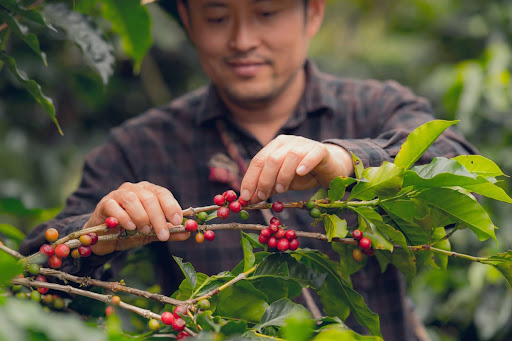

A $29 pair of reading glasses just solved one of Guatemala’s thorniest agricultural problems.
A $29 pair of reading glasses has done what years of debate over labor shortages and productivity have not: it made Guatemala’s coffee fields more productive—almost overnight.
Coffee harvesters fitted with corrective eyewear increased their daily output by 12 pounds, a 7.9% productivity gain that translates to $321 in additional annual wages per worker and $906 in extra revenue for farm owners.
The findings come from Seva Foundation, a Berkeley-based nonprofit that has spent nearly five decades providing eye care services to 72 million people across more than 20 countries. Their latest research, conducted across 12 Guatemalan coffee farms with 332 seasonal workers during the 2023-2024 harvest season, reveals that addressing uncorrected vision problems delivers returns comparable to an entire year of formal education, but with immediate results and at substantially lower cost.
The $1 to $11 Return on Investment
“We estimate that providing glasses increases harvest output by about 12 pounds per worker per day, roughly an 8% productivity gain, at a cost of $29 per person,” says Brad Wong, Chief Economist at Seva Foundation. “Harvesters receive more than $300 in extra wages, and farm owners experience $900 in higher revenue from every pair of glasses provided on farms: a remarkable win-win for workers, businesses, and Guatemalan society.”
The research arrives as coffee producers grapple with climate-related yield pressures and persistent labor shortages. Guatemala’s coffee sector faces particular strain, with approximately 2 million of the country’s 17 million residents suffering from some form of visual impairment. The country has the highest age-standardized prevalence of eye disease in Latin America and the Caribbean at roughly 16%. Rural areas experience even higher rates, approaching 30% according to field estimates.
Coffee harvesting is more visually demanding than it appears. Workers must scan plants from a distance to locate clusters of ripe cherries, then examine individual berries up close to select only those ready for harvest. Seva’s research team, which included economists from the University of San Francisco, UC Davis, Johns Hopkins University, Mettalytics and local Guatemalan partners, found that workers struggling with both near and far vision gained the most from correction.
Those with conditions affecting both near and far vision, such as astigmatism, experienced productivity increases of 14.8 pounds per day, a 10.4% gain. Workers with either distance or near vision problems showed smaller but still meaningful improvements. The pattern confirms what researchers suspected: clearer sight directly enables faster, more accurate cherry selection.
Crucially, the gains appeared almost immediately. Productivity rose within the first week of wearing glasses. Because coffee pickers are paid by the weight harvested, higher output translated directly into higher incomes—while farm owners captured greater yields without increasing labor headcount.
Systems That Sustain Themselves
Seva’s model goes far beyond distributing glasses.The organization builds infrastructure that outlasts its presence. Founded in 1978 by public health expert Dr. Larry Brilliant, spiritual teacher Ram Dass, and activist Wavy Gravy (with early backing from Apple co-founder Steve Jobs), Seva partners with local hospitals, governments, and communities to create self-sustaining eye care programs.
The organization trains local eye health professionals, strengthens existing medical facilities, and equips communities to maintain services long after external support ends. Their Pristine 2.0 camera exemplifies this philosophy: small enough to fit in a backpack, the device detects conditions affecting the back of the eye, enabling care delivery in remote villages previously beyond reach.
To validate its findings in Guatemala, Seva’s research team employed rigorous statistical methods, including ANCOVA models and multiple difference-in-differences analyses, ensuring the results were not only compelling but robust.
Taken together, Seva’s field research and decades of on-the-ground work are demonstrating that eye care is not just a health intervention but a powerful economic tool—one of the most immediate, profound, and cost-effective ways to lift incomes, strengthen productivity, and alleviate poverty.
Proof That Speed Matters
“The evidence is clear: a small investment in vision leads to immediate productivity gains, higher incomes for workers, and meaningful returns for employers, often within days,” explains Kate Moynihan, Executive Director and CEO at Seva Foundation. “That kind of speed, scale, and alignment between human wellbeing and economic value is rare, and it’s exactly what governments, donors, and businesses need to see when deciding where to invest for impact.”
The $29 intervention cost comprised $13.40 for screening and diagnosis, plus $16 for glasses. Assuming a three-season lifespan for the eyewear, workers who invest in their own vision correction receive $10.90 back for every dollar spent. Farm owners who provide glasses for their workforce see returns of $2.60 per dollar invested, even after paying increased wages to more productive workers. And because this study reflects small-scale implementation costs, the impact could be even greater: at scale, glasses can be delivered for less than $5 per person.
Across developing countries, eye care interventions generate benefit-cost ratios of 36 to 1 according to Seva’s broader research. That’s six times the median return from other global development investments. The organization currently operates across Central Asia,
Southeast Asia, Eastern Europe, Latin America, and sub-Saharan Africa, with specialized programs for Indigenous communities in North America.
With more than two billion people worldwide experiencing uncorrected refractive errors (1.1 billion without proper correction, 90% residing in low- and middle-income countries), the potential economic impact extends far beyond Guatemala’s coffee fields. Seva’s research suggests that as extreme weather patterns intensify and agricultural labor becomes scarcer, the $29 solution sitting on workers’ noses might be agriculture’s most underutilized productivity tool.
Learn more about Seva Foundation: http://www.seva.org