
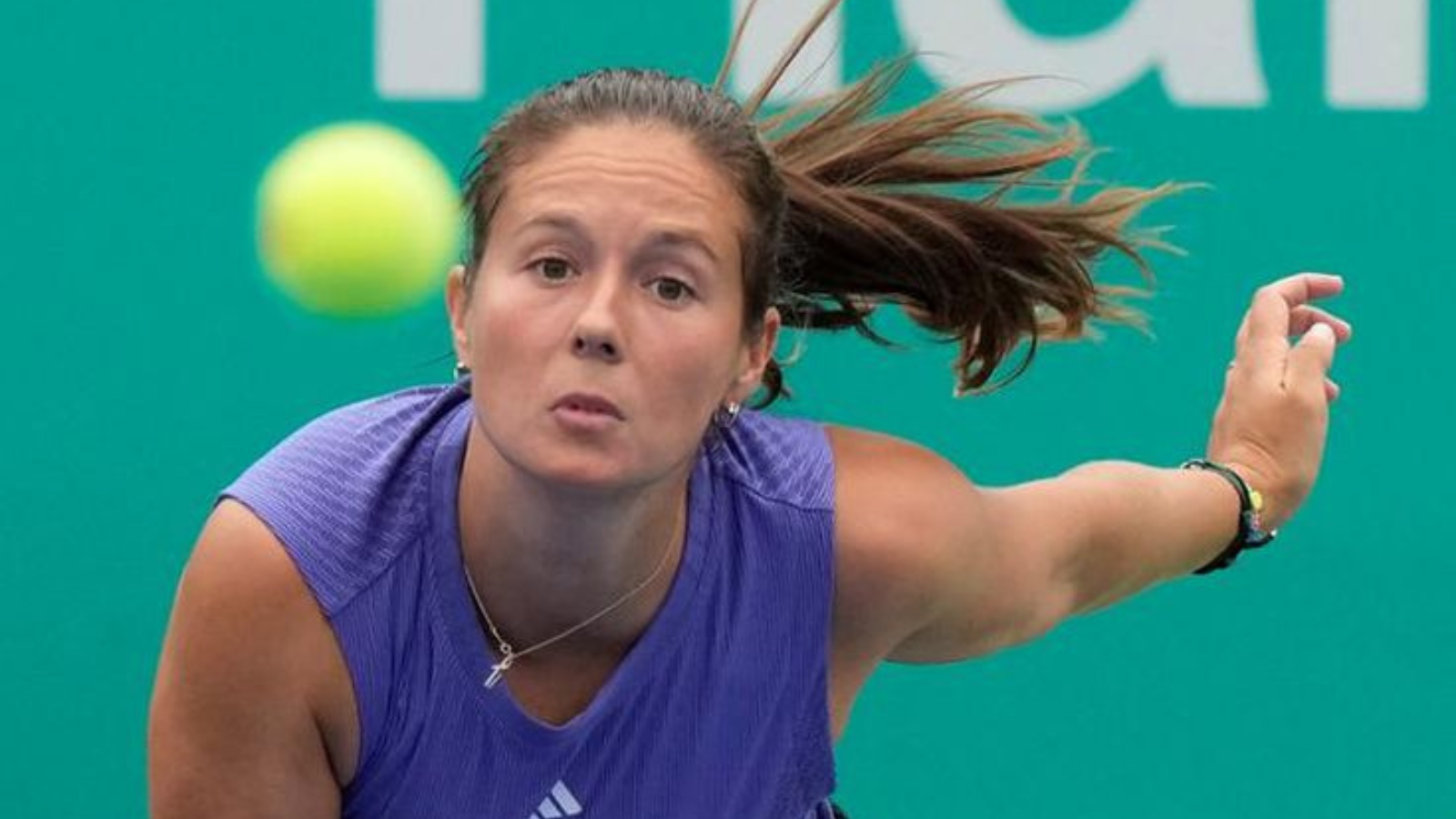

Kasatkina’s early Australian Open exit underlined a night of contrasting emotions for home fans, as her frustration collided with breakthrough performances from several other Australians on court. The result added another twist to the story of a player still adjusting to life as Australia’s adopted standard-bearer on tour.
A New Flag, Familiar Pressure
Daria Kasatkina arrived at Melbourne Park carrying both opportunity and expectation, making her debut at the Australian Open as a home player after switching allegiance from Russia to Australia. The move had made her the country’s top-ranked woman almost overnight, turning her into a focal point for a tennis public hungry for a new standard-setter.
Kasatkina had spoken in recent months about rediscovering confidence after a difficult spell, one that included a form slump and the emotional decision to end her 2025 season early for the sake of her mental wellbeing. She framed this Grand Slam not just as a chance to go deep in the draw, but as a fresh chapter in a career defined as much by resilience as by craft and court savvy.
Yet the margins at the highest level leave little room for sentiment. Under the lights in Melbourne, the crowd’s anticipation quickly turned to unease as familiar frailties resurfaced in Kasatkina’s game, from misfiring serves to tentative forehands at key junctures. For a player who has built a reputation on variety and creativity, the unsettling sense was that the racquet felt heavier than usual in her hands.
A Night That Got Away
From the opening games, Kasatkina chased the match more than she dictated it. Her opponent seized on short balls, stepped into the court, and forced the Australian to defend from uncomfortable positions, turning rallies into tests of nerve as much as skill. Broken early in the first set, Kasatkina struggled to settle, her body language betraying frustration as she looked to her box for answers that did not immediately arrive.
There were flashes of the competitor who has lived inside the top tier of the women’s game: knifed backhands, clever use of angles, and sequences where she worked her way into points with patient, probing patterns. But each time she threatened to swing the momentum, an untimely error or a loose service game pulled her back, almost as if the match were on a loop she could not escape.
By the final changeover, the scoreboard told a harsh but familiar story for a player trying to rebuild in a new jersey. The handshake at the net was brief, and when Kasatkina left the court, she did so with the restless walk of someone already replaying points in her head, knowing opportunities had slipped away on a night that was supposed to mark a different kind of beginning.
Frustration, Honesty And High Expectations
In the aftermath, Kasatkina did not hide from her emotions. She acknowledged her frustration at letting the match drift and spoke candidly about how much she wanted to deliver for Australian fans who had embraced her as one of their own. There was no attempt to disguise the sting of the defeat; instead, she leaned into honesty, a trait that has become part of her appeal well beyond the boundaries of tennis.
Her openness sits against a backdrop of long-standing physical and mental challenges she has discussed before, including migraine attacks that have affected her since adolescence and the toll of a packed tour schedule. Those realities add context to nights like this one, where a flat performance is less about lack of effort and more about the complex balancing act required to compete at the top while managing health and expectation.
Australian tennis has, in many ways, fast-tracked its relationship with Kasatkina. She has already delivered signature results in national colours, including big wins that hinted at a new era for the country in women’s tennis. That history makes losses such as this feel heavier, amplifying every misstep while occasionally obscuring the fact that reinvention, especially on a global stage, is rarely linear.
Mixed Fortunes For The Home Contingent
If Kasatkina’s frustration offered one snapshot of the night, the broader picture for Australian players was far more varied. While one flag-bearer fell early, other locals used the same stage to announce themselves, stringing together gritty wins that kept home hopes alive deep into the evening. The result was a patchwork of emotions in the stands: disappointment on one court, relief and jubilation on another.
That contrast is part of the tapestry of a home Grand Slam. For Australian fans, the tournament becomes a rolling narrative, with each session offering a new hero, a surprising upset, or an unexpected storyline. On this particular day, Kasatkina’s loss existed alongside breakthrough performances and heartening comebacks from compatriots who thrived under the same spotlight that seemed to weigh her down.
For Kasatkina, the challenge now is to find meaning in a night that did not go to script, even as the tournament moves on without her. She has already signalled her desire to return and write a different story in Melbourne, hinting that the connection she feels with Australian crowds will not be undone by one painful loss. In a sport that rarely pauses, her journey will continue on the next court, the next week, the next tour stop, with this defeat another chapter rather than the final word.