
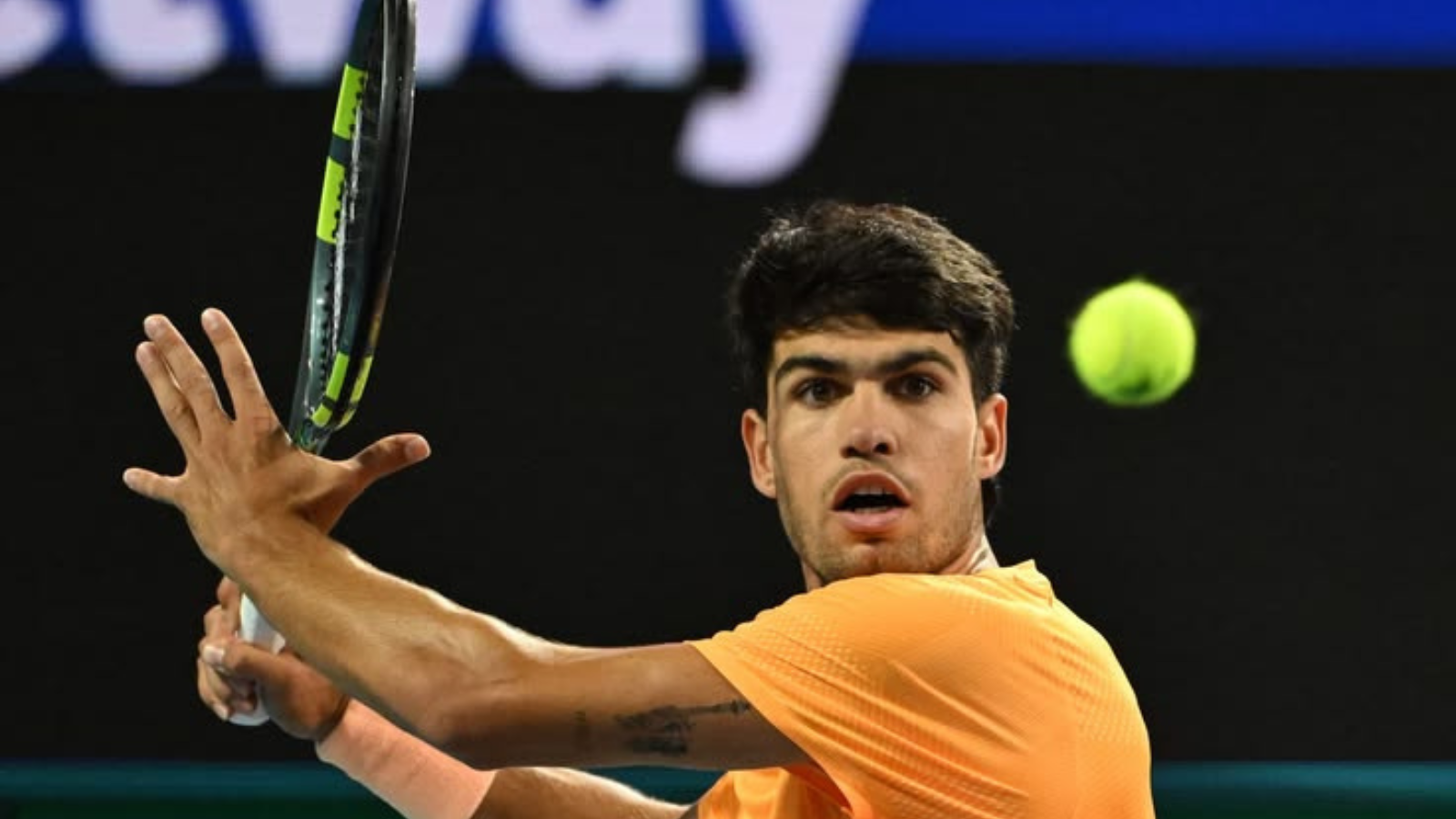

Carlos Alcaraz arrives in Melbourne carrying more than just expectation. The young Spaniard, already a Grand Slam champion, now stands on the edge of another defining chapter in his career. The Australian Open has long been a proving ground for emerging greats, and for Alcaraz, it presents an opportunity to solidify his place among the sport’s elite.
Yet this campaign unfolds against the backdrop of change. His recent split from a key member of his support team has added a layer of intrigue to his preparation. While transitions like these are not uncommon in professional tennis, timing is everything. For a player chasing history, even subtle shifts in rhythm can carry weight.
Despite this, Alcaraz has shown little outward sign of disruption. His early training sessions in Melbourne have reflected the same intensity and creativity that have defined his rapid ascent. Observers note that his adaptability, both tactically and mentally, may prove decisive as the tournament progresses.
Navigating Change on and off the Court
The nature of Alcaraz’s recent split has sparked conversation across the tennis world. Changes within a player’s inner circle often invite scrutiny, particularly when they occur ahead of a major tournament. However, those close to the Spaniard suggest the decision was rooted in long-term growth rather than immediate necessity.
Professional tennis demands constant evolution. From coaching adjustments to physical conditioning strategies, players must refine every aspect of their game to remain competitive. For Alcaraz, this moment may represent a recalibration rather than a setback. His team continues to emphasize stability, ensuring that the core of his preparation remains intact.
On the court, his game appears as dynamic as ever. His ability to shift between baseline aggression and deft net play gives him an edge against a wide range of opponents. As the tournament unfolds, the question will not simply be whether he can win, but whether he can sustain peak performance through the physical and psychological demands of a Grand Slam.
An Open Field in the Women’s Draw
While Alcaraz’s journey commands attention, the women’s draw tells a different story, one defined by unpredictability. In recent years, the Australian Open has seen a variety of champions, reflecting the depth and competitiveness of the women’s game. This year appears no different.
Several top contenders enter the tournament in strong form, yet none carry an overwhelming aura of dominance. Injuries, fluctuating performances, and the emergence of new talent have contributed to a landscape where opportunity feels evenly distributed. For rising players, this openness presents a rare chance to make a breakthrough on one of tennis’s biggest stages.
The absence of a clear favorite has also heightened anticipation. Matches are expected to be tightly contested, with momentum capable of shifting rapidly. In this environment, mental resilience often proves as critical as technical skill. Those who can manage pressure and adapt to varying conditions are likely to emerge as serious contenders.
The Stakes of History and Opportunity
For Alcaraz, the stakes extend beyond another title. A strong run in Melbourne would further cement his status as a generational talent and bring him closer to milestones typically associated with more seasoned players. Each match carries the weight of expectation, but also the promise of legacy.
At the same time, the women’s tournament underscores the evolving nature of tennis. The lack of a dominant figure highlights the sport’s increasing parity, where margins are slim and outcomes uncertain. This dynamic keeps audiences engaged while offering players a platform to redefine the hierarchy.
As the Australian Open unfolds, these parallel narratives will shape the tournament’s identity. Alcaraz’s pursuit of history provides a focal point, while the women’s draw offers a canvas of possibility. Together, they reflect a sport in motion, where tradition meets transformation and every match holds the potential to shift the conversation.