

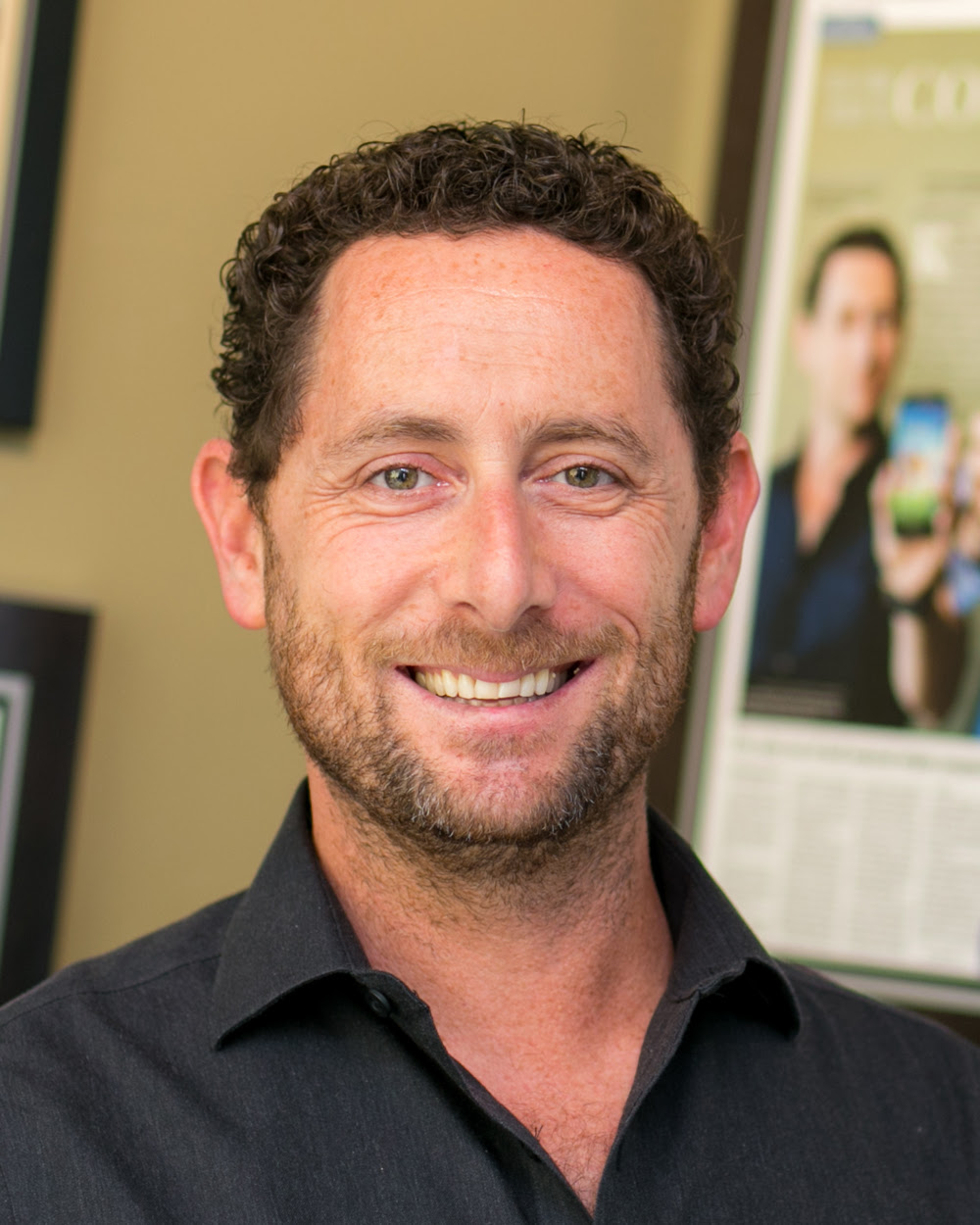

Most people find out about a technology shift when it is already too late to act on it. Andrew Maltin has made a habit of finding out early. The co-founder of MEDL Mobile and the mind behind Cytd.ai has spent the better part of three decades building inside technology markets that most established players had not yet taken seriously. That track record is exactly why his current argument deserves attention.
The Search Habit Nobody Noticed Breaking
Something changed quietly in how people look for businesses. A customer searching for a local accountant, a restaurant for Friday night, or a plumber for a weekend emergency is increasingly likely to type their question into ChatGPT or ask Google’s AI Overview rather than scroll through a list of blue links. The answer they receive is not a ranked list of options. It is a direct recommendation, synthesised on the spot, drawn from sources the AI has learned to trust.
For businesses, this creates a problem that most have not yet registered. A company could hold a page-one Google ranking built over years of careful search engine work and still receive no mention at all when an AI assistant fields the same query. Google and AI answer engines are running on different logic. Google rewards backlinks, keyword placement, and site authority. AI systems surface brands that are well-cited across authoritative sources, whose content clearly answers the questions real customers ask, and whose technical structure allows the AI to read and extract information cleanly. These are related disciplines, but they simply are not the same one.
Maltin watched this divergence open up and drew a conclusion that shaped everything he built next. The businesses investing only in Google while ignoring AI citation visibility were, in his reading, quietly becoming invisible to a growing share of their own potential customers.
Why the Clock Moves Faster This Time
Maltin’s previous company, MEDL Mobile, was co-founded in 2008 at a moment when mobile applications were an open field. The firms that entered early built client relationships and category credibility that later entrants spent years trying to replicate. MEDL went on to develop products for clients including The New York Times, Disney, and Emirates Airlines — a portfolio that grew precisely because the company arrived before the market consolidated.
His read of AI search follows the same pattern, with one crucial difference. “The way customers find businesses is changing faster than most operators realise,” he has said. The mobile transition gave early movers years to build advantage. The AI search transition, in his view, is compressing that window significantly.
The data bears this out. AI-referred sessions to websites grew 527 percent year-over-year through the first half of 2025. Meanwhile, Acquia research found that 70 percent of organisations believe AI search will significantly affect their strategy within three years, while only 20 percent have started doing anything about it. That gap between awareness and action is where Maltin has placed his bet.
What Cytd.ai Actually Does
The platform Maltin built to address this is deliberately unglamorous in its design. Cytd.ai measures a business’s citation visibility across major AI platforms — ChatGPT, Google AI, and Grok — and produces a single score based on three inputs: how often the business is referenced across AI platforms, how well its content matches the questions its customers are actually asking, and whether its technical structure meets the standards AI systems use when deciding what to cite.
“The shift from traditional search to AI search created a new visibility problem for businesses,” Maltin said. “Success was no longer determined solely by rankings on Google. Companies needed a way to understand how AI systems were interpreting their brand and recommending them to customers. Cytd.ai teaches AI models on their behalf.”
That clarity of purpose is intentional. Many tools in this emerging category present business owners with dense dashboards full of metrics that require technical expertise to interpret. Cytd.ai produces one number, with specific recommendations ranked by impact behind it. The target user is not a digital marketing team. It is the restaurant owner, the independent insurance broker, the real estate agent — the operator who needs to know where they stand in AI search without needing a specialist to explain it.
The category itself is gaining ground. Established analytics companies including Semrush have added AI visibility monitoring to their existing platforms. Newer companies are being built around it from the ground up. The discipline, broadly called answer engine optimisation, is no longer speculative. It is becoming a standard line item in how serious businesses think about customer discovery.
Maltin’s argument is simple: the businesses that act now accumulate an advantage that compounds over time. AI systems, much like their search predecessors, tend to reinforce existing patterns. Brands already appearing in AI-generated answers attract more citations. Brands absent from those answers face a rising barrier to entry with every passing month. The window to act before that gap becomes structural will not stay open indefinitely.