

The night at State Farm Arena started late, with an 11:06 PM local tip that felt like it invited a strange kind of patience. New York arrived with purpose anyway, establishing control before the game could turn into the kind of track meet Atlanta prefers. From the opening stretch, the Knicks played as if they intended to own the margins, not just the spotlight, and that approach quietly shaped everything that followed.
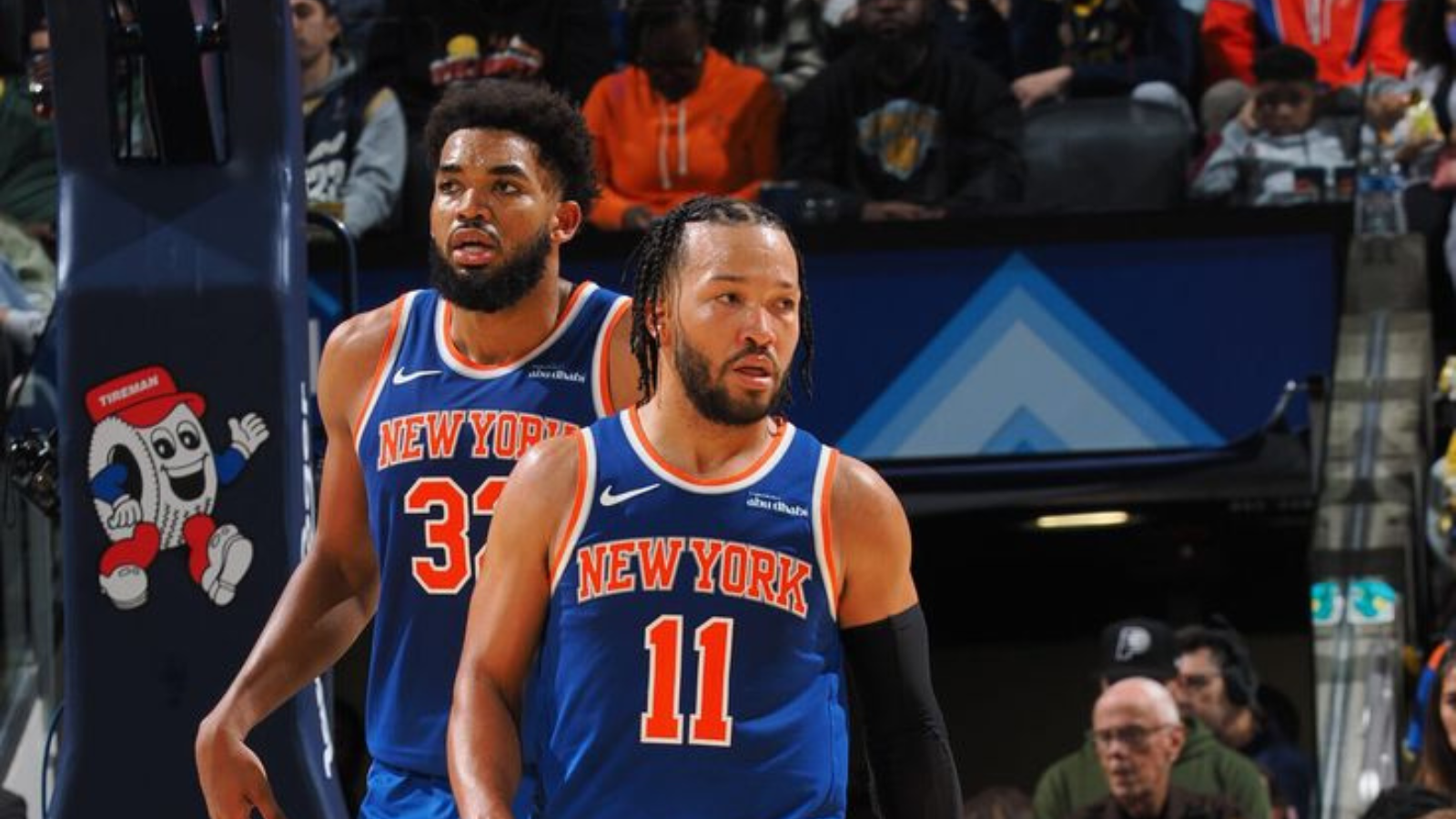
Atlanta had energy right out of the gate, showing life through Onyeka Okongwu’s perimeter touch and Jalen Johnson’s ability to create. Those early moments gave the home crowd something to lean into and forced New York to respond rather than dictate every possession on its own terms. Still, the Knicks answered with structure, feeding Karl-Anthony Towns in positions where he could punish contact and letting Jalen Brunson steer the offense when the tempo threatened to fray.
As the first half settled, New York’s path became clearer. Extra chances appeared again and again through offensive rebounds, and the Knicks kept returning to the free-throw line as physical play increased. Atlanta could slice into the margin with timely threes, but New York’s ability to reset a possession, draw whistles, and finish trips with points helped the visitors maintain the upper hand by halftime.
Towns And Brunson Build The Middle Quarters
If the early minutes were about establishing posture, the middle of the game was about reinforcing it. Towns, in the midst of a season-best scoring night, kept asserting himself in ways that showed up everywhere on the stat sheet. He finished with 36 points and 16 rebounds, and the most telling detail was how reliably he turned contact into points, going 17-for-18 at the line. That steady accumulation gave New York something Atlanta struggled to erase.
Brunson supplied the balancing force. Whenever Atlanta threatened with a burst, he met it with a jumper or a controlled possession that stopped the momentum from snowballing. He ended with 34 points, hitting 15 of his 29 shots and knocking down 4 of 11 from three, and his calm management mattered as much as his scoring. The Knicks did not need him to play fast; they needed him to play sure, and he did.
Atlanta, meanwhile, kept finding decent looks but couldn’t consistently turn them into a sustained run. Empty possessions and turnovers arrived at the wrong times, interrupting the rhythm a comeback requires. By the time the third quarter gave way to the fourth, the Hawks were no longer searching for style points. They needed urgency, and they leaned into defensive pressure and transition chances to try to change the temperature of the game.
One Possession, One Swing, One Escape
The final quarter delivered the kind of finish that makes a three-point margin feel deceptive. Atlanta surged late and finally managed to pry the door open, turning pressure into a steal and score that flipped the building’s mood in an instant. With 48 seconds left, Nickeil Alexander-Walker converted a layup after a steal to push the Hawks in front 125-124, a brief lead that carried the weight of the entire comeback.
New York didn’t panic, and the response came in the most straightforward form. OG Anunoby stepped to the line and hit two free throws to restore the Knicks’ advantage at 126-125 with 30 seconds remaining. Then, in the moment that decided the night, Atlanta’s chance to answer dissolved into a turnover. Trae Young’s pass was picked off by Anunoby, a defensive play that turned the Hawks’ momentum into immediate damage.
The Hawks still had opportunities to tie it, but the Knicks forced hurried execution and avoided the kind of clean look that would have rewritten the ending. New York added the final points at the line in the closing seconds, finishing the sequence that closed the game at 128-125 and sealing a win built on composure, rebounding control, and a willingness to live at the stripe when everything tightened.
The numbers reflected the story the tape already told. Both teams made 43 field goals, and Atlanta actually shot a higher percentage from the floor and from three, going 17-for-43 beyond the arc. Yet New York’s advantage surfaced in the less glamorous places, especially on the glass. The Knicks won the rebounding battle 55-37, including 19 offensive boards to Atlanta’s 9, and those extra possessions paired with a 27-for-32 night at the free-throw line helped offset Atlanta’s shot-making. In a game that ended with a frantic final minute, New York survived because it spent the earlier minutes quietly stacking the kind of edges that matter most.