

In the early life of most hard-tech startups, progress is measured not by revenue or market share, but by how many experiments can be run before time, money, or people run out. Benches fill with improvised setups, protocols shift faster than they can be documented, and promising ideas stall under the weight of manual repetition. For decades, this fragility was treated as an unavoidable phase of innovation.
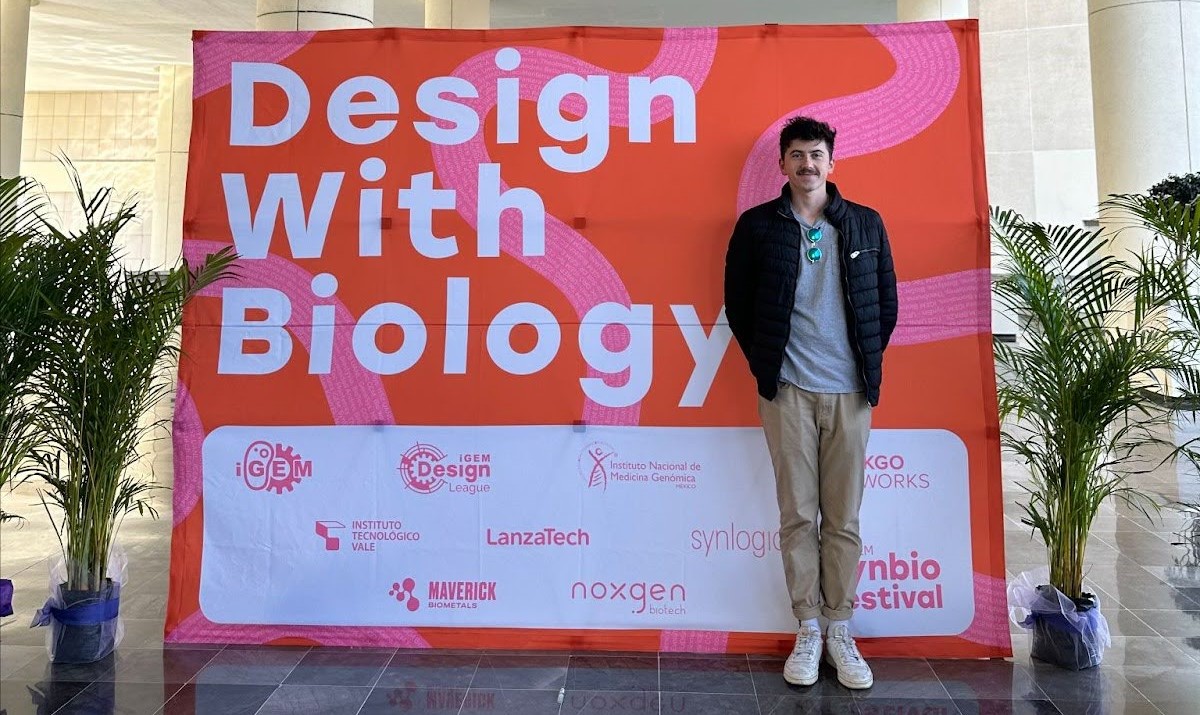
Antoine Gueguen has spent much of his early career on reducing the constraints associated with that phase. As a bioengineer, Gueguen focuses on laboratory automation as foundational infrastructure rather than a late-stage addition. His work reflects a broader shift underway across biotechnology and other hard-tech fields: a growing view within parts of the industry that the ability to scale experimentation can influence whether research efforts translate into commercial applications.
Rather than asking how research can be simplified to fit existing machines, Gueguen frames the challenge differently: how can laboratory systems remain adaptable as experimental design changes?
When Experiments Become The Bottleneck
Across biotech, synthetic biology, and advanced materials research, the limiting factor is no longer ideation. Artificial intelligence and computational tools can now generate thousands of hypotheses, molecular targets, or experimental conditions in a fraction of the time it takes to test them. The result, widely documented in scientific literature, is a widening gap between discovery and validation.
This execution gap has economic consequences. Manual experimentation introduces inconsistency, slows iteration, and limits reproducibility—factors that directly affect investor confidence and regulatory readiness. As a result, demand for automated laboratory infrastructure has grown steadily. Industry analysts estimate the global laboratory automation market at roughly $6–7 billion in the mid-2020s, with projections exceeding $9 billion by 2030 as organizations pursue higher throughput and data integrity.
Gueguen encountered this constraint firsthand while working as a founding engineer at a metal-extraction startup, where biological experimentation quickly outpaced what researchers could reasonably test by hand. Manual workflows, he observed, introduced variability that made scaling more difficult.
“Manual systems fail through inconsistency, fatigue, and strongly limit the realm of possibilities that you can test,” he said. “Every time you manually test a candidate, you have to decide to leave 10 to 100 more on the side that you can’t’
Designing Automation For Uncertainty
Although a new wave of automation is just starting to challenge that, most traditional laboratory automation platforms are designed for a very specific task to be repeated over and over again, such as clinical diagnostics or quality control. But for startups where R&D reinvents protocols daily, systems built for repetition do not always accommodate that level of change.
Gueguen’s response has been to prioritize flexibility over narrow optimization. In previous roles, he introduced robotic liquid handling and modular automation workflows that replaced manual experimentation without locking teams into rigid processes. These systems ran continuously—day and night—while remaining adaptable enough to absorb frequent changes in experimental design.
The impact was significant. Experimental throughput increased by roughly 25 times without a corresponding increase in staff, expanding the range of conditions the team could evaluate while maintaining consistent experimental standards.
What once required weeks of manual effort could now be executed continuously, expanding the range of conditions the team could evaluate while maintaining consistent experimental standards.
Yet automation itself posed a barrier. Most commercial systems are designed for large pharmaceutical companies, with costs and capacities that far exceed the needs and budgets of early-stage startups. Making automation viable required more than purchasing equipment. It demanded creative engineering — building modular workflows, adapting flexible liquid-handling systems, and designing cost-conscious solutions that balanced scalability with financial constraint. In this case, the emphasis was not simply on automation itself, but on adapting it to early-stage operational realities.
There’s a balance to find between high throughput and flexibility in the process. Gueguen said. “In productive startups, automation should be designed to change.”
Automation As A Signal of Maturity
For investors and partners evaluating hard-tech startups, laboratory automation has become an indicator of operational readiness. Venture capital firms increasingly examine experimental infrastructure alongside intellectual property, viewing scalable workflows as an indicator that a company can move from proof of concept to production.
Industry analyses suggest that early integration of automation shortens development cycles and reduces marginal experiment costs—advantages that compound over time. Startups that can generate large volumes of consistent, high-quality data may be better positioned during regulatory review or technical due diligence.
“Scaling science isn’t just about machines,” Gueguen noted. “It’s about whether your systems can keep up with the questions you’re asking.”
Software, Data, And The Invisible Layer
Automation alone is insufficient without orchestration. As labs grow more complex, software platforms that manage workflows, integrate instruments, and track experimental data have become essential. The laboratory informatics market, projected to exceed $6 billion by 2030, reflects this shift toward integrated digital infrastructure.
For hard-tech startups, informatics bridges the gap between machines and insight. Without it, high-throughput experimentation risks producing more data than teams can interpret or trust.
“Throughput without structure is just noise,” Gueguen said. “The value comes when automation and data systems evolve together.”
A Measured Skepticism
Despite its promise, lab automation is not without critics. Researchers and consultants caution that poorly implemented systems can introduce new complexities, such as dependence on specialized hardware, difficult integrations, and high upfront costs.
“Automation doesn’t fix broken processes,” said Dr. Lena Ortiz, a consultant who advises research organizations on laboratory design. “Without clarity in experimental goals, you just scale confusion.”
Gueguen agrees that automation amplifies both strengths and weaknesses. “You can’t automate your way out of bad science,” he said. “But you can make good science impossible to ignore.”
Designing Scale From The First Experiment
As regulatory standards tighten and competition for capital intensifies toward 2030, the ability to turn experimental insight into a repeatable process will increasingly determine which hard-tech startups endure. In that environment, automation is less a productivity tool than a philosophy of execution.
“Adapting experiments to high throughput is hard.” Gueguen said. “Scaling is much more efficient when you keep it in mind from the very first experiment.”
If earlier generations of startups accepted fragility as the cost of innovation, current approaches place greater emphasis on designing research systems with scalability in mind from the outset.