

For more than a decade, Radhanath Thialan has been building something that most artists never attempt: a career that is simultaneously a choreographic practice, a teaching philosophy, a technology venture, and a sustained cultural project. He has done it with the kind of quiet consistency that tends to go unnoticed until the body of work becomes impossible to ignore.
Thialan’s academic foundation set the terms for everything that followed. He completed three associate degrees at Scottsdale Community College in two years, graduating with honors and membership in Phi Theta Kappa. He then moved to the University of California, Irvine, where he earned a Bachelor of Fine Arts in Dance Choreography with a 4.0 GPA and the Outstanding Choreographer Award. His Master of Fine Arts in Dance, also from UC Irvine, came with a full scholarship and academic distinction. These were not incidental achievements. They reflected a deliberate approach to a discipline that demands technical precision and conceptual clarity, a combination Thialan has carried into every stage of his professional life.
That rigor shows in his choreographic choices. Thialan’s work does not reach for spectacle. His pieces engage with questions that carry social weight: the difference between genuine and surface happiness, the symbolic role of paper in social structures, and the texture of childhood memory. All of these are drawn from lived experience and presented through movement. Props serve a meaning rather than decoration. The result is choreography that audiences tend to carry with them after the lights come up, work that operates on multiple levels at once.
A Choreographer With Intent
Thialan’s reach extends well beyond the studio. He choreographed for the Pacific Symphony’s Lunar New Year productions. He traveled to Shanghai to participate in the East Meets West International Dance Festival, where his work held its own in a context that demanded it translate across a significant cultural distance. He was part of a UCI delegation representing the university in China and Israel, and his contributions reinforced what has always been central to his artistic vision: that dance can function as a genuine medium of cross-cultural exchange, not simply a vehicle for cultural display.
That mission has also taken institutional form. Thialan founded Rad-icalDance Company, a California-based seasonal performance organization, as a long-term platform for his choreographic work. He also serves as Vice President of San Musae Cultural Center, a nonprofit dedicated to bridging Eastern and Western art forms through dance and music. These are not honorary roles. They represent the organizational infrastructure Thialan has deliberately built to sustain the cultural dialogue that runs through his work, evidence that his commitment to cross-cultural engagement is structural rather than occasional.
Since 2017, Thialan has served as Associate Artistic Director at Yaya Dance Academy, where his influence on student training has accumulated over years of consistent engagement. At UC Irvine, he taught courses in Laban Movement Analysis, Kinesiology for Dancers, and Social Dance. These subjects sit at the center of performance and pedagogy, reflecting his understanding of dance as a field that demands physical and intellectual development. His students have not simply learned technique; they have been shaped by a practitioner who takes the ideas behind the movement as seriously as the movement itself.
Technology as an Artistic Tool
What distinguishes Thialan further is his attention to the operational realities of the dance industry. Recognizing that administrative inefficiencies often limit what studios and arts organizations can accomplish, he developed a suite of customizable technology solutions: iStudio for studio management, CompTrackr for competition administration, and Recital Companion for recital production. Rather than forcing dance professionals to adapt to generic software, these platforms were designed specifically around the needs of the performing arts community.
Recital Companion, for example, serves as a comprehensive recital production platform that integrates ticketing, communication, digital programs, audience engagement, and production management into a single ecosystem. By streamlining workflows and centralizing information, studios can operate productions more efficiently, often reducing the staffing demands traditionally associated with large-scale recitals. Demonstrations and customized implementations are available for organizations seeking tailored solutions.
The instinct behind that work is the same as the one behind his choreography: identify where systems are not functioning as they should and create something that works better. For Thialan, operational clarity and creative freedom are not separate pursuits but complementary ones.
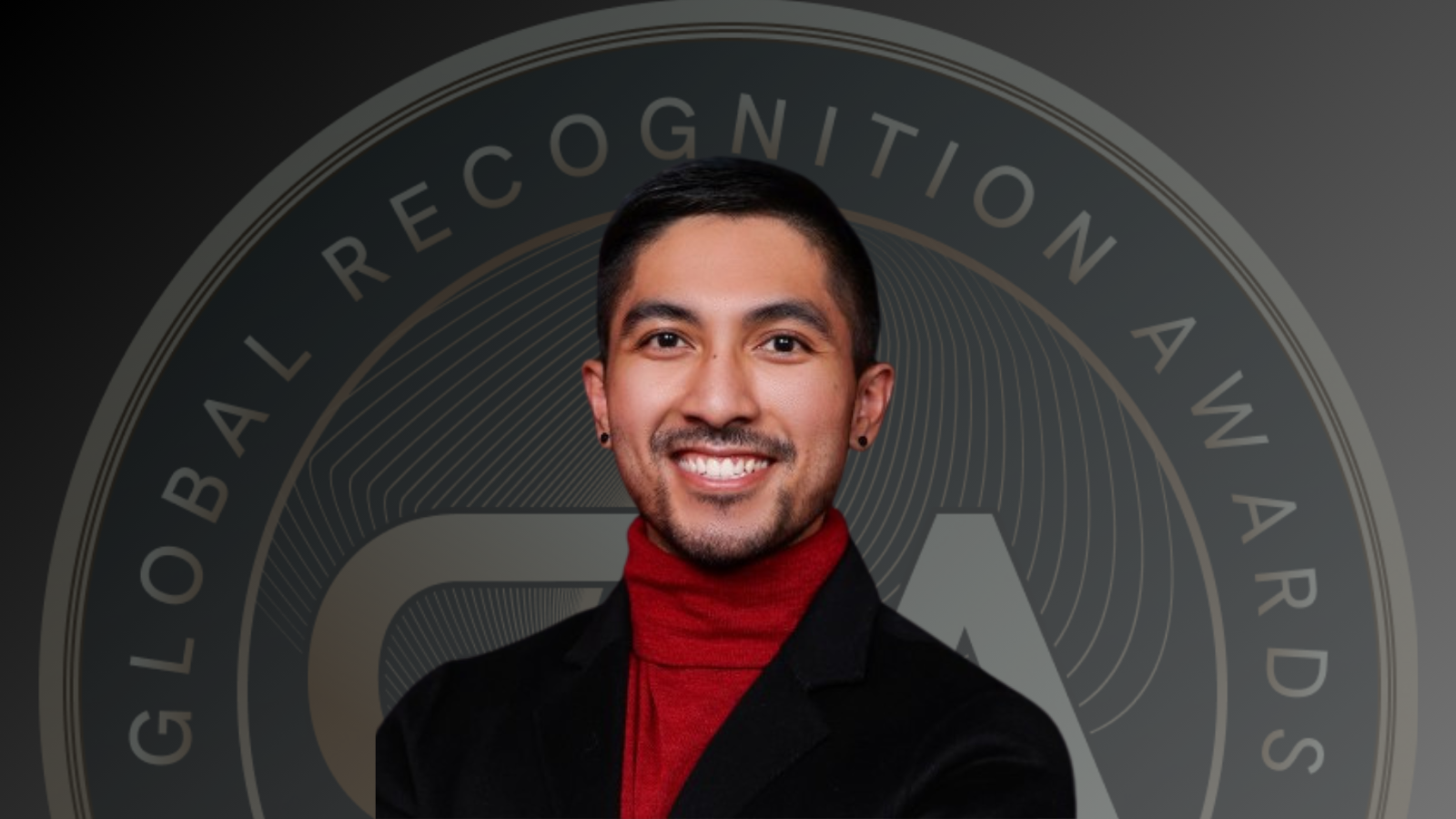
Global Recognition Awards evaluated Thialan’s profile using the Rasch model, a measurement framework that generates a linear scale for comparing applicants who excel across different areas. His scores in artistic originality, cross-cultural impact, and innovation in technique placed him among the top tier of applicants reviewed this cycle. Marquis Who’s Who also recognized him in 2026 for his expertise in the performing arts, an acknowledgment from the professional community of contributions that cover choreography, education, technology, and cultural advocacy. Thialan has received a 2026 Global Recognition Award for this body of work.
“Radhanath Thialan exemplifies the kind of multi-dimensional excellence we look for in our recipients, and his ability to lead, innovate, and create work that resonates across cultures is precisely why he has earned this recognition,” said Alex Sterling, a spokesperson for Global Recognition Awards.
A Career Built on Substance
Thialan’s career resists the logic of the singular breakthrough. There is no single production, no single award, no single moment that defines it. What defines it instead is accumulation: years of work across choreography, teaching, institution-building, and technology, each dimension reinforcing the others, each reflecting the same underlying seriousness of purpose. That kind of career is harder to summarize than a highlight reel, but it is also more durable.
He has worked across continents and disciplines without losing the thread that connects them. The choreography he made for a Lunar New Year performance in California connects to the work he brought to Shanghai, which connects to the cultural infrastructure he has built through San Musae, which connects to the students he has trained at Yaya Dance Academy. It is a coherent body of work more than a decade in the making, and still in progress.
In a field that often rewards visibility over depth, Thialan has built something that rewards closer examination. His career’s significance becomes clearer the longer you look at it, and his influence will likely take years more to measure fully.