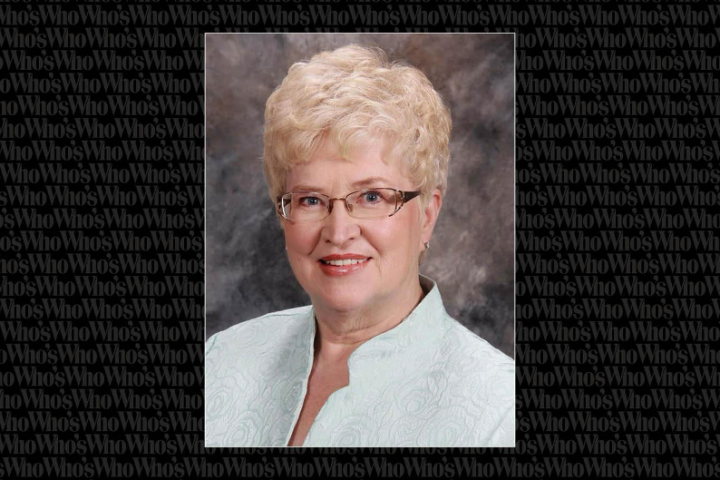



Long before the pandemic made Dr. Erin Coakley’s work feel urgently familiar to the wider world, compassion had already taken root in her life in an ordinary, almost forgettable moment. In her second book, Empathy in Crisis: How Compassion Transformed Care During COVID-19, she returns to a childhood incident that could have ended in embarrassment and reprimand. She recalls stepping on her teacher’s foot by accident, only to realize the teacher was pregnant.
What might have become a scolding instead became something else entirely. The teacher responded with patience and kindness, meeting a child’s mistake with understanding rather than shame. Dr. Coakley frames that response as more than a nice gesture. It was an early, formative demonstration of empathy in action, small in scale but lasting in effect, and it quietly shaped the way she would later think about care, responsibility, and the human side of medicine.
As her path moved through medical school, residency, and into her work as a hospitalist, that early lesson did not fade into the background. Instead, it matured alongside her clinical skills. She practiced medicine in Belton, Texas, carrying the dual weight of her professional role and her personal life, including raising twins while serving as Director of Medicine. When COVID-19 arrived and the pressure inside hospitals intensified, the compassion she had been cultivating was no longer simply a virtue. It became essential equipment.
When Hospitals Became Families
During the pandemic, Dr. Coakley witnessed how empathy could transform the atmosphere of care even when circumstances stripped away normal comforts. Hospital restrictions meant many patients faced illness without visitors. The absence of family members at the bedside left a quiet space that medicine alone could not fill, and clinical teams found themselves stepping into roles they had not anticipated.
Nurses and physicians, already stretched thin and running on exhaustion, became stand-ins for the people patients most wanted near them. They held hands when fear spiked. They sat in rooms a little longer than the schedule allowed. They offered reassurance in the moments when the machines and protocols could not soften what the experience felt like. Dr. Coakley describes these gestures as necessary, not ornamental, because they turned isolation into connection.
Her account emphasizes that time and presence can be as consequential as any intervention. In the hardest stretches, the extra minutes spent listening, the decision to stay at the bedside, and the effort to communicate warmth through barriers of fatigue and protective routines reminded patients they still mattered as individuals. Those same moments also served the clinicians, because they reconnected burned-out staff with the reasons they entered healthcare in the first place.
Three Books, One Through-Line
The trilogy begins with Heartbeats & Homecoming: A Doctor’s Pandemic Experience, a starting point that sets the emotional register for the books that follow. In it, Dr. Coakley recounts how she never expected to be leading a department, yet found herself carrying that responsibility as the crisis accelerated. She writes about sacrifice and strain, and about what it meant to watch patients fight for their lives while the work demanded steadiness day after day.
That first volume also captures the closeness that can form when teams are forced to function as a single unit under relentless stress. Coworkers became a kind of family to one another, and in many cases, to the patients who could not have their own families nearby. Dr. Coakley’s message is clear: empathy is not separate from leadership. It is a prerequisite for trust and for the kind of human connection that keeps even the strongest operational plans from collapsing when the pressure peaks.
In Empathy in Crisis, she moves deeper into the inner life of the pandemic, arguing that empathy is not a soft accessory to competence. She presents it as the center of effective care, because patients respond differently when they feel seen and valued. She offers practical guidance to clinicians, urging them toward meaningful interaction, cultural sensitivity, and a genuine effort to understand patients’ values and beliefs, not as an abstract ideal but as a workable discipline.
The book also highlights what healthcare workers learned from one another at speed. Dr. Coakley describes rapid mentorship and skill-building among nurses and physicians, with new procedures absorbed almost overnight and leaders making room for honest communication. She also stresses self-empathy, a reminder that caregivers must tend to their own limits if they hope to remain capable of tending to others, especially after so many on the front lines learned the cost of neglecting themselves.
Her third book, Leading By Example During a Crisis, widens the lens to show compassion as a force that shapes teams from the top down. Here, Dr. Coakley underscores the impact of approaching both patients and colleagues with empathy, and of listening carefully to concerns as a way to build trust and motivate improvement. The leadership she describes is not performative. It is grounded in how people are treated when the stakes are high and time is scarce.
She recounts modeling the behaviors she wanted to see, including meticulous documentation, attentive listening, and cross-disciplinary collaboration, especially during the most intense periods of the crisis. As Director of a medical group, she felt the weight of leadership, and she describes moments when communication had to happen without words, including exchanges of eye contact when language felt insufficient. Patient survival stories, as she tells them, carried lessons about resilience and reinforced the central theme running through all three volumes: compassion holds teams together and comforts patients when crisis strips everything else away.
Across the trilogy, Dr. Coakley invites readers to see empathy and leadership as intertwined rather than separate. Compassion heals individuals, but it also strengthens teams, supports mentorship, and helps leaders navigate conditions that test endurance and spirit. For readers drawn to narratives of humanity, growth, and healing, the series offers a consistent reminder that single acts of kindness accumulate into something larger, a mosaic of care that can endure even the darkest stretches. The books are now available online.