

The rolling hills of northern England and southern Scotland tell a familiar story. Rural communities and villages that once thrived on farms and local businesses now face population decline, shuttered storefronts, and aging residents with dwindling resources. With a largely forgotten and homogenous aging population, and younger residents moving into cities, the future is most certainly not very bright for this part of the world.
While economists debate solutions and policymakers draft reports, one executive has moved beyond discussion to action, merging eco-tourism, environmental reform, and economic renewal into a single vision.
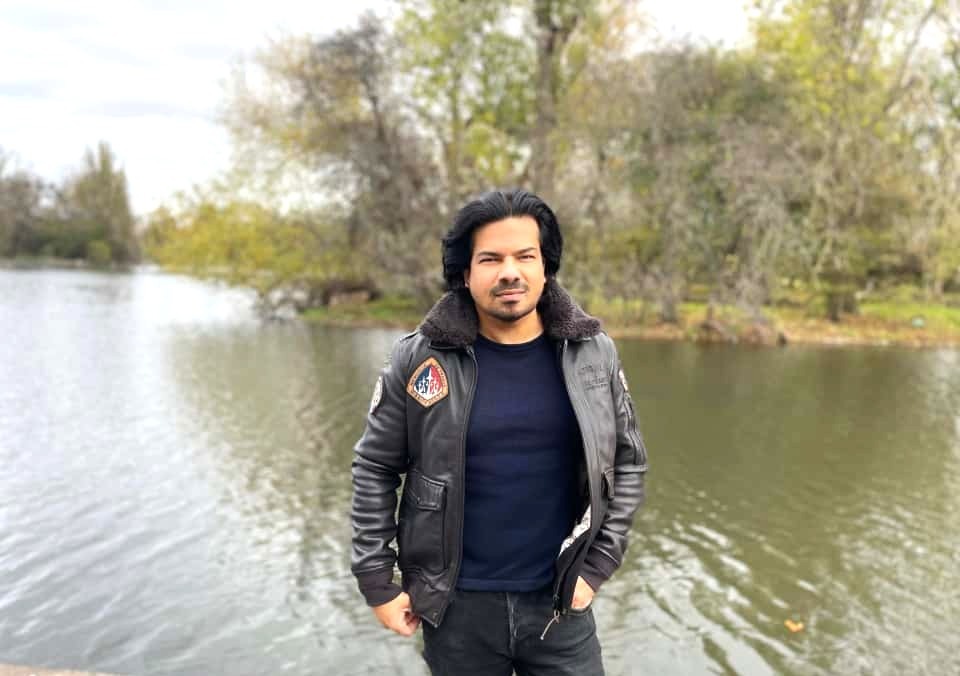
Dr. Eric Balki, CEO and Chairman of TriPyramid Ventures, leads a Group that employs more than 600 employees working across healthcare, health research, technology, and real estate development sectors. His work tackles what he sees as two connected threats in Western economies: the collapse of rural communities and the mounting pressures of aging populations in developed nations. With degrees in Physics, Finance and Law, and a PhD in Health, he has the background and motivation to take on this challenge.
“The combination of declining rural economies and aging populations represents a ticking time bomb in western economies,” Balki stated.
“This is leading to major economic disruptions, including contributing to the cost of living crisis, and more burden is falling on the younger populace to support inactive older generations. This is ultimately not sustainable and innovative solutions are needed. Unfortunately, people’s views in such circumstances move towards extremes, which can trap developed economies in a doom loop of inaction that history tells us is hard to come out of.”
A Blueprint Born From Urgency
Balki has developed what he calls the 5E Blueprint for Rural Economies, which he describes as the first comprehensive white paper specifically designed for the development and rejuvenation of declining communities. The approach centers on building eco-friendly resorts in rural locations, creating sustainable jobs, and drawing visitors to areas that have weathered decades of economic stagnation.
The model refuses to accept rural decline as inevitable. Instead, Balki positions these communities as underutilized opportunities waiting for the right investment in sustainable tourism and modern infrastructure. The eco-resort functions as an economic catalysts, generating effects that reach far beyond hospitality jobs to benefit local suppliers, service providers, ecology and community development. They develop an interest in the rich history of these communities, going back to Roman times, while at the same time creating a net positive footprint from an ecological and energy stand point.
TriPyramid Ventures recently secured planning permission for a multi-million dollar eco-friendly resort in rural northern England.
“The main issue was how to adapt this project to my 5E concept, namely how the project will have a net positive impact on rural Economy, Employment, Ecology, Energy and Environment. The task was not easy but then the idea, which in retrospect seems obvious, came to me as I was looking down these rolling hills off a disused fuel station,” said Dr Balki as we sat with him.
This idea involved the creation of a lake (Lake Biminy), which would stimulate the local wildlife, but would also be the source of heating and cooling for luxury lodges that would line its shores. Alongside would be restaurants, and craft shops that will allow locals and farmers to thrive in commerce in a self-sustaining model. To top it all, there will be a powerful radio and optical telescope that will be accessible to universities and schools alike, to bring back interest in the beautiful rural countryside. The project would be energy self-sufficient, using solar slate roofs to be carbon neutral.
“My hope is that this will lead to my self-imposed goal of satisfying all of the 5E’s gaining a net positive in each area, and perhaps if it is a success, can form the model for future projects.”
When asked what he thought was the biggest threat to the project, he was very direct about the challenges.
“The countryside landscape is extremely difficult to navigate, with a lot of resistance to change. There are lots of new regulations to overcome, a very complicated, cumbersome, and aging planning system that is probably not fit for purpose. Decision making is slow, and the scope for support from the Government currently is limited. There was some early interest from the Government for this project, which fizzled out, and which makes financing such a large project quite a major challenge. However, thus far, we are managing with the help of our banking partners.”
To Dr Balki the development represents more than a business venture. It stands as a proof of concept that could reshape how governments and investors approach rural revitalization.
“I reckon, if scaled up, such projects could not only have a major impact on the GDP by almost 0.5-0.75%, but could also lead to improving the health and resilience of the country’s citizens, by engaging them, providing more opportunities for being productive members, and bringing a more positive outlook to life.”
As rural areas continue losing population and services, remaining residents, often older adults, face mounting isolation and declining quality of life. Meanwhile, urban centers strain under population concentration, rising housing costs, and infrastructure demands. Furthermore, younger generations shoulder growing financial responsibilities for supporting increasing numbers of retirees, creating tensions and economic pressures that threaten social stability.
His model attempts to reverse these patterns by making rural areas attractive destinations again through modern amenities, economic opportunity, and improved quality of life, all while highlighting the existing beauty and charm of these areas. The Lake Biminy and the 5E Rural Blueprint offers sustainable tourism employment, ensuring that aging populations who choose to remain in or relocate to these communities have employment opportunities and remain productive healthy members of society.
Building Tomorrow’s Future Renaissance
As rural areas continue losing population and services, remaining residents, often older adults, face mounting isolation and declining quality of life. Urban centers strain under population concentration, rising housing costs, and infrastructure demands. Younger generations shoulder growing financial responsibility for supporting increasing numbers of retirees, creating tensions and economic pressures that threaten social stability.
His model attempts to reverse these patterns by making rural areas attractive destinations again through modern amenities, economic opportunity, and quality healthcare. The eco-resorts offer sustainable tourism employment while the healthcare and research components ensure that aging populations who choose to remain in or relocate to these communities have access to advanced services.
The success of Lake Biminy will serve as a critical test case. If the development can demonstrate both profitability and measurable positive community impact, it could provide a replicable template for other rural regions facing similar challenges across the Western world.
For communities watching populations dwindle, schools close, and young people leave for cities, Balki’s project offers something increasingly rare: a concrete alternative to managed decline. Whether building a commercially viable project in rural landscape leads to a net positive impact on the most pressing problems on western economies, remains to be seen, but the effort is admirable. Decline is not destiny, and with strategic innovation, rural economies can become engines of growth rather than cautionary tales of obsolescence.