


Cancer remains one of the leading causes of death globally, with the World Health Organization estimating nearly 10 million deaths in 2022 alone. Despite advances in treatment, the patient experience often remains fragmented. Diagnosis, specialist consultations, treatment planning, and follow-up care are typically handled across separate systems, requiring patients to navigate complex pathways with limited coordination.
This fragmentation can delay care and increase the risk of miscommunication between providers. Studies published in scientific journals have shown that diagnostic delays and gaps in follow-up are associated with poorer outcomes in several cancer types. At the same time, patients frequently report difficulty understanding medical information and managing multiple appointments, medications, and care providers simultaneously.
CereOnco, an AI-powered oncology platform developed by CereBree, is being built to connect these disconnected elements into a single system. By integrating diagnostics, patient tools, and clinical coordination, the platform is designed to provide continuity across the cancer journey from detection to recovery.
Using AI to Support Earlier and More Accurate Detection
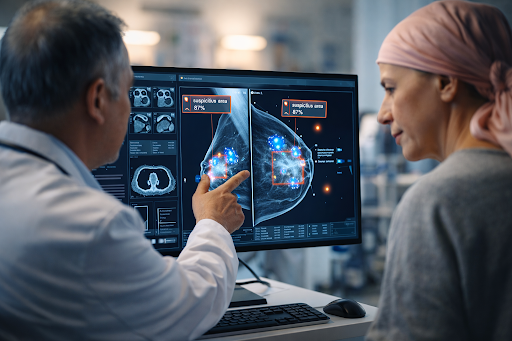
One of the central components of CereOnco is its AI diagnostic capability, which analyzes medical imaging to assist clinicians in identifying cancer.
The CereOnco’s system functions as a second-read tool, meaning it does not replace clinical judgment but adds another layer of analysis. This can help identify subtle patterns that may be missed during manual review, particularly in early-stage disease where signs are less pronounced. Earlier detection remains a critical factor in survival rates for example, five-year survival for localized breast cancer exceeds 90 percent, compared with significantly lower rates once the disease has spread.
Sunil Raina, founder and CEO of CereBree, said, “CereOnco is part of our effort to connect diagnosis, treatment, and patient support in one system, so that critical information does not remain isolated across different stages of care.
A Patient-Centered System Beyond Clinical Settings
Beyond diagnostics, CereOnco is structured as a patient-facing platform that brings together tools typically scattered across multiple services. Patients can access verified cancer information, search for hospitals and specialists, and schedule consultations within the same system. The platform also includes a personalized dashboard where users can store medical reports, track appointments, and receive reminders for medication and follow-ups.
A key feature is the use of AI to interpret medical data in more accessible language. Many patients struggle to understand clinical reports, which can affect decision-making and adherence to treatment plans. By translating complex information into clearer explanations, the system aims to make medical data more usable for non-specialists.
The platform also incorporates mental health support, reflecting growing recognition of the psychological burden associated with cancer. Patients will be able to access therapists, interact with an AI assistant, and connect with peer communities. Research from the National Cancer Institute has highlighted that anxiety, depression, and emotional distress are common among cancer patients and can influence treatment outcomes if left unaddressed.
Arib Fatima, who is involved in the development of CereOnco, said, “The system brings together diagnostics, patient support, and coordination so individuals can better navigate each stage of their cancer journey.”
Connecting Clinicians, Data, and Future Treatment Pathways
CereOnco is also designed to serve healthcare providers through a digital interface that allows clinicians to manage patient interactions, monitor progress, and coordinate follow-ups. This is intended to reduce gaps in communication that can occur when patients move between specialists, facilities, and stages of care.
In its planned future development, the platform will include tools for precision medicine, allowing clinicians to tailor treatments based on patient-specific data. It also aims to incorporate AI-driven clinical trial matching, helping patients identify relevant studies based on their condition and eligibility criteria. Clinical trial participation remains low globally, with estimates suggesting that less than 5 percent of cancer patients enroll in trials, often due to lack of awareness or access.
By linking diagnostics, patient management, and research pathways, CereOnco reflects a broader shift toward integrated oncology systems. As healthcare systems increasingly rely on digital tools to manage complex conditions, platforms that connect data across the patient lifecycle may play a larger role in how care is delivered and experienced.