

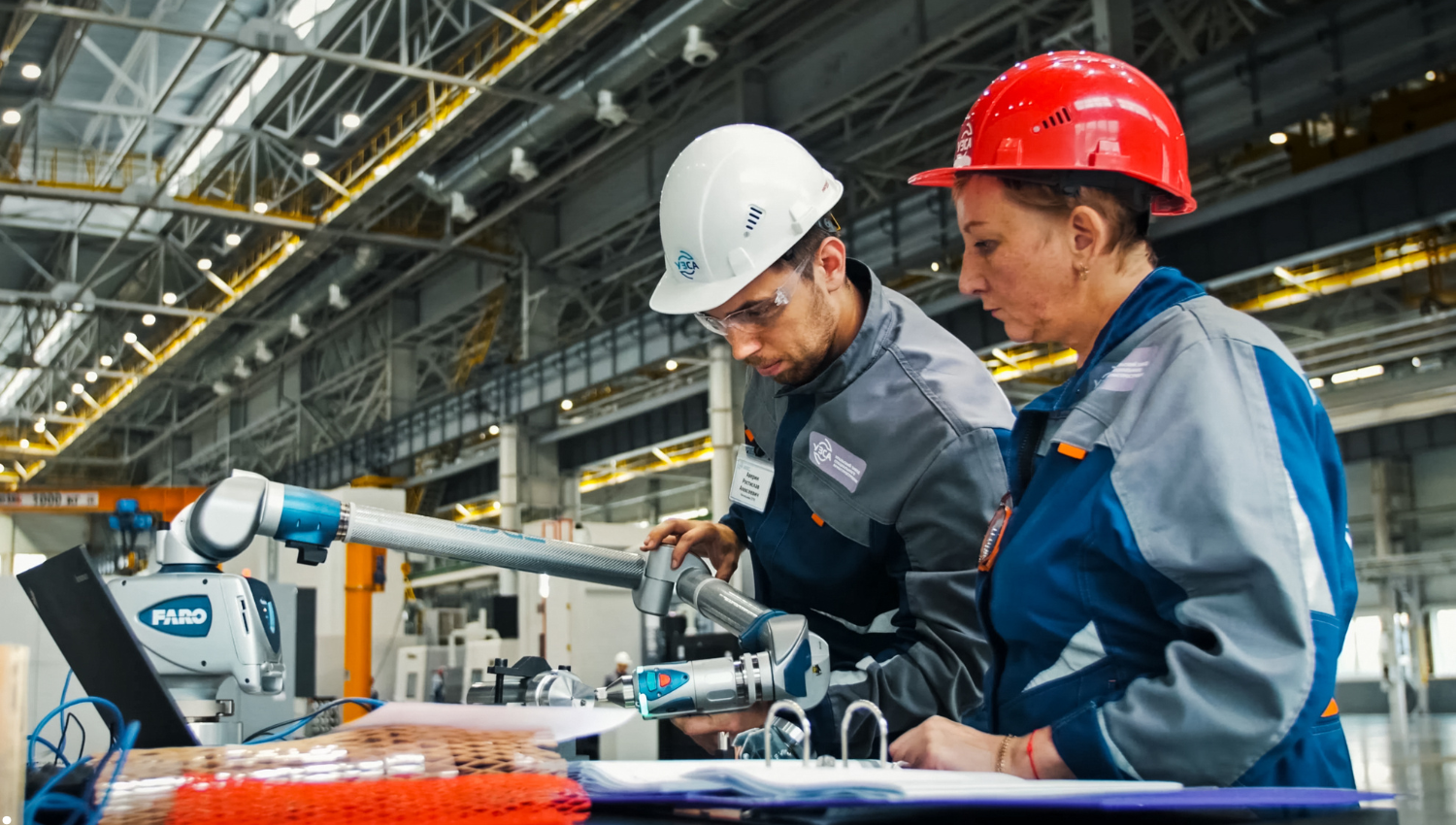

In Sugarcreek, Ohio, the Belden Brick Company has been firing clay into brick since 1885. Its bricks hold up walls at the Alamo and the University of Notre Dame. For most of that history, the electricity bill was a line item nobody lost sleep over. That changed last year, when the company’s power costs jumped 90 percent.
Brad Belden, the fifth generation of his family to run the business, can point to the culprit on the invoice. One charge in particular caught his eye: a monthly capacity fee that climbed from $1,600 to $12,000. “That capacity charge just jumped off the page,” he said.
Belden Brick is not an outlier. Across the industrial Midwest and mid-Atlantic, factory owners are watching their energy costs climb, and many of them trace the increase to the same source: the enormous, power-hungry data centers being built to run artificial intelligence. A Reuters review of federal energy data, alongside interviews with roughly a dozen manufacturers and industry groups, found that factory electricity bills are rising faster than those of most households and ordinary businesses.
The numbers show where the pressure is concentrated. By December 2025, average industrial electricity prices had risen 31 percent year-on-year in Pennsylvania and 26 percent in Ohio, against a national increase of 7 percent for industrial users. Homeowners in those two states saw their bills go up too, but more modestly, by 14 and 9 percent.
For a factory, that gap matters more than it might sound. Manufacturers tend to run on slim margins and consume electricity in bulk, so even a small percentage increase can eat into the year. “Even a 1 percent or 2 percent power-cost increase can stretch factory owners,” said Paul Cicio, who heads the Industrial Energy Consumers of America. He warned that sustained increases could decide “whether or not these facilities can continue to operate.”
The strain is showing up elsewhere on the grid. Last week, the regional operator PJM asked some customers to cut back their electricity use to head off rolling blackouts, as a heat wave pushed demand to a record. Data centers, one PJM spokesperson noted, can be built far faster than the power plants needed to supply them.
The costs land unevenly, and some are dramatic. Plaskolite, a plastics manufacturer with plants in Ohio and Pennsylvania, saw its annual capacity charges balloon from $200,000 to $1.2 million. The company is now weighing whether to bypass the grid entirely and run its operations on a direct natural gas feed, according to Timothy Ling, its senior environmental director.
Data center advocates push back on the idea that they are simply passing costs to their neighbors. Aaron Tinjum of the Data Center Coalition argues that the surge in demand is finally forcing overdue upgrades to an aging grid, and points to retired power plants and limited transmission lines as part of the problem. There is some truth to that. The grid has been under-invested in for years, and AI is not the only thing straining it.
Still, the manufacturers make a fair point of their own. “Manufacturers are not data centers,” Cicio said. “We should not be impacted by their effort to manage data centers.” At least ten states are drafting rules to manage data center power demand, but those same rules could sweep in factories if they are written too broadly.
The politics are awkward. The push to onshore American manufacturing has been a bipartisan talking point, and rising energy costs cut directly against it. The White House says it has moved to protect manufacturers, citing a “ratepayer protection pledge” signed by tech companies earlier this year and orders to build more generation.
For Belden, the response is more immediate. He has already raised brick prices by 4 percent, and profits have shrunk anyway. Now he is looking at building his own power generation on-site to get off the grid. His summary of the situation is blunt, and it doubles as a warning for a lot of towns like Sugarcreek: “Manufacturing goes as power goes.” Some companies, he added, are “on the razor’s edge.”